The Easel

3rd November 2015

Hi-yo silver – British artists sparkle

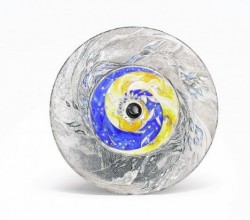
Besides undertaking an ancient regulatory function London’s Worshipful Company of Goldsmiths has for over 700 years promoted fine silver and gold work. The Company currently has an exhibition in Edinburgh covering work from the last 15 years. Images of this amazing work give weight to the claim that Britain is a “glittering star” and world leader in contemporary silver.
‘To drag the past into the present and re-animate it’

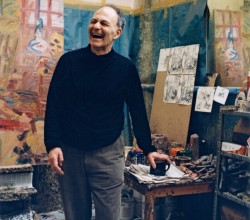
This great painter has just two subjects – a handful of sitters, who he paints repeatedly, and his own London suburb. The writer, whom Auerbach has painted weekly since 1978, thinks he has done over 60 portraits of her but there is no repetition. “There is an analogy between Auerbach [when painting]… and a great [actor]… unexpectedly inhabiting the character, the performance perhaps unrepeatable”

Looking Beyond the Obvious in Lisa Yuskavage’s Mighty Paintings

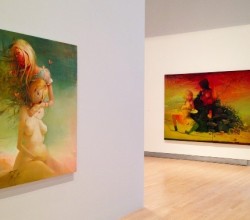
Few are indifferent to Yuskavage’s paintings of female figures, often set in gaudy landscapes strewn with classical art references.  A force in portraiture she may be, but one critic claims she is “disingenuously peddling a soft-porn aesthetic.” Yuskavage gets the benefit of the doubt – “perceived lewdness … hardly begins to take into account the richness of this astoundingly strong body of work”.  More images are here.

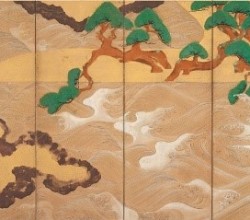
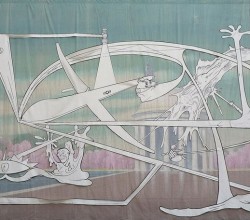
Tawaraya Sotatsu’s art inspired many — once it was saved from oblivion

Tawaraya Sotatsu emerged during the Edo period when Japan isolated itself from the West. Despite being a commoner, he became the era’s pre-eminent artist with his bold, almost abstract designs. Introduced to Western audiences only in the early twentieth century, his work influenced Art Deco as well as individual artists such as Klimt and Matisse. This is his first major retrospective outside Japan. More images are here.

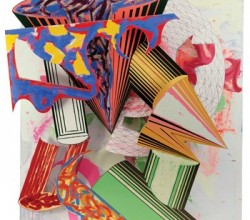
The Wrestler: Frank Stella Redies a Landmark Third New York Retrospective

Frank Stella started out wanting his art to be premeditated and it shows. The early works that made him famous are pure symmetry. But he has since moved on “perhaps more dramatically than … almost any contemporary artist, from spare, modestly sized abstract paintings to wild, cartwheeling painted-metal reliefs. “[He] has been absolutely fearless … when he feels that ideas are exhausted, he reinvents himself.””

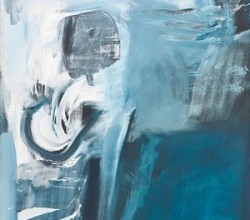
Soaring Flight: Peter Lanyon’s Gliding Paintings review – rhapsodies in blue

“The revelation of the year” according to this reviewer. Most reviews focus on how Lawton depicted the Cornish landscape. But some pick up a second theme. Unlike his contemporaries, he resisted the 1950’s distinction between abstraction and figuration. The end result – a re-thinking of landscape painting, fueled by his “staggering inventiveness”. Further images are here

Review: Keeping an Eye Open

Should we view a painting as a stand-alone image or through the lens of the artist’s life? The novelist Julian Barnes, whose recent book on art is being reviewed, argues that it’s all about the painted image. A painter’s life and the works they produce don’t always fit a single neat narrative.  The reviewer is unconvinced. Inevitably “the stories we tell about paintings matter more than the facts of the paintings themselves”

27th October 2015

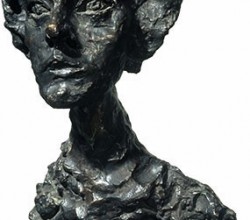
The ‘double life’ of Alberto Giacometti

Giacometti focused on what he could observe. The Surrealists in 1920’s Paris tried but failed to win him over. Back home in Switzerland, his father pushed him to portray beauty, not Parisian avant-garde styles. Francis Bacon noticed that when he and Giacometti went to museums, his friend liked the “wrong” pictures. What he wanted to see was the “presence” of an object.  The result – some of the most intense art of the century.

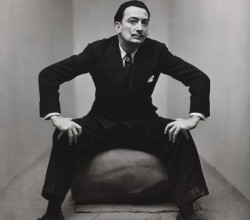
‘Beyond Beauty’ is beyond words

A young Irving Penn hoped that the art muses would anoint him a painter. They didn’t. The iconic photographer thus came to photography only as a fallback option. His taste for stark simplicity was married to a concept of beauty that, over his career, became increasingly edgy – “less an accepted ideal and much more about the ragged edge of beauty”. More images are here.

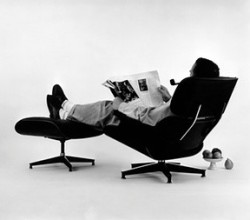
The World of Charles and Ray Eames review – prodigious and abundant talent

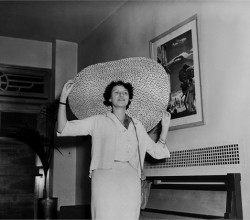
An Eames chair is still a byword for urban sophistication. However, what surprises in a current London exhibition is the sheer scale of the inventiveness – furniture, films, architecture, textiles and more. Charles and Ray Eames were a polymath couple, exemplifying the cheerful outlook of postwar California – “the fun side of the industrial-military complex [producing] modernism without angst”.

Crackpot Gothic

There seems to be agreement that Jim Shaw is a visionary artist but reviewers do struggle with how to characterize his work. Is it comic art, Surrealism, Conceptualism, kitsch or just strange? Besides making his own art, Shaw also trawls through thrift shops for “outsider art” – items for which he is often the only bidder. The reviewer provides his own summation – “cheerful [and] enigmatic … crackpot gothic”.

Museums Take a New Look at Art Nouveau

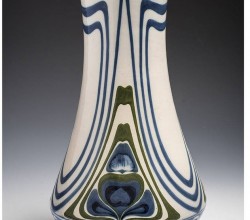
Art nouveau is sometimes associated with the hippies of the 1970’s. Of course, it has much older roots and a distinct philosophical outlook. One historian characterised this outlook as “Nature against History, private intimacy against public monumentality, feminine caprice against male rationality…” Growing museum interest (and auction room results) suggests the tide of critical appreciation is turning.

In Bed with the Avant-garde: The Peggy Guggenheim Story

Notwithstanding the headlines, most art collectors have little impact on the art world. Not so Peggy Guggenheim. Undeterred by sexist attitudes, she assembled an art collection of enduring significance. Her support of living artists and backing of commercial galleries significantly influenced the course of contemporary art. The Peggy Guggenheim Collection in Venice remains a major tourist attraction.

Jean-Etienne Liotard, Royal Academy

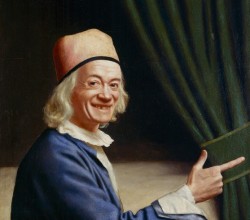
Artists are easily forgotten. In the case of Etienne Liotard, his profile may have fallen because his superlative work has been hard to transport. But one critic suspects there is more. He was“[a] happy man with happy skills… working happily in happy places. That isn’t nothing he’s pointing to in that mad … self-portrait. It’s everything. No wonder they couldn’t find a place for him in the twisty, angsty, neurotic meta-narrative of the rococo.”