The Easel

15th September 2026

Maurizio Cattelan’s NIGHT: A Brilliant Reordering of Power, Memory and the Museum

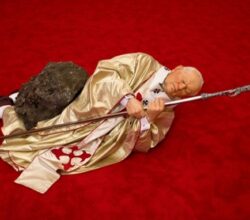
Cattelan’s reputation as a “comic existentialist” was secured when he taped a banana to a gallery wall and it sold for $6m.Hiis work is full of punchline but also “instability of meaning”. A solid gold toilet, for example, is both absurd and a satire of excessive wealth. The Pope being felled by a meteorite illustrates the “precariousness of power.” Cattelan’s works are “not simply provocations … seriousness and irreverence are never opposites.”
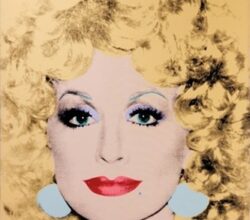

Dearly Departed Dolly

Parton asked Warhol to paint her portrait so she could gift it to a friend. The work didn’t please. It was similar to other Warhol portraits, that presented subjects as “impossibly perfect”. From Warhol’s perspective, these were portraits of celebrities as “shallow surfaces and absent souls”. Beneath her “eager to please” public persona, Parton was a smart and insightful songwriter. Warhol’s portrait misses that about her and about her best songs. His portrait “doesn’t match the darkness that lurks beneath.”

Ileana Sonnabend: a taste for the unexpected, a life in contemporary art

Sonnabend was one of a tiny group of art dealers who can be said to have influenced the direction of art. After dabbling in art in post-war New York, she opened a gallery in Paris in 1961, introducing contemporary American art to Europe. Moving back to New York in 1971 she introduced an astonishing, “daring” rollcall of major artists. Such was her judgement that Rauschenberg said, “I never finished a painting without wondering what Ileana would think of it.’ Said Sonnabend “I only want what I don’t like”.

The Art World Needs Better Fights

Is there an analogy between the art world and professional wrestling? The professional wrestling world is rich with good guys (“faces”) versus bad guys (“heels”) and other such narratives. Current politics also has a WWE vibe, so what about art? Not all artists are sincere – think those that specialise in “platitudes and evasions” – but rarely do we hear denunciations and trash talk. The art world needs to agree that “art itself matters enough to fight about.”

What’s Going on With the Met’s Odd New Giacometti Show?

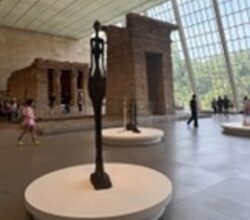
Giacometti was interested in simplified sculptural forms and liked the Egyptian sculptures he saw in Europe’s museums. He was also inspired, perhaps even more so – by the elongated figures in some tribal African carvings. A show that exhibits his gaunt, spectral figures around an ancient Egyptian temple thus connects loosely with his back story. But so what?  Curators are having fun mixing old and new objects but where is the narrative? “It is kind of a half-show, with a half-premise”.

Alina Szapocznikow: Autobiography in fragments.

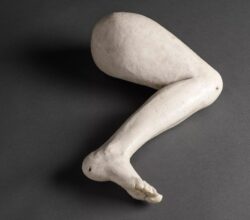
As a teenager Szapocznikow survived a Nazi concentration camp. Her later sculptures never revisited that trauma directly. She was acclaimed for figurative abstractions, casts of legs, arms and breasts presented as if they were found objects. They spoke to the body’s “devastating confrontation” with life while also affirming its “continued capacity to feel and to love”. Her final work, made following a cancer diagnosis, was Szapocznikow‘s statement that “the body remains the ultimate measure of human experience”.

Another Life on Paper: “Here Lyeth: Grave Rubbings by Ann Parker and Avon Neal”

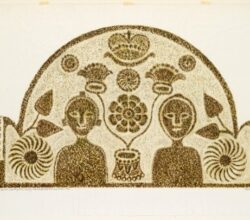
The Puritan communities of colonial New England were often austere. Nowhere was that clearer than in their graveyards. Death was commonplace and not sentimentalised. Gravestone carvings were varied, some restricted just to symbols that could be managed by local craftsmen. These carvings are a record of culture – of caring, of racism intertwined with acts of remembrance, of inevitable death. Many headstone carvings now exist only as wax rubbings on paper, a fragmented memory of what once was.

8th September 2026

‘Chest-thumping machismo’: The Bayeux Tapestry reveals the bloody, bawdy truth about the Middle Ages

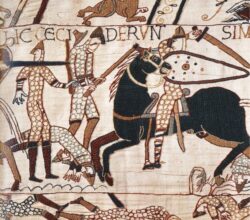
Although the Bayeaux Tapestry can be viewed in France quite easily, its year-long visit to London is still a big deal. It offers a vision of life in 11th century England and narrates the Battle of Hastings where the Normans changed Britain forever. One writer observes that the tapestry is “war propaganda”, vividly describing the brutality and machismo of battle. That substantial parts of the work are still not understood simply adds to its medieval charisma. Gushes one writer, “the most famous textile in the world”.

The Lucas Museum Doesn’t Have a Narrative

The Lucas Museum of Narrative Art has taken 17 years to complete and required “fuck you” amounts of money. It displays all forms of art that tell a story – paintings through to comics, street art, posters and film. It’s a mash-up of high and low culture, something Lucas proudly calls “a temple to the people’s art”. But where is the explanation for why these objects belong together? This lack of contextualisation is “egregious … the Museum of Narrative Art lacks any kind of narrative. [It is] a vanity project”.

“Creatures of Myth and Imagination: Europe and the Americas” at The Met Cloisters

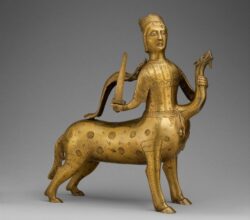
Up to about 1500CE, European artists imagined mythical creatures that combine features of animals and humans. Such imaginings were an attempt to explain the known world and express spiritual visions. In the Americas, completely independently, hybrid creatures were similarly being imagined that linked the human and the divine. These are beautiful and provocative objects, “a sampler of greater ventures hopefully to come.” Images are here.

What Hieronymus Bosch’s Fantastical Triptychs Reveal About the Artist’s Worldview

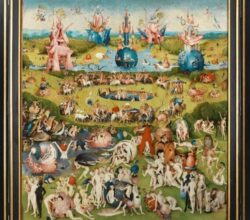
To modern eyes, Bosch’s Garden of Earthly Delights is “bizarre”. Living in a regional Netherlandish town, he had a flourishing reputation, yet by the time he was commissioned to paint The Garden of Earthly Delights, his outlook was darkening. He expected people to take responsibility for their actions but the frolicking figures in this work betray pessimism about this happening. The many owls looking on carry his stern message that people “should behave” and there would be hell to pay if they didn’t.

“Avery, Gottlieb & Rothko: By the Sea” Shows How Three Midcentury Greats Were Shaped by the Shore and One Another

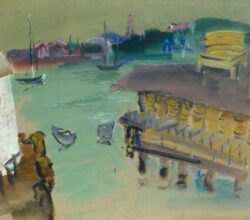
An American art history tale. Milton Avery was a pioneer of colour field painting – broad areas of flat colour. His younger friends, Rothko and Gottlieb were producing figurative work. The trio started summering together in the 1930’s where Avery encouraged them “to eliminate and simplify, leaving apparently nothing but colour and pattern”. Rothko was most influenced by this advice, ending up with his stacked rectangular fields of colour. Avery also evolved but never entirely let go of painting the sea.

Sophie Calle’s ‘Overshare’ Exhibition Takes Visitors on a Journey Through the Intimate

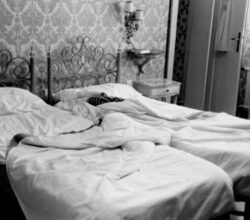
Calle anticipated social media by decades. She is fascinated by what we keep private versus the sometimes constructed personas we choose to make public. This has led Calle into projects like photographing occupied hotel rooms or following and photographing people as they move around their city. Despite her work being widely acclaimed she has never entirely dodged accusations of voyeurism. Claims she, it’s all about “the urge to see, to know, and to be known”.