The Easel

29th September 2026

Arthur Jafa, King of Pop

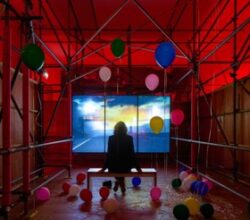
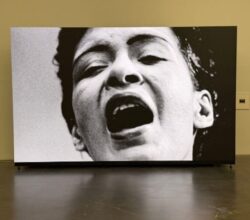
Jafa’s diverse art, such as the video Love Is the Message, The Message Is Death (2016) has had a significant cultural impact. A large survey show illustrates the themes of his work, notably the beauty of Black culture and the persistence of racial violence against Black communities. But does it give a clearer vision of this important American artist? He has an intuitive grasp of “memes” but not all of his works are clear. “It’s a charming, playful, and rich homage, but does anyone get it? 
Pope.L’s pleasing refusal to be interpreted

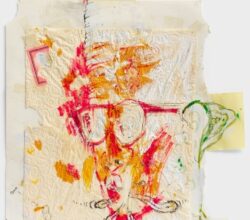
Pope.L’s performances included crawling along Manhattan streets and sitting for days on a raised toilet eating the Wall Street Journal. Were such deeds deranged or a lucid advocacy for those in his family who were homeless? His drawings are equally elliptical. This writer disagrees with critics who want to group his graphics and performances as a coherent whole. “Pope.L couldn’t care less about crafting an image or a brand. His work thrives on the incoherence of his own restless curiosity.”

The 2026 Turner Prize Show Is Grim—but the Strongest in Years

The Turner Prize is one of the art world’s most closely watched events. The themes of the four shortlisted artists are grim – climate apocalypse and political discord. As with so much contemporary art, opinions divide on how best to expresses the zeitgeist. For example, one work that references “global oil” is seen as either “amazingly sinister” or “belonging to an undergraduate sketchbook”. Although the writer has no idea who will win the prize, he observes that “sometimes the grimmest of times produces the best art”.

John Berger: From Life by Tom Overton review – a vibrant biography of the pioneering critic

An especially eloquent review of the biography of John Berger, the politically engaged British cultural critic who changed how we see art. He opposed the “great man” theory of art, arguing instead that viewers need to be aware art is produced for a marketplace. It is thus a “manifestation of art and politics. We never look at just one thing he said.” We are always looking at the relation between things and ourselves. “There is no single version of a story.”

Velázquez’s Rediscovered Portrait of the Count-Duke of Olivares Joins the Getty Museum’s Collection

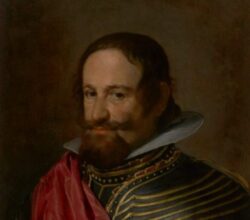
Lucien Freud and Francis Bacon both rated Velazquez as just about the greatest artist ever. Only 120 of his paintings are known (the Prado holds “more works than God”) so the “rediscovery” of a lost work is a big deal. The new work is a court portrait of Count Duke of Olivares, a powerful Spanish statesman. It is, says a curator, “a great example of Velazquez’s ability to capture the subject’s personality directly from life”. It has been purchased by Getty, reputedly the world’s richest museum.

22nd September 2026

No One Is Accountable in Taryn Simon’s Detective Story

Starting out as a photographer Simon has since evolved into a documentarian-artist. A major new show displays a single 10-year work focused on the career experiences of an anonymous FBI agent. Using both images and text, it highlights the social systems that impact our lives. What do we take away from an exhibition that’s a bit like a book? “There are some really good anecdotes [as well as] a sense of helplessness … [while we] retrospectively wonder at all the horrors we’ve lived through.”

The cosmic paradox of Anish Kapoor

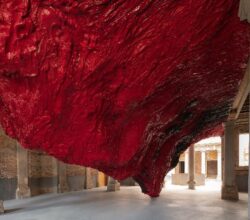
After Kapoor’s high-profile summer show, this piece tries to get inside his “impersonal” sculptures. He insists they have nothing to do with his Indian/British identity nor the materials he uses. Instead, his work aims to establish “that strange in-betweenness, between nothingness and eternal possibility” The fundamental question, he says, is whether the object ‘holds any poetic value”. Is that quality planned or accidental? Says Kapoor, “of course, it’s a bit of both”.

The Largest Carpet Ever Woven: An Exhibition at the Metropolitan Museum of Art in New York on the Project Commissioned by Louis XIV

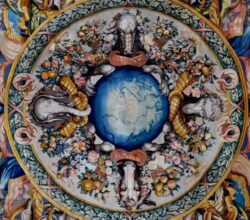
In 1668 and living in the Louvre Palace, Louis XIV wanted further personal glorification. This resulted in an unprecedented commission of 92 carpet panels to decorate a 440m hallway. These Savonnerie carpets took 20 years to manufacture, were never displayed as intended and many were sold off during the French Revolution. A video  taken when 32 were recently hung in Paris shows their astonishing scale and detail. Four are briefly on display in New York. Gasps one writer, “Baroque masterpieces”.

Art Institute unveils ode to ‘relentless experimenter’ Mary Cassatt

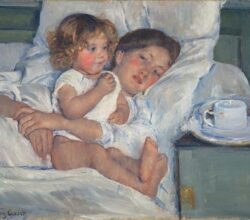
Cassatt was a Paris resident when her friend Degas invited her to exhibit with the Impressionist group. She agreed and was a regular presence in their later shows. Her paintings had a characteristic focus – contemporary women and their daily lives. Caregiving was, in her hands, treated as a serious subject and domestic scenes were underpinned by a “steely rigour of design”. Says one critic, “the outstanding woman painter of the 19th century”. Discussion of a lost Cassatt mural is here.

On Lisette Model

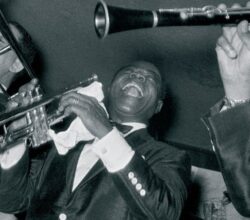
Failing to make it as a professional musician, Austrian-born, Model left Europe for pre-war New York. There, she established herself as a street photographer. After her death, a large archive of images of jazz musicians and jazz clubs was discovered. Her “plainspoken” images, now seen as central to her output, capture a society rife with segregation and anti-communist fever. Said Model, “I was absolutely overwhelmed by jazz because I knew that was America”.

The Antiquarium at Villa Albani Torlonia doubles its capacity with the addition of a newly renovated exhibition space

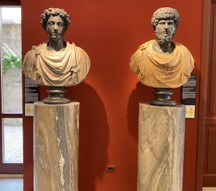
No superlatives are too grand to describe the Torlonia Collection of ancient Greek and Roman sculptures. A long dispute between the Italian state and one of Rome’s grand families over control of the collection resulted in it being opened to the public. This is happening – slowly – with newly restored works focused on polychrome and gorgeous coloured marbles. Imperial quarries yielded purple-ish porphyry and green breccia, luxurious materials that helped make ancient Rome “very colourful”.

The Pattern of Life: Enid Marx and Modern British Design

Marx’s house was full of kitschy, “enjoyably silly” items, not what one might expect of such a widely influential designer. Training as a pattern designer, she was exposed to the abstract pattern making of various Indigenous cultures. With WW2 creating opportunities for women, Marx designed the seat fabric used on the London Underground, among many projects. More widely acclaimed at the time than now, she moved past the “waning Arts and Crafts ideas” to establish “a distinctively British Modernism’”.