The Easel

12th December 2023

A reminder: your questions or comments!

In last week’s Easel, I invited readers to send in comments or questions on “arty topics”. Click on the title above to see a list of thought starters. Our Contributing Editor, Morgan Meis, will combine these with his own musings on the year just past and whip them all into a delightful flummery that will appear at the start of 2024. Comments/questions/views can be sent to me, the editor, at: andrew@the-easel.com.

Small effort, nice reward!!

Minimalism, Between Art and Life

Short and elegant. What has happened to minimalism? It started as an “act of recontextualization” – taking an ordinary box, for example, and thinking of it as an art piece. The task is much easier if the box is in a white-walled gallery. Over time, minimalism has crept into daily life – “aesthetic minimalism”. “Modernism created industrial space, minimalism showed us how to live in it”. Minimalism is the process of determining the “gesture that connects life and art”.

Jesse Darling Scoops Challenging Turner Prize 2023

The problem with writing about the Turner Prize is that critics feel obliged to be polite about the winner. It is, after all, a prize that is usually career defining. The 2023 winner, Jesse Darling, makes sculptural installations. His work for the prize was described (before the event) as “wonderfully chaotic … everywhere you look, emblems of control are bastardised and made pathetic, rendered more fragile.” Says this reviewer (after the event), Darling is “a formidable artist”.

Strike a Pose

A show of African contemporary photography recently went through London without much comment. This review is a catch up and discusses what makes African photography distinctive. Western photography frequently captures strangers or unusual situations, whereas photography in African hands gravitates to community. “[My predecessors] developed the revolutionary act of focusing on group portraits. I almost always work with friends and family – [it] becomes a personal and intimate exchange.”

A Welcome Weight: The Art of James Johnson

To appreciate indigenous art, one can start by listening to what indigenous artists say. Johnson, a Tlingit man from southern Alaska – and an acclaimed sculptor – explains that the Tlingit don’t think of art as ‘art’ but simply part of their visual language. As he explains his art, which extends to designs for snowboards and sportswear, the relentless innovation that drives contemporary Western art is not part of his mindset. Of Johnson’s current work, an elder said “your ancestors are smiling down on you”.

Holbein Politics Religion And Draughtsmanship

Illiteracy was common in Tudor England. That made painting important because potent images of a leader were an effective communication. HenryVIII hired Holbein, a great renaissance portraitist, to do just that. He did, and with such unparalleled realism that he became the “image maker of the Tudor court”. Tudor England was, of course, full of political intrigue, so being the King’s Painter required subtlety, an ever-so-careful balancing act between the truth that Holbein saw and the truth that Henry VIII preferred.

Amber dextrous

A straightforward piece, but its exotic subject – amber – gives it lustre. Amber is fossilised tree resin which, for obscure reasons, was especially prevalent in the Baltic Sea. A show in Paris, 20 years in the making, boasts exquisite pieces that showcase amber’s colour (“every shade of the sun from dusk to dawn”) and the extraordinary craftsmanship lavished on it. Carved amber’s zenith was in 17th century Prussia when it was seen as the perfect way to buy influence.

5th December 2023

A chance to be involved!

Earlier this year The Browser published a letter by its founder, Robert Cottrell, riffing on views expressed by its readers. It was such a good idea that Morgan Meis and I have decided to borrow it. A click on the title above will take you to a page on the Easel website that lists some arty topics on which we would like to hear from you. Please email your comments/questions/views to me, the editor, at andrew@the-easel.com. Morgan will take your thoughts and comments and, together with his musings on 2023, write a not-too-serious essay that will appear at the start of 2024. Enjoy!

How Paris’s Once-in-a-Lifetime Mark Rothko Exhibition Changes the Way We See His Revered Paintings

Naomi Rea, Artnet news: November 1, 2023

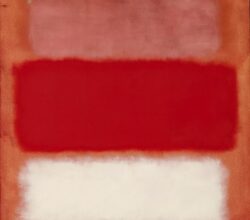
Before WW2 Rothko was a figurative painter, but the carnage of war led him to dabble with surrealism. Finally, in 1949 he produced his spiritually inspired “multi-forms”. At the time, one writer felt they had “a yearning vacancy, a sense of waiting for an epiphany that never comes.” A blockbuster Paris show includes 70 of these popular works, “chromatic harmonies of saturated yellows and reds, but also pinks, purples, and blues”. Yes, they have an immersive beauty but are also “perforated with existential angst”.

The DMA presents a must-see retrospective of groundbreaking Mexican artist Abraham Ángel

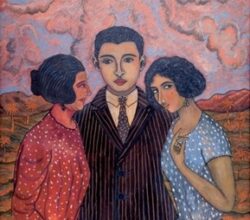
Are Rivera and Kahlo the sum total of post-revolution Mexican art? It seems not. A decade after the 1910 revolution, Mexican art was trying to articulate a modern national identity. A country boy who then moved to Mexico City, Ángel produced just 24 paintings yet is now acclaimed as an important voice of that generation. Ángel’s unusually assured portraits are a contemporary answer to that question of identity. Says a curator “he should be seen as important as Rivera, Orozco, or Kahlo.” Images are here.

Nan Goldin has been named number one in the Art Review Power 100 – quite right too

You should take ArtReview’s annual Power100 list with a pinch of salt. About 40 “secret” panellists opine on who most influences the art world’s choices about what is made and seen. Both subjective and of its moment, it includes familiar movers-and-shakers as well as new names from outside the “European – North American axis”. Nan Goldin wins the gold star for her activism against tainted philanthropy. Social activism and money seem the key common denominators. Art critics – nowhere!

On Frans Hals

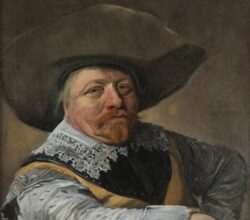
Unlike a recent piece on Hals (September 19) this one has a more intimate focus on the artist and his work. Hals had a happy, “devil-may-care” attitude and was given to painting “louder and more flamboyant” works that his Delft contemporaries. He had a “quickfire” style of working but “his comprehension of heads and hands … was consummate”. And those rumours about boozing? “It feels unmistakable to me: beer and chasers, this exhibition fairly reeks of them”.

Elliott Erwitt: Legendary photographer dies aged 95

Erwitt loved photographing dogs and lovers – rather quirky tastes for a fine art photographer. Yet he brought such wit and charm to those images that he was still invited into the fabled Magnum collective. He didn’t have an intellectual approach to photography, just an ability to see rigorous compositions in the passing parade of life. So, why dogs? “Dogs are people with more hair.” Images are here.

Impressionists on Paper: Degas to Toulouse-Lautrec @ the Royal Academy

Impressionist drawings – just another Impressionist crowd pleaser? Surprisingly, this London show offers more.  Art materials technology developed greatly in the 1860’s – better paper, more colours in tubes and crayons. These innovations brought artists outdoors and elevated drawing’s status as a medium. Inevitably, the critics also roll out familiar Impressionist critiques. One notes that Renoir on paper is still “bland” and Degas is still “an old perv”. Yet, even on paper, the magic of that group is still there.

Why a Caspar David Friedrich sketchbook cannot leave Germany

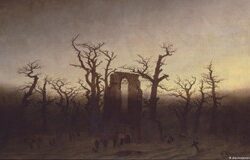
The German Romantics, prominent from about 1800, were a fervent lot. Friedrich’s landscapes are full of their allegories about Nature and the Sublime. Still, it’s all a bit vague. For example, do trees in his landscapes represent Germany or are they an embodiment of God? Goethe, sitting on the fence, called his work “religiously patriotic”. From about 1830, Friedrich’s popularity waned but his minimal, evocative compositions are still influential. Rothko apparently shared his desire for a “view of the infinite”.