The Easel

4th July 2023

The Unsettled Life and Art of Jimmie Durham

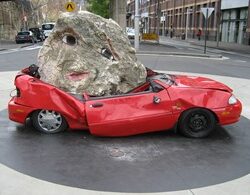
Durham left a trail of unanswered questions. As a sculptor, there was seemingly no material he wouldn’t use, including boulders (for dropping on cars). Increasingly, he showed his art in places other than his native USA. He claimed Cherokee heritage, but later cast doubt on this. Not only does that run counter to our identity obsessed present but it also creates ambiguity about his art. Unsettled he may have been but was still “one of the most remarkable sculptors of our time”.

Le Corbusier’s Enduring Spirit: Celebrating 100 Years of Architectural Influence

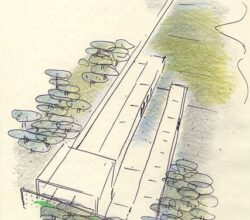
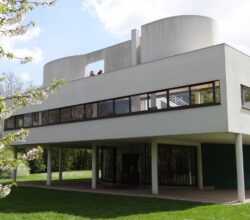
Le Corbusier published Towards an Architecture 100 years ago. Its credo – functional, unfussy design – remains hugely influential and underpins his statement “a house is a machine for living in”. He also advocated for cheap, adaptable concrete and the use of natural light indoors. Ideas on urban planning were a rare misstep. A measure of his influence is seen in a recent survey of “important” 20th century buildings – more Le Corbusier designs were voted in than from any other architect.

Peter Howson: new retrospective reveals how Scots painter found redemption after Bosnian war

Is the stern tone in Howson’s works due to the “joyless culture” of Scottish Calvinism? Perhaps, but surely it also reflects his youth in working class Glasgow, a world of “rough, masculine men” who he portrayed as having sense of “nobility”. An engagement as official artist in the Bosnian War confirmed his view that life, in essence, is “violence and confrontation”. These works have an “epic” quality and mark him as “one of the greatest contemporary British artists”.

After 25 years and $185m, Spain’s new Royal Collections Museum is finally opening

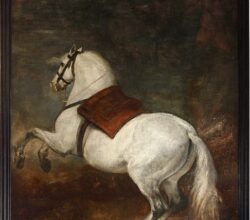
Your bucket list just got a bit longer. Spain’s 16th and 17th century monarchs bought their favourites – Bosch, Titian, El Greco, Rubens, Velázquez and Goya, and others – in quantity. Scattered across 19 palaces, this collection had little impact so a project to centralise it commenced in 1998. At long last, a “spectacular” new building has opened next to Madrid’s Royal Palace. One critic has called it a “mecca for old-world art lovers”. Indeed!

Paul McCartney Photographs 1963-64: Eyes of the Storm review – Macca’s remarkable snaps capture the buzz of Beatlemania

Catnip for baby boomers, perhaps an eye roll for others. It’s a given that nothing new can possibly be said about the Beatles, but this show of McCartney’s photography hangs its hat elsewhere. It offers, says the curator, intimate, off-guard moments of someone looking out from “the eye of a [cultural] storm”. Further, even now, it is “hard to find a more unifying embodiment of British identity”. Images are here.

On Karl Lagerfeld

Merely an elegant reminiscence. Lagerfeld asked Ando to design him a house. When he visited, Ando was surprised to find Lagerfeld living in a “grand stone mansion”, a far cry from Ando’s Japanese inflected international modernism. Lagerfeld responded that “as an artist I am better at creating what is ephemeral. That may be why I like architecture that lasts for eternity.” The project was never realized, though both men continued to refer to it as if it were underway.

27th June 2023

A Dutch mystery: Jacobus Vrel

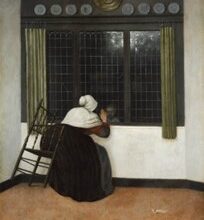
Who was Jacobus Vrel? All we know is that he was probably Dutch and painted from about 1640 – 1660. His small output focused on humble street scenes and quiet, enigmatic interiors where female figures go about their tasks or just daydream. Sound familiar? Previously thought a mere follower of Vermeer, it turns out that Vrel preceded him by more than a decade. Vermeer, it seems, was not the first to paint “the act of looking”. Wow!

Banksy’s art is political drivel for the smug, right-thinking classes

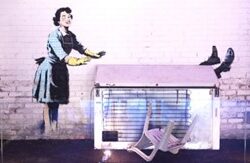
How should you review a Banksy exhibition? Many critics, seemingly aware of his huge popularity, offer noncommittal, anodyne commentary – for example, here. The above writer shows no such restraint. Emerging from Britain’s 1990’s rave scene, Banksy was, from the start, “glib”. Although his reputation has grown, his work has not become any more interesting. “None of his works are, in any meaningful way, original … this is a publicity stunt, with little substance underneath”.

Palermo Mon Amour: Fondazione Merz

Palermo has sunny skies, a long history and … the mafia. A group photography exhibition documents the city’s story with images of poverty, economic neglect and the mafia’s “industry of violence”. These are unpolished images that celebrate the “persistence of optimistic lives limited by hard circumstances. The clarity of these photographs feels urgent. They stand against … art as commodity.” Images are here.

Shapeshifting show finds optimism in bleakness

One critic deftly characterizes Weems as imagining “the kitchen table as a place of political upheaval”. Kitchen tables are relevant because a photo series shot around such tables first made her name. She has since proved to have “chameleon” qualities, working in film, dance and installation. While her early interest was expressing the black female experience, she says she now has a broader focus – “the dismantling of power.” An interview with Weems is here.

The new National Portrait Gallery review – ‘It’s the same old cocktail party’

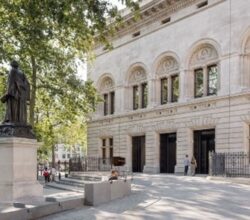
London’s National Portrait Gallery has re-opened after a long renovation. Yes, the money has been well spent, and yes, the re-hang is more inclusive. But should a portrait gallery be showing exemplary lives or exemplary art? One critic says, coyly, that the balance is “judicious”. Others disagree. “It’s still the same shoddy chaos. You can argue that representation is more important than artistic quality – but that leaves the NPG [as] a collection of notable faces with no regard for artistic depth.”

William Ince and John Mayhew: the remarkable legacy of a 40-year furniture-making partnership

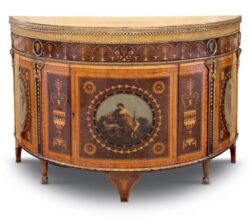
In the rarified world of cabinetry, Chippendale is considered the most illustrious name. A book, 40 years in the making, proposes that there is a worthy challenger. Ince and Mayhew were their contemporaries, working in Georgian London selling to the same aristocratic client base. Equals in terms of their cabinetry, the Ince and Mayhew house style was seen as more “classical”, with elaborate use of inlaid woods and marquetry. This is cabinetry at its most spectacular.