The Easel

22nd November 2021

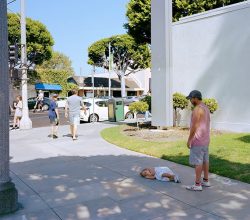
In Jeff Wall’s photographs, it’s all about the details. But are they important?

Wall is credited with helping photography transcend its status as “a problematic subset of art.” Intrigued by artifice, he decided to create tableaux – near-documentary re-creations. These images have little details seemingly incongruent with the ‘face-value’ story. Once this is noticed, the “documentary value” of the image “collapses like a house of cards … [unlike a movie] Wall’s photographs seem stolen from a narrative timeline with no backstory, or denouement in the offing.”
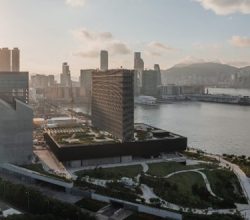
Hong Kong’s extraordinary M+ museum opens amid ongoing censorship fears

At long last, Hong Kong’s M+ museum has opened. It is big by world standards, has a peerless collection of contemporary Chinese art and is a bold statement for a city some think is culturally sterile. Censorship is, sadly, the elephant in the room. “Curatorial integrity is intact”, claims the director. The museum’s key donor strikes a slightly different tone: “Maybe today we cannot show everything, but one day I am sure that whole collection can be shown. It’s for the long haul.”

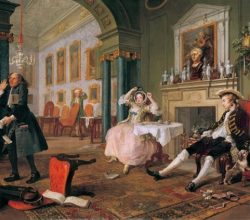
Hogarth and Europe, Tate Britain, review: a show in paroxysms of embarrassment about its own subject

This show intended – pre-Brexit – to position Hogarth as a European. That view has now been soft-pedalled, though the point of the show seems unchanged – he was influenced by Continental social realist artists. By any measure, his satirical paintings of modern life packed a punch. Sadly, the “asinine” wokeness of the show’s wall labels gets up many noses. Was not Hogarth’s greatness that he held up a mirror to his times? Why mount “a sustained attack on the artist [you are] celebrating?” 

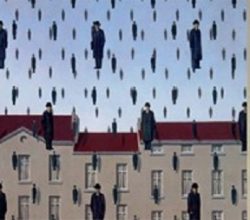
The Artist Behind the Bowler Hat

As a child Magritte was “a bit of a shit” and later lost his mother to suicide. He admitted committing rape as a teenager. In adult life he embraced the boredom of middle class Belgium – “dullness was a safe haven, a place free of devils.” Yet Magritte was one of the century’s greatest image makers and his deadpan sensibility remains hugely influential. He commented once in an interview, “everything we see hides another thing, we always want to see what is hidden by what we see.”

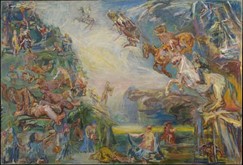
The overlooked masterpiece warning of a Cold War apocalypse

A “magnificent” renovation gives London’s Courtauld Gallery the opportunity to display a key work by Kokoschka. He came of age in glamorous fin de siècle Vienna, but his art grew fearful about the modern age. In his Prometheus Triptych, Prometheus is a “symbol of intellectual arrogance”, reflecting Kokoschka’s anxiety about military technologies. He had learned, as a soldier in WW1, that playing with fire meant that “fingers would be burned “.

9th November 2021

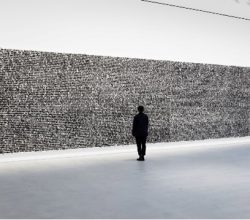
Inside Glenn Ligon’s Groundbreaking Solo Show at Hauser & Wirth

Ligon enjoys “Olympian” status among contemporary American artists. Stenciled text paintings have, for decades, been his calling card. They carry overt political content – the erasure of African Americans in their society. But they are more, cleverly illustrating the slipperiness of language and the “tug-of-war between pure abstraction and dusty figuration”. A new show features more ambiguous text works. Don’t ask Ligon for an explanation, though – his job, he says, is just to ask “good questions”.

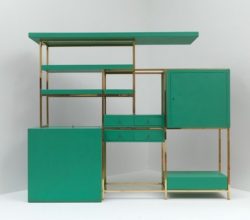
Ettore Sottsass: The Magical Object

When Sottsass graduated in architecture after WW2, building projects were scarce. He instead chose design, producing sculpture, ceramics, jewellery (“miniature architecture”) and notably, furniture. While functionality was important, so too was an object’s emotional impact. Designs he produced with Memphis Group were described as a “shotgun wedding between Bauhaus and Fisher-Price”. Still, he is widely credited with introducing the “poetics of artmaking” into design. Images are here.

Leon Kossoff’s Art of Darkness and Light

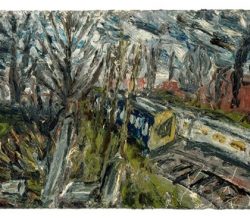
An appreciation. Kossoff lived his adult life in the same part of North London. In contrast to the great English tradition of painting rural landscapes, his fascination lay with what was outside his suburban front door. London’s grimy vistas and overcast skies were his main subject and he captured them with a “slow turbulence” of paint. Kossoff painted many such works, likened by one critic to a man “making a map of locations where he can begin to search for himself”.

Late Constable, Royal Academy, London, review: sentimental or experimental? Both, actually

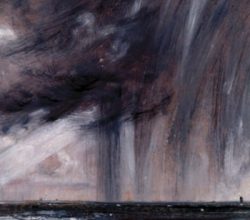
Some regard Constable as a “chocolate box artist”, conventional and well mannered. Undoubtedly, he helped advance the status of landscape painting. His fidelity to nature has its admirers, even if our times perhaps inclines toward the wilder imagination of his contemporary, JMW Turner. In late career, Constable’s style became looser, especially his oil sketches. They impress this critic: “For those of us brought up on a diet of Modernism these works are very appealing.”

Eileen Gray’s Human-Centered Design

The modernist credo in architecture is ‘form follows function’. In Le Corbusier’s hands, this meant houses with precise geometries, inside and out. Such architecture, according to Gray, had “no soul”. A house, she said, is a “living organism” and should prioritise the experience provided by its interior spaces. Her recently restored house in the south of France, E-1027, is “a marvel of personal customization”, a masterpiece that “transformed” architecture.

‘I went from having to borrow money to making $4m in a day’: how NFTs are shaking up the art world

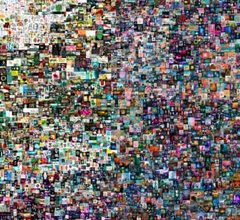
After some ritualistic gnashing of teeth about speculators, and Paris Hilton, this piece asks a few good questions. Are NFT’s a more democratic form of art? (A bit). Have galleries and auction houses found a way to cash in? (Of course). Are prices the “dominant” focus, rather than ideas? (That sounds familiar). And, most importantly “is there a meaningful difference between an artwork and an asset?” The writer says, hopefully, “not always”. A more candid answer might be – usually not.

How AI is hijacking art history

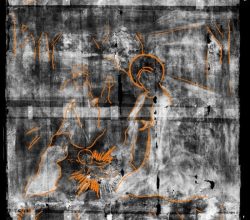
Three cheers for art historians. Headlines are regularly captured by artificial intelligence researchers claiming to have discovered or reconstituted “new” works of art. This is just “soft diplomacy” for AI. Art historians use art to understand how people once looked at the world. Algorithmic analysis may assist but cannot replace their nuanced historical analysis. Much will be lost if art history becomes mere “toys in the sandboxes of scientists with no training in the humanities”.