The Easel

28th February 2017

Alice Neel, Collector of Souls

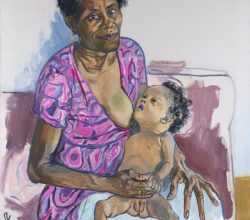
Despite being enmeshed in New York’s art world Neel’s style was immune to its famous art movements. Right from her earliest work she viewed herself as a realist painter, one without an agenda. Her emotionally insightful portraits, including those of pregnant women, now underpin a lofty reputation.  She observed “if I hadn’t been an artist, I could have been a psychiatrist.” A video (5 min) is here and images here
Depression Era Painting and Its Resonance: America After The Fall – An Extract

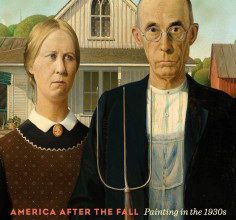
By 1930 the US had experienced decades of rapid immigration, war, industrialization, a stock market crash and then depression. Little wonder that artists struggled to portray this rapid social change. “It’s an unruly show from first to last, wildly stylistically inconsistent” notes one critic. But there can be no doubting the significance of the decade – or the art that emerged from New York soon thereafter. More images here.

How Egon Schiele Went From Radical Punk to Respected Artist

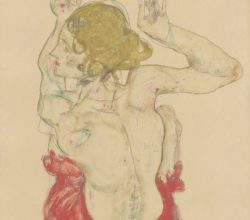
Schiele subscribed, it seems, to the view that all art is erotic. In a short career the majority of his thousands of works were nudes. Then again he was a spendthrift, living from hand to mouth and erotica sold well. By portraying subjects without contextual background he highlighted his greatest gift – line. “It defines the work conveying both form and emotional energy at a level that has not been surpassed.”

SC Edit – Contemporary Jewellery Designers in London

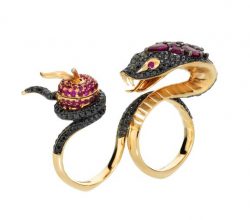
London – specifically the Hatton Garden district – boasts an organized precious metals and jewellery trade dating back over 700 years. This longevity speaks to the metalworking expertise needed to turn great design into exquisite objects. The specialization also extends to eminent design academies. For those looking for personal decoration, you now have a destination.

A Luminous Look at Turner’s Port Paintings

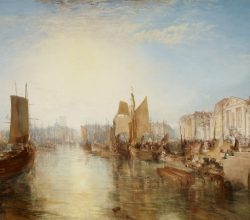
Given his fascination with light, sunset-lit vistas of bustling port activity were bound to attract Turner.  Once travel to the continent was freed up, he took his chance. “Although some of Turner’s port paintings recall a nostalgic past, the present is always haunting the view, with the sun-soaked settings acting as a gateway between lost history and a rapidly dawning future”. A video (5 min) from Frick is here.

Ed Ruscha, the pop painter with ‘the coolest gaze in American art’

If your paintings sell for millions and you are regarded as cool then life must be sweet. That’s the impression Ruscha gives in this pleasant bio piece. He admits to being relaxed about having labels put on his work – “Most of my work comes out of popular culture. I can’t deny that. So call me a pop artist.” And what makes him laugh? “Everything that goes on in the world.”

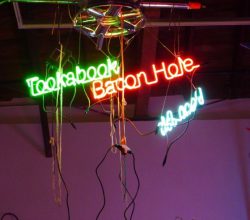
Jason Rhoades: is Installation Art the Whitest Privilege?

The late “great” installation artist Jason Rhoades died young, just as his reputation was growing. Now he is getting a survey show that, according to one critic, is taking Los Angeles “by storm”. But not everyone is in love with the work: “what was good for 1994-2006, the years covered in this survey, may not be good for 2017. Does any of this more-than-a-decade-old work suddenly seem to reflect the times we live in?”

21st February 2017

Celebrating Design Without Contending With It

Netflix is launching a docuseries that tries to answer the question “what makes good design?” One designer suggests empathy. “Design is not just a visual thing. It’s a thought process. Ultimately, design is a tool to enhance our humanity. It’s a frame for life.” But the creator of a docuseries on design prefers something less lofty: “I described design to somebody as art with clients.”

Image: Netflix

Never mind the politics, feel the lobsters – Wolfgang Tillmans 2017, Tate Modern

Tillmans came to fine art photography from fashion. His images are contemplative and patient, not at all the photography of the ‘decisive moment’. So, what is his defining quality? “[H]is instinctive knack for creating memorably ravishing images is a sort of ocular superpower – the essence of his talent, akin to, say, David Hockney’s exquisite draughtsmanship.”

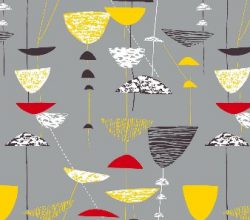
Power and originality: the iconic print designs of Lucienne Day

Post-war Britain wanted colour and style and textile designer Lucienne Day was the one to supply it. Her “resolute modernist” designs, drawing in particular on the visual language of artists like Klee and Calder, were both popular and influential. Later work included carpets, ceramics and aircraft interiors.  Notably, most of her work was aimed at the mass market: “She made the link between mass production and fine art.”

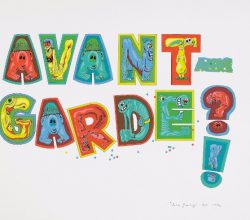
Man Meets Machine: Eduardo Paolozzi at Whitechapel Gallery

As English critics are quick to remind us, Paolozzi was there right at the dawn of Pop art. But he moved on to other things – many other things. Reinvention is probably a good thing but in Paolozzi’s case was there sufficient quality control? “His driving interest — the relationship between man and machine — feels dated … His later works … are hideous and over-obvious.” More images are here.

Image: Whitechapel Gallery

Revolution: Russian Art 1917-1932, Royal Academy

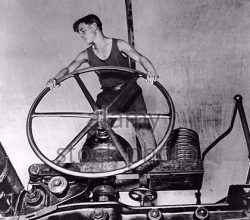
“Most depressing exhibition ever” is not a promising start to a review. Russian art in the 1920’s was enthusiastic about the revolution until a 1932 edict closed down all art except socialist realism. Can the early art be separated from its politics? For some yes, but not for this writer “The role of tendentious images like these was to divert people’s attention from dismal reality … propaganda at its most leaden”.

The Red of Painters

Red carries a long cultural history. Medieval recipes for making red pigment make clear that “one could not do just anything with anything: vegetable was pure, animal was not; mineral was dead, vegetable and animal were living. [O]ften the essence of the operation consisted in making a material considered to be alive act upon a material considered to be dead: fire on iron; madder or kermes on aluminum salts; vinegar or urine on copper.”

Jannis Kounellis, Whose Ingenious, Poetic Work Helped Define Arte Povera, Dies at 80

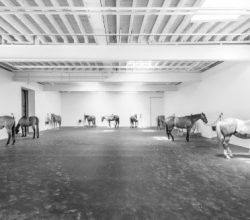
Although trained as a painter, Kounellis quickly made his way to working with found objects including burlap sacks, coal, smoke, shelving units, trolleys and coffee grounds. Most famously, he once tethered a dozen horses inside an art gallery, leading this writer to observe “As is true of so much of his work, it was both utterly beautiful and utterly strange”.  A review of his last show in Rome is here.

Image: Gavin Brown’s enterprise