The Easel

29th November 2016

Pipilotti Rist

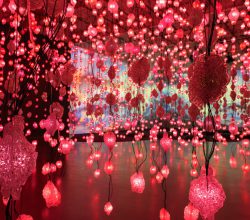
Rist started off making video backdrops for local bands in Vienna. Decades later she has an international reputation in video art and multimedia installations. Some critics struggle to adapt their usual critical vocabulary to video. For the above writer, whose stomping ground is 20th century music, it’s easy. As for Risi, there is no issue: “[V]ideo has a very painterly quality”. Samples of her work are here.
A Good Reason to Visit Baltimore

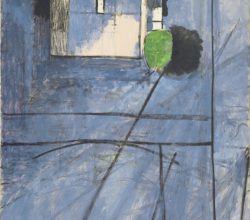
Richard Diebenkorn was a painter deeply conscious of his debt to tradition. No debt was greater than the one he owed Matisse who showed how colour could be used. As one critic noted “[Matisse] clashed his colours together like cymbals and the effect was like a lullaby”. Or, as Diebenkorn himself commented “It’s the restraint coupled with the sensuousness that’s so utterly exceptional.” More images are here.

The Democracy of Touches: A New Reading of Richard Pousette-Dart

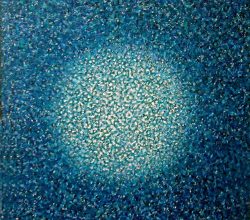
In the iconic 1950 Life photo of the abstract expressionists, one of that select group was Richard Pousette-Dart. He shared their views about art but, unusual for that group, preferred the quiet life. From early on, he produced diverse thoughtful works, reflecting a seemingly untroubled inner self.  This output had a common element – “complex light infused compositions” – but, to his commercial detriment, no signature style.

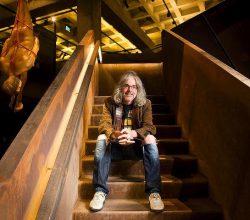
David Walsh of Mona: on art, sex and why (gallery) size matters

The acclaimed MONA, built by a mathematician / gambler / collector who knows “almost nothing about art”, continues on its unconventional way. In its latest exhibition four famous non-art world experts have each curated collections of works to explain why humans make art. Personally, Walsh rejects the view that art is a cultural phenomenon. His preferred explanation – “art is merely another method of sexual selection”.

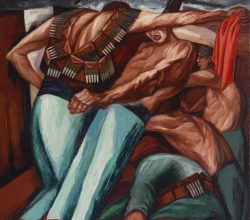
Paint the Revolution Mexican Modernism, 1910–1950

After a decade of civil conflict, Mexico’s newly elected government wanted local artists to create art that would unite the nation. The resultant movement was much broader than its star couple, Rivera and Kahlo. Mexico became, for a period, “the real crucible of Modernism” and a global focal point outside of war-shattered Europe. More images are here and short video (1.5 min) here.

Criticism in the Twilight

A reviewer vents his pessimism about the future of artistic criticism. Few institutions can afford to pay critics a steady income. And a more fragmented society means fewer big targets. But as the traditional channels of criticism shrink does this necessarily mean there is no interest in criticism? Perhaps the critic model needs updating – no longer the all-knowing seer, more the sherpa who spots what many others miss?

London’s design museum: an in-depth look at its architecture and exhibitions

Given that the Tate is in a former power station it may not surprise that London’s Design Museum has been making do in a former banana warehouse. Now has a new “upscale” home. Most reviews (some less than rapturous) focus on the building’s merits. Not all are pleased that it incorporates a “high-end residential” development. And as for design objects … some classics are here.

22nd November 2016

Elton John’s Radical Eye

Tate Modern admits it only began collecting photography seriously in 2009. Local celebrity Elton John is helping out by loaning them pieces from his collection. Many reviewers struggle to focus on the works rather than their owner. But, there is agreement that his is a collection of the highest quality – and the Tate show is too, borrowed though it may be. Images and a video interview with the collector (4 min) are here.

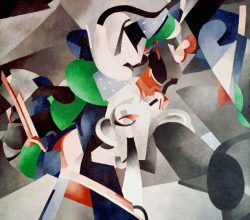
Monster Mash: MoMA’s Retrospective of the Shape Shifting Provocateur Francis Picabia is one of the Best Shows of the Year

The current Picabia show first opened in Zurich because of that city’s links with the Dada movement. Now in New York, the show is viewed somewhat differently through American eyes. Lesser emphasis on Picabia’s Dada links brings other aspects of his profoundly innovative output into focus. Like his habitual rule-breaking: “I would argue Picabia never quite painted a masterpiece … and suspect that he would take as a compliment.”

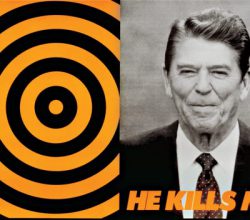
This Post-Election Pain Is Good, At Least for Art

Ripples from the election of Donald Trump are everywhere. Jerry Saltz responds with a call to action. “[T]he shift or clusterfuck under way may … return [professionalized artists] and all of us to our rightful outsider gypsy position — aristocratic bohemians with highly calibrated bullshit detectors. After all, why should art want to serve consensus? What is interesting, or exciting, or urgent about consensus? ”

‘Walhalla’: Anselm Kiefer, White Cube Bermondsey

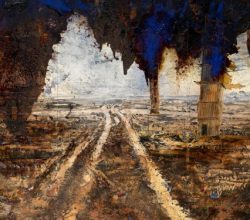
Among German post-war painters it is Kiefer who has won particular critical acclaim. His ever-present theme is the tragedy and hope of German history, tackled with a style that one critic described as “grinding earnestness”. His current show contains huge canvasses encrusted with the unconventional; “clay, ash, earth, lead, and fabric”. Important? – yes; challenging? – yes again.

Jean Tinguely: Machine Spectacle

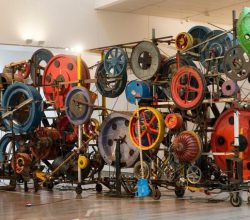
Tinguely said he couldn’t tell when a painting was finished. So he switched to making machine sculptures, their movement offering him “an endpoint”. He viewed his weird contraptions as fun that shouldn’t be in museums. Some he even designed to self-destruct. Now, they define his legacy. Those that have survived are treasured objects and mostly kept … in museums. An excellent video (7 min) is here.

Picasso Portraits at the National Portrait Gallery is an interesting but perverse and surprisingly limiting exhibition

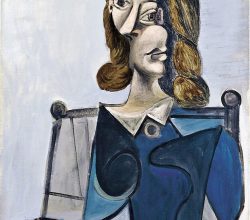
Who is not in awe of Picasso’s virtuosity? But the writer poses an interesting question. These portraits may be great paintings but are they great portraits in the tradition of Velazquez or Rembrandt? “It would be hard to claim psychological depth or exploration of character; Picasso was interested in subjecting his sitters, sometimes almost obliterating them, under the force of his pictorial design.”  More images are here.

What Makes Marina Abramovic’s Art So Extreme?

Marina Abramovic is a pioneer of performance art with a substantial reputation and an outlook on life that is, well, different. One reviewer of her “misconceived” memoir notes the need to tolerate “a certain amount of pomposity”. A colourful example of how her book can be viewed in the absence of such tolerance is here. A (serious) interview with the artist can be found, of all places, in Harvard Business Review.

Image: Wikimedia