The Easel

1st November 2016

Beyond Caravaggio review: a masterpiece of surprise

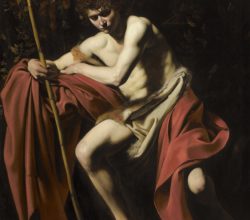
Caravaggio was immensely influential while alive but then promptly forgotten until the mid-1950’s. His innovations were substantial – closely observed real life detail, the interplay of light and dark, his dramatic tableaux, and more. But he had another quality important to the modern eye – “The realism of Caravaggio … is … neither logical nor scientific. It is an appetite for life.” An excellent video (3.5min) is here.
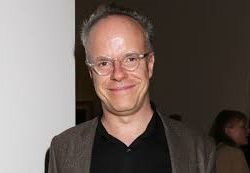
The Trick to It All: A Conversation with Photographer Henry Leutwyler

Photography, according to Leutwyler is “an art of free spirit”.  Famous for his portraiture, he also photographs objects with famous owners. “Every object talks. I photographed the first edition of Peter Pan that was owned by Michael [Jackson] … the musical genius of this kid that didn’t have a proper childhood recreated a childhood at Neverland. Disaster. Heavy, heavy, heavy load of history, every single object.”

‘Max Beckmann in New York’, a Belated but Full-Blown Homage to a German Modernist

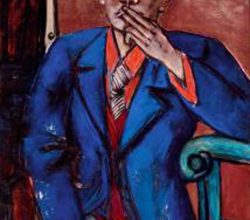
Traumatized by his military service in WW1, Beckmann used his art to show Europe’s military madness. His intense imagery brought renown as one of Weimar Germany’s greatest artists until Hitler’s regime deemed him a ‘degenerate’. Emigrating to the US after WW2 he found New York much to his taste, enjoyed a burst of creativity but died within a year of arrival. A useful background piece is here and more images here.

2016 Power 100

London based ArtReview has just released its Power 100 list of the art world’s powerful people. The rankings are based around who influences the art that gets seen, as judged by an international panel. Gallerists get the most mentions followed by artists, collectors and curators. No art advisers or art critics made the cut. ArtReview’s defence of the list is here and a critic’s review of the rankings is here. Make of it what you will!

Nick Moore writes on Robert Motherwell, “Abstract Expressionism” at the Bernard Jacobson Gallery

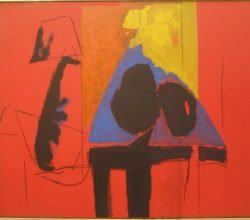
Among Abstract Expressionists, Motherwell was the odd man out. He had family money and a first rate education. His outlook was intellectual, “too French”. He felt no particular need to develop a signature style. Perhaps as a result, he is not always given his due as a great abstract painter. However, at a show in London his “versatility and breadth”, in painting and collage, is on full display.

Neo Rauch and the carnival of European art

Describing Rauch’s work invites a fruit salad of jargon. Surrealism and East German social realism are key influences and give his work an “unanchored strangeness”.  The reviewer of his first UK show approves, concluding that his work comes together into “a strangely convincing whole”. Rauch resists such analysis, commenting simply that his art is “a precisely-aimed reach into the immeasurable flow of things”.

Alan Gouk writes on Abstract Expressionism at the RA

More AbEx! The Royal Academy’s Abstract Expressionism show may be pulling in the crowds but there is still space for dissenting voices. Clyfford Still – “artistically somewhat inert, inexpressive”. Barnett Newman – “colossally over-rated”. Franz Kline – “simply a very bad painter”. Joan Mitchell – “a vapid work”. One can only wonder that if these artists are not worthy of attention, who is?

27th September 2016

Abstract Expressionism — the show of the year

“Outstanding, astounding” “unmissable” – the superlatives tumble out about the Abstract Expressionism show at the Royal Academy. Conceived at a black time in history – the Depression, war(s), the atom bomb, – the audacious emotional imagery was revolutionary. With a diverse group of European born and home grown artists New York quickly eclipsed Paris. Art was changed forever.

Carmen Herrera, 101-Year-Old Overnight Success, Gets Her Whitney Close-Up

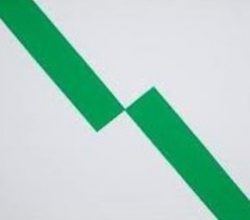
At age 101, it is astonishing that Herrera is still actively painting – and that she has received so little recognition. Exposure in post-war Paris to the work of Mondrian and Malevich led to her signature style – “a marriage of Minimalist and Op-Art sensibilities, invented before those movements were “a thing””. The verdict of one critic – a “ravishing” exhibition – seems to be a consensus view.

Image: Wikipedia

Serious Eye: Two New Books About Richard Bellamy

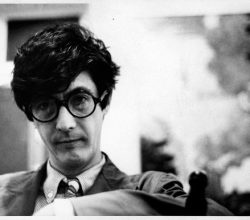
One measure of an art dealer’s prowess is the “talent for selecting the unlikely but strangely right work”. By this measure Dick Bellamy was, in 1960’s New York, a dealer without peer. His legendary Green Gallery helped launch many famous careers but ultimately folded due to Bellamy’s lack of interest in commercial matters. The gallery was, according to a fellow dealer “the great proving ground of the sixties.”

“The Spectacular Second Empire 1852-1870” opens at musée d’Orsay in Paris

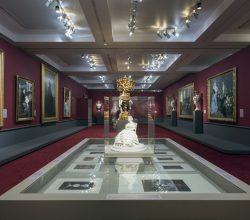
Napoleon III had mostly lived a life of aristocratic exile before becoming Emperor of France in 1851. His tastes lay with ornamentation and splendor, a lover of antiquities. However the modernizing economy was creating a prosperous urban middle class with a quite different outlook. Politically unpopular, Napoleon was gone within twenty years but left a legacy of artistic brilliance. Some images are in this video (1 min)

Open Secret

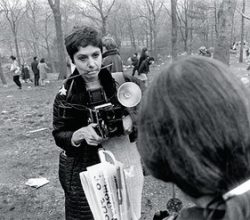
A new biography of the photographer Diane Arbus has been released after ten years of research. Some reviews seem to have a prurient interest in its revelations about her highly unusual private life. Do the new details illuminate her photography? At best, by loose analogy. “She was looking for the opposite … a seam that was designed to be hidden. [Arbus said] there are things that nobody would see unless I photographed them”.

The 20th century’s last art movement

Italy’s arte povera movement peaked around 1970 but has remained influential. It focused on making art – often sculpture – in a style that “follows and understands” its materials. This may reflect a particularly Italian sensibility. As one artist notes “Bernini had a great feeling for the nature of the material”. The first of a series of forthcoming London shows is reviewed here.

Auctioneer Simon de Pury: ‘Owning art puts you on a different level’

The memoir of “celebrity auctioneer” Simon De Pury offers some light reading. Described by the BBC as “the man with the golden gavel” he also revels in the descriptor “the Mick Jagger of art auctions”. On collecting art – “it is an addiction”. Reasons to sell – “debt, divorce and death”. The merits of art versus money – “[art] puts you on a different level”. He has now started an online art business that “aims to disrupt the market”.

Image: Artnet