The Easel

20th September 2016

Nicholas Serota: art’s modern champion

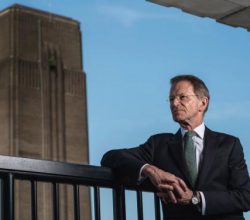
Nicholas Serota is “one of the world’s greatest museum directors”.  Probably no exaggeration. During his 28 years as director, Tate has become the world’s most visited modern art museum, has opened a major extension and established a strong network of regional galleries. Friendlier public attitudes toward contemporary art might be an even greater legacy. The fascinating back story of how it all happened is here.


Pure color: A curator’s new view of Helen Frankenthaler’s unprimed legacy

The 1960’s critic Clement Greenberg claimed modern art had finished contemplating nature. Henceforth, pure abstraction would be about colour. Frankenthaler, a friend of Greenberg’s, took this path and produced images with thin paint washes – sort of Jackson Pollock without evidence of the painter’s hand. But her career past 1970 was artistically uneventful. Pure abstraction, it turned out, was running out of puff.

From Tiananmen to THIS: The new world of Chinese photography

Contemporary photography emerged in 1980’s China with a politically charged documentary style. Tiananmen Square changed that. A new generation of artists has emerged that put greater emphasis on abstract and constructed images. What is unclear is whether overt official support for fine art photography involves a quid pro quo: leave out the “politics of the past.”

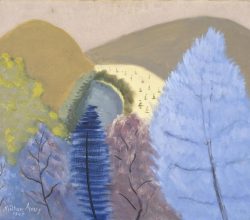
When Milton Avery would visit Vermont

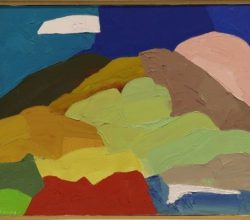
Milton Avery loved Matisse’s work. It inspired him to think of a painting as a flat field of colour, without depth. When he applied the idea in his landscapes he didn’t use Matisse’s pure colours but rather subtle “indeterminate hues”. Avery never moved to full abstraction but via his influence on younger artists – notably Mark Rothko – he played handmaiden to the more radical achievements of the next generation.

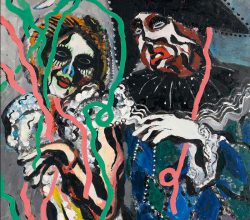
Saint Augustine, Napoleon, the Funny Guy: the many faces of Francis Picabia

The latest Dada centenary celebration is a major Picabia retrospective in Zurich. Picabia left a bewildering legacy. He adopted multiple alter egos and had a wildly diverse artistic output, all combined with a frivolous lifestyle. Duchamp characterized his life as a “kaleidoscopic series of art experiences”. Picabia’s own summary was more enigmatic – “I’ve stopped trusting anything save chance and nonsense”. Dada to a tee!

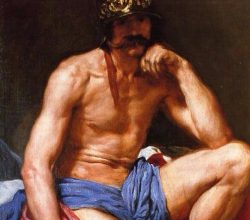
El Siglo De Oro / Gemaldegalerie, Berlin

Gold from the New World funded one of European art’s great chapters – Spain’s Golden Age. A show in Berlin demonstrates just how impressive the artists of this period were. Velázquez, Murillo and El Greco were stars but there were many more. After quibbling about the wall labels, the reviewer admits “The works, of course, speak, and, in many cases, scream for themselves.” A video of images is here.

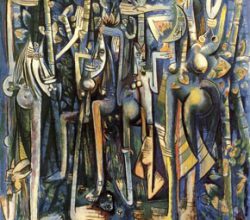
This large Tate Modern exhibition is cruel to Wifredo Lam

There is an ambivalence about the current London exhibition of Cuban painter Wifredo Lam. According to one critic we are unused to dealing with “cultural hybridity”. But the above writer is more direct – Lam never “attained exit velocity” from Picasso’s influence. “A small room of pictures by Lam might have made him look interesting; this large display ends up making him seem smaller”.

Image: Wikipedia

13th September 2016

Journeying Beyond Western Time in Contemporary Aboriginal Australian Art

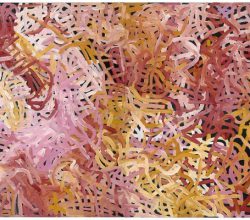
Ancient doesn’t necessarily mean primitive. Notwithstanding having the art world’s oldest lineage the critic Robert Hughes called Australian indigenous art “the last great art movement of the twentieth century”. A US show backs this up, containing works that “dazzle”. But behind this happy story lies a fraught relationship between indigenous peoples and mainstream Australia. Says one artist “We exist in Australia as a kind of non-people”.

Picasso, Manet, Degas and others’ rivalry revealed by Sebastian Smee

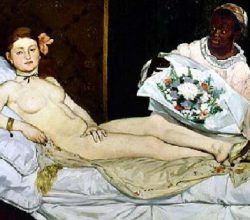
‘Frenemies’ can push artists to greater achievement. A highly praised study of four famous rivalries shows how competitive tensions benefited each party’s artistic development. Picasso resisted Matisse’s ideas about African design before brilliantly incorporating them in his own work. Having seen Picasso take that step, Matisse in turn realised Picasso was as an “electrifying innovator” whom he might learn from.

RAQIB SHAW with Allie Biswas

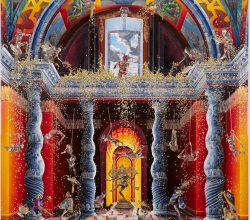
Shaw’s stratospheric prices can be a distraction. For some, he makes art for the rich. Other critics stay more focused on his distinctive art. He blends Old Masters scenes with Eastern themes, all in painstaking detail and with sumptuous materials (including inlaid crystals). “One has to go all the way, otherwise there’s no point.” Images (paired with the corresponding Old Master painting) are here.

On Writing and Criticism: An Interview with Jerry Saltz

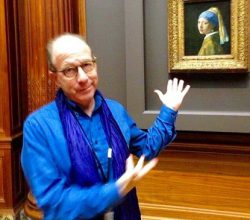
A refreshing blast from the inimitable critic. On art reviews: “you get to a word like “problematize” … What does this even mean?” Wall labels: “Just read the last two sentences. That’s usually where it tells you what you need to know.” Art critics: “I am lucky. I was a long-distance truck driver into my 40s” and: “I think we lost three generations of critics to academicism, writers made skittish about their own opinions”.

NEON: The Charged Line, Grundy Art Gallery, Blackpool

Neon lights always seem ambiguous – are they modern or retro? Eye-catching and versatile, they dominated signage in the first half of the twentieth century before cheaper alternatives emerged. And a long line of artists have worked with them. So what is the appeal? “[W]e can’t help but be drawn to it,” the curator of this show muses. “Perhaps we are all moths at heart.” More images are here.

The Weight of the World – Etel Adnan at Serpentine Galleries

Etal Adnan came to painting after a successful writing career – reason enough to be called a polymath. Her colourful semi abstract landscapes don’t conform to any particular style. One critic describes her work as “not just a colorist’s paintings, they are visual poems, each color chosen as carefully as a word in a love letter to nature”. This is her first survey show in a UK public gallery. A video (5 min) with images is here.

Image: Serpentine Galleries

Why a growing number of museum veterans are crossing over to the commercial sector

More art experts are moving between (publicly funded) museums and commercial roles. Salary differentials are a factor as well as the challenge of putting curatorial expertise to new uses. One expert is relaxed – “no-one cares about the boundaries any more”. But sharp edged commercial roles are not for everyone. Says one “I wasn’t one of those people who can look at art principally in terms of market value”.