The Easel

25th August 2015

The Tortured Genius of Yves Saint Laurent

The concept of high fashion as “art” has been reinforced in several recent shows, including Sonia Delaunay’s “wearable paintings” in her Tate retrospective and the Alexander McQueen blockbuster at the Victoria and Albert. Now comes an Yves Saint Laurent retrospective, described by one art critic as “the best fashion exhibition I have ever seen”. The linked essay covers the designer’s life, some key images are here and excellent video clips are here.

Image: Wikipedia
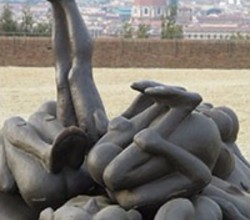
Antony Gormley in Florence: torment and triumph of the body

Kim Kardashian was married there but, apart from that, Florence’s ancient Forte Belvedere also hosts sculpture exhibitions. This summer’s invitation went to the British artist Antony Gormley who has responded with a “brilliant” show of human forms – “a rich and worthy contribution to the narrative of western sculpture”. An excellent video (2 min) is here.

From designing Seventeen mag to defining conceptual art: Sol LeWitt

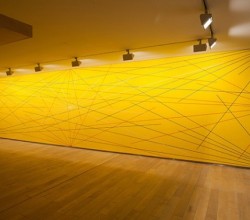
There may be a scholarly debate over whether LeWitt’s was a Minimalist or a Conceptualist but few object to his art being called austere. He was not the least interested in painterliness; it was all about the abstract idea. An exhibition of his wall drawings, now on display in Spain, was created by technicians and a mathematician following his written instructions. The result … “you couldn’t fail to be impressed”.

‘Dismaland’: A Theme Park by Banksy

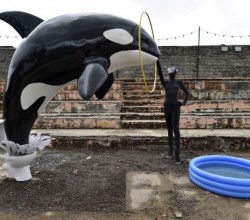
A derelict swimming pool park at Weston-super-Mare, a coastal town in Somerset, has a new tenant – the anonymous graffiti artist Banksy. He has created Dismaland, a “bemusement park” that is “the latest addition to our chronic leisure surplus”.  It shows artworks from 58 local and international artists and will be open until late September.  Disney have apparently declined to comment. Multiple images are here.

Selfie with ‘Sunflowers’

A perennial debate in art is whether colour or line is most important. Many argue that Van Gogh’s greatness derives from his audacious use of colour. Recent books on his life, and his letters to his brother Theo show, according to the reviewer, that Van Gogh’s greatness lies elsewhere – in his “heroism” in the face of mental instability and “his intense desire to make painting ‘a consolatory art for distressed hearts’”.

Beltracchi: The Art of The Forgery

Walter Beltracchi did “original fakes”, newly imagined works in the style of famous European artists. At his trial in 2011, he pleaded guilty to just 14 such works but claims that another 300 exist. One victim was the comedian Steve Martin. Another, interviewed in this documentary, sounds wistful: “The lady of the house notes that [a Magritte] is “not as nice” as the phony …done by Beltracchi that once occupied the wall.”

Roy Lichtenstein and the Sea in East Hampton

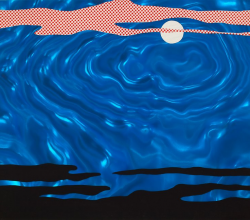
Lichtenstein worked for years within the conventional fine art tradition before his jackpot success in 1961 with comic strip based paintings. He quite quickly moved onto other things, including applying his pop art style to landscapes. These works don’t seem to carry the same charge as his comic-based works, but his intent was the same – render an image as an industrial artifact.

19th August 2015

Vermeer in Manhattan

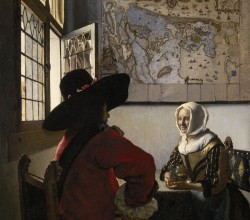
Vermeer’s interiors of unremarkable domesticity include little details that cause the viewer to speculate about what’s really going on. Therein lies the genius of the Dutch master and, for the person at the centre of this little essay, it supplies a refuge from a painful divorce.

‘Nobody Has Endless Strength’: Ai Weiwei’s New Life in Europe

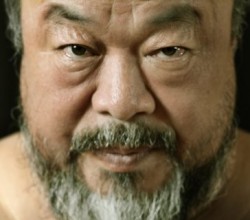
Two weeks after regaining his passport, Ai Weiwei left China for Berlin, his return date uncertain. Some wonder if his fame comes from his art or just his political activism. Jed Perl described him as “a man with a quick mind, indomitable energy, and no particular aptitude for art.” Perhaps Ai Weiwei is wondering if activism has been his muse: “[A]s an artist, I have a big problem with this situation… What should I do now?”

Richard Prince, Instagram, and Authorship in a Digital World

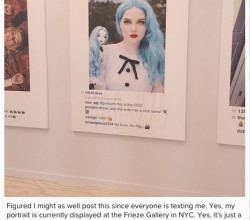
“Richard Prince is a jerk and he sucks”. This headline captures some of the uproar over Richard Prince’s exhibition of prints that reproduce images taken from Instagram. Some critics dispute its “artiness” while others are upset about copyright. But, really, it’s about what authorship means in the digital world. “What rights do you have to use the images that come at you in a flood you cannot escape?”

‘He loved weightlifting and buying jewels’: Andy Warhol’s friends reveal all

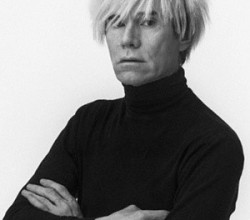
A new BBC documentary claims that, away from the cameras, Andy Warhol was a churchgoer, went to the gym and authored six books.” Warhol, the man who turned the everyday of American life into art – dollar bills, soup cans, Brillo-pad boxes – pulled off the same trick in reverse, making an artificial or at least contrived version of “Andy Warhol” part of everyone’s scenery”.

Hands Over Head: An Interview with Jack Pierson

After a not-too-subtle put down of the interviewer, this interview settles into a nice profile of a working artist. Pierson is a prominent American artist and is currently exhibiting work done while living on a Florida island. “I guess as artists, we want to indulge in the act of making …. For me it all starts with my hands instead of my head”. Multiple images are here.

What Dan Flavin’s First Light Pieces Tell Us About His Devotional Art

Dan Flavin greatly admired the Russian artist Tatlin and, like all the serious minded Minimalists, copied Tatlin’s use of common materials. Flavin’s material of choice is the “anonymous and inglorious” florescent light. For him it has no symbolism and his sculptures work by impacting the space around them. “They are constructed concentrations celebrating barren rooms. They bring a limited light.”

Review: High’s “This is Now” explores Alex Katz conundrum through lens of landscape

Alex Katz is, without doubt, a celebrated American artist so it’s strange that he hasn’t been able to shake off the naysayers. Robert Hughes was one critic not completely sold – “To doubt the ultimate value of Katz might be construed as a vote against sunny lawns…” More recently the critic Mark Hudson also seems in two minds: “Is his work deceptively facile, or is it simply facile?”  Multiple images are here.