The Easel

13th October 2026

Four Art Critics Walk Into a Bar… and Debate the Met’s Pollock-Krasner Retrospective

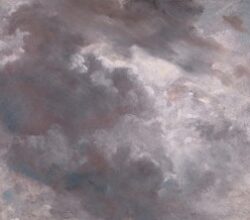
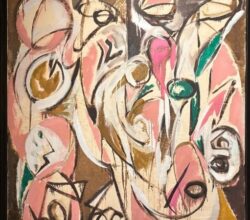
Fascinating. The many agendas surrounding these artists – marriage, relative abilities, self-sacrifice – give this show sizzle. Krasner’s work stalled in the 1940’s so she focused on promoting Pollock. His works in that period dominate. After the early 1950’s, he hit a dry patch. Following his death, Krasner’s works show a “magnificent grace”, and she emerges from this show much enhanced. One critic observes “without Krasner, we don’t have Pollock. [And yet] the one thing they do together [a collage] is terrible”
Robert Ryman: The Real Thing, Barbican review- painting at its most joyously intelligent

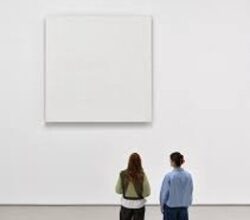
It’s hard to get a feel for Ryman’s singular white paintings because reproductions usually miss their subtleties. Yet the subtleties are there, such as “a glossy, almost perfect white haunted by a memory of green”. Variation in the density and texture of the paint and the framing materials were also Ryman specialties. For one critic, such minute effects are “dry and boring”. Ryman explained that he used white because it helped “make things visible”. Don’t try to analyse, he advised, “the essence of all painting is feeling”.

Timeless Tintoretto review – the Italian artist who brought Heaven down to Earth

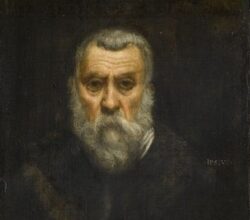
Even in his day, Tintoretto was revered. A contemporary called him “the most formidable mind painting has ever known.” Venice born and bred he trained with Titian. Whereas Titian painted with “stately grace”, Tintoretto wanted drama – hasty brushstrokes, “bold” colours, contorted bodies, dramatic light effects. These attributes proved influential among later artists. His brushstrokes “energise the entire surface in ways that Joan Mitchell or Jackson Pollock would certainly recognise.”

The bravest modern artist — he dares to paint Jesus

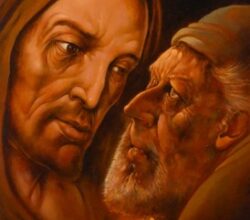
Described as a “brutalist-realist“, Howson’s early work included Glasgow “bovver boys” with bulging neck muscles. That subject matter reflected the social tensions of post-Thatcher Britain. Following a turn toward religion, he now frequently paints “uncool” images of Jesus. The writer admits the exhibition is “tangibly discomforting” with images that make you feel “you are being splattered with Jesus’s sweat”. So, what’s the attraction? “Its strikingly original …boy, can he draw”.

Game of chance

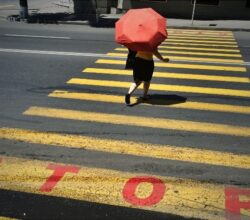
A lament. Magnum photo agency built its reputation with street photography that captured moments of stillness – “micro dramas”- in the modern city. Such images had a clear relationship with real events. Now, though, scrolling through constantly renewing images is a new way of looking.  Does the still image still exert any authority? Is photographer skill or technology now the critical factor? Can Magnum still rely on us resisting “alternative worlds that are seductive, overwhelming, uncanny”?

The Art World’s Obsession With Apples, Revolutionized by Paul Cézanne

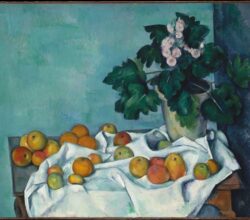
Cezanne revered apples – he made nearly 300 paintings of them. While living in Paris he captured their irregular details but on moving to Provence he rendered them more spherical. Sometimes taking 100 sessions to finish a still life, his apples began to look like “colours enclosed by a line”. One writer suggests his real objective was to represent “presence, not illusion. [His apples] are so weighted with pictorial decision … they seem twice as solid as real fruit”.

6th October 2026

Lucie Rie and Hans Coper, two potters united by a shared ambition

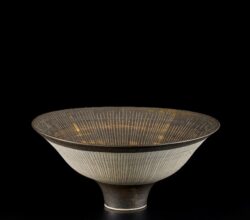
Bernard Leach initially dominated postwar British ceramics with rustic brown pots. Rie, an emigre from Germany, offered a refined, modernist alternative. When Hans Coper turned up on Rie’s doorstep looking for a job, one of ceramics great partnerships was formed. They were in some ways opposites – she used colourful glazes and precise designs while he was “a sculptor at heart” and used a stark, restricted palette. Together, “they wanted to make work that would require no explication, no context.” Images are here.

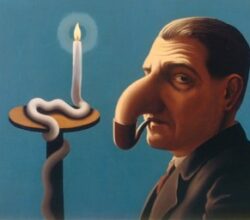
Magritte: This Is Still Not a Pipe review – brilliance and trash from the surrealist who sent up Freud

Magritte was no ordinary modernist, nor for that matter, an ordinary surrealist. Uninterested in surrealism’s dream culture (think Dali) he was attracted to the slippery connection between words and images. His deadpan, matter-of-fact style only made his paintings more confounding – most famously his painting of a pipe that declares “this is not a pipe”. Sometimes, to annoy people, he would “paint like a clumsy moron. Magritte was too intelligent to respect anything, least of all art.”

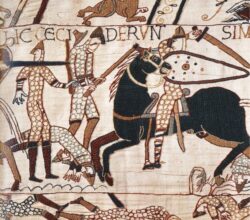
The Bayeux Tapestry

Another take on the Bayeaux Tapestry and the surprises it offers modern (English) eyes. So often reproduced in school history books it reveals itself, when seen in the flesh, to be an artwork, “a monster of outrageous medieval inventiveness”. It is also unexpectedly modern. Needle and thread when used skilfully, yields surprising characterisations – “of happiness to subservience to anger. Nowhere do we see standardisation or lazy repetition. [An artwork] that feels as if it has finally and belatedly come home.”

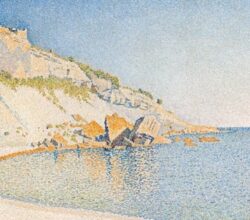
How the French Riviera shaped modern art

World War Two “killed” the Riviera as a state of mind, but before that it was for many an artistic Arcadia. Lured south to escape “the authority of Paris”, artists responded to the bright sunny climate with startling new art. Matisse and Cezanne best illustrate this, painting colours not from life but from their minds – “pink flesh, dark blue sea, light blue sky”. An exhibition of these works re-creates that mindset … an intoxicating story of painting as pure visual joy”. Images are here.

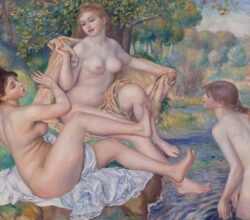
No, Renoir isn’t kitsch nonsense. See the National Gallery’s five-star smash

Renoir has acquired a few haters, based on syrupy late career works and his porn-y nudes. This reviewer pushes back. His earlier work – his “glory years” – richly described working-class Montmartre and pushed the boundaries of depicting transient light. Impressively, some of his most joyous renditions of life’s fleeting pleasures were completed after being drafted to fight in the Franco-Prussian war. Says one critic, Renoir was “an artistic innovator and painter of the first rank”.

Cloud Spotting with John Constable and Alfred Stieglitz

In 1821 Constable did something unusual – he made studies of the sunset, with the land below treated as a secondary feature. He made many such “skying” works and thought the sky in a landscape painting was “the standard of scale and the chief organ of sentiment”.  Photography promised an ability to capture the sky with even greater immediacy, but the technology took a long time to meet that challenge. Only with Stieglitz’s cloud studies in the 1920’s did photography start to capture “the ethereal realm above our heads”.