The Easel

8th September 2026

‘Chest-thumping machismo’: The Bayeux Tapestry reveals the bloody, bawdy truth about the Middle Ages

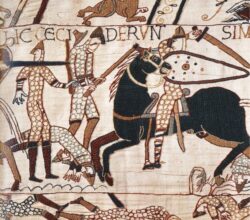
Although the Bayeaux Tapestry can be viewed in France quite easily, its year-long visit to London is still a big deal. It offers a vision of life in 11th century England and narrates the Battle of Hastings where the Normans changed Britain forever. One writer observes that the tapestry is “war propaganda”, vividly describing the brutality and machismo of battle. That substantial parts of the work are still not understood simply adds to its medieval charisma. Gushes one writer, “the most famous textile in the world”.
The Lucas Museum Doesn’t Have a Narrative

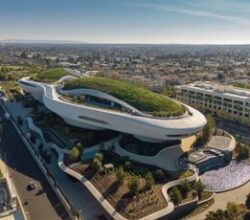
The Lucas Museum of Narrative Art has taken 17 years to complete and required “fuck you” amounts of money. It displays all forms of art that tell a story – paintings through to comics, street art, posters and film. It’s a mash-up of high and low culture, something Lucas proudly calls “a temple to the people’s art”. But where is the explanation for why these objects belong together? This lack of contextualisation is “egregious … the Museum of Narrative Art lacks any kind of narrative. [It is] a vanity project”.

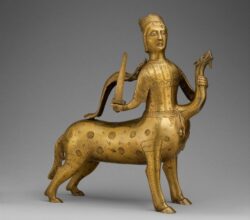
“Creatures of Myth and Imagination: Europe and the Americas” at The Met Cloisters

Up to about 1500CE, European artists imagined mythical creatures that combine features of animals and humans. Such imaginings were an attempt to explain the known world and express spiritual visions. In the Americas, completely independently, hybrid creatures were similarly being imagined that linked the human and the divine. These are beautiful and provocative objects, “a sampler of greater ventures hopefully to come.” Images are here.

What Hieronymus Bosch’s Fantastical Triptychs Reveal About the Artist’s Worldview

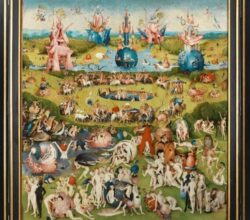
To modern eyes, Bosch’s Garden of Earthly Delights is “bizarre”. Living in a regional Netherlandish town, he had a flourishing reputation, yet by the time he was commissioned to paint The Garden of Earthly Delights, his outlook was darkening. He expected people to take responsibility for their actions but the frolicking figures in this work betray pessimism about this happening. The many owls looking on carry his stern message that people “should behave” and there would be hell to pay if they didn’t.

“Avery, Gottlieb & Rothko: By the Sea” Shows How Three Midcentury Greats Were Shaped by the Shore and One Another

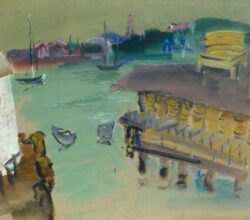
An American art history tale. Milton Avery was a pioneer of colour field painting – broad areas of flat colour. His younger friends, Rothko and Gottlieb were producing figurative work. The trio started summering together in the 1930’s where Avery encouraged them “to eliminate and simplify, leaving apparently nothing but colour and pattern”. Rothko was most influenced by this advice, ending up with his stacked rectangular fields of colour. Avery also evolved but never entirely let go of painting the sea.

Sophie Calle’s ‘Overshare’ Exhibition Takes Visitors on a Journey Through the Intimate

Calle anticipated social media by decades. She is fascinated by what we keep private versus the sometimes constructed personas we choose to make public. This has led Calle into projects like photographing occupied hotel rooms or following and photographing people as they move around their city. Despite her work being widely acclaimed she has never entirely dodged accusations of voyeurism. Claims she, it’s all about “the urge to see, to know, and to be known”.

1st September 2026

A Tribute to Yayoi Kusama

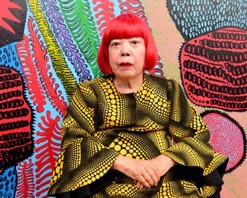
After a traumatic childhood, Kusama found that art helped with her mental health issues. Moving to the US in 1957, she created her famous art forms – phallic-shaped soft sculptures, infinity mirror rooms, pumpkin sculptures and fields of dots. Returning to Japan in 1973 she was seen as an embarrassment, but a later career revival brought huge fame. Her themes of infinity and self-obliteration reflected a desire to be “dissolved into the pattern.” Said she, “I am just another dot in the world.” Images are here.

Mary Heilmann, Who Revivified Abstract Painting, Dies at 86

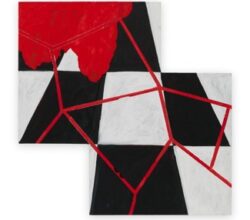
After training in California and a brief foray into ceramics, Heilmann moved to New York intent on “making it big” in sculpture. She didn’t, and in 1969 took up the supposedly dying medium of painting. Her “proudly unpolished” abstractions poked fun at the serious geometries of minimalism while radiating a “joyful humanity”. She continued to “uncork strange delights” until institutional recognition finally arrived in her late-60s.  Heilmann had “one of the defining art practices of her era”.

Often Overlooked, Tudor Art Richly Reflected a Turbulent Century of Growth and Change

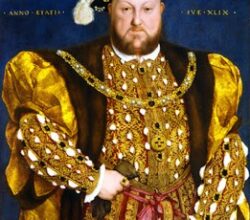
We mostly associate the Tudor dynasty with its superstars, Henry VIII and Elizabeth I. Yet beyond their famous portraits there is a bigger art story. Vision was thought the most important of the human senses so art was used to shape political narratives. Henry VII used classical architecture to promote Protestant ideas while other monarchs supported artforms such as tapestry. Far from being a dynasty “barren of art”, the Tudors all used it to establish “courtly magnificence” and their own legitimacy.

How Japan Turned Department Stores Into Dreamworlds

Tokyo’s department stores are grand institutions, monuments to “beauty and abundance”. It turns out that they have also been agents for cultural change. Part of this was through their early adoption of  20th century technologies like lifts and lighting. More important was their use of posters for advertising. Lithography facilitated inventive poster designs and made posters hugely popular, an “art world sensation”. Essentially, they were addressing “a difficult question: what did modern life look like?”

In Sioux City, Disparate Visions of the American West Converge

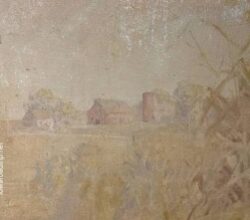
Before he painted his iconic “American Gothic” in 1930, Wood did a large mural of an autumnal Midwest corn field. Once regarded as merely an “artifact”, a restoration reveals it is a major work that depicts rural abundance. It marked Wood’s growing interest in Regionalism, an art movement focused on realist agricultural landscapes. Nowadays, Regionalist works anchor more contemporary art that addresses the “weighty emotions” rural Americans carry as they pursue “a successful modern life “.