The Easel

5th May 2026

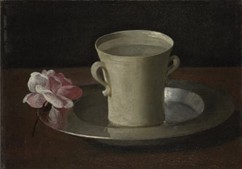
Spanish Baroque Painter Zurbarán: Essential Meditative Moments at the National Gallery

Zurbarán painted when Spain was militantly religious, so many of his works went to religious orders in and around prosperous Seville. Often painted against nearly black backgrounds, his images are austere yet compellingly real, full of drama, emotion and beauty. The way he conjures up form and volume brings his figures to life while his still lifes mesmerise with their accuracy and the way they present the spectacle of life. Says one critic “Oh my … in painting after painting we encounter genius”.
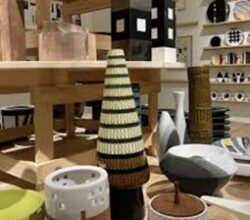
Ettore Sottsass: Italy’s king of anti-design

The Bauhaus dictum that ‘form follows function’ was de-throned in 1981 by the Memphis Design group. It’s co-founder, Sottsass, had used his architecture training to produce designs in ceramics, furniture and then (with Olivetti) typewriters. In each area he pursued the idea that design should not just be functional but also speak to human emotions. That meant radical designs, bright colours and inexpensive materials. With the iconoclastic Memphis, he “rewrote the language of industrial design”.

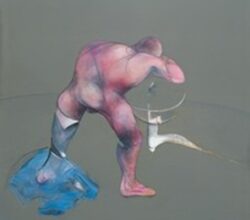
Francis Bacon: Reinventing realism

A backgrounder on three late Bacon paintings. Toward the end of his life Bacon lived for a decade in Paris finding its atmosphere “lighter” than London. That resonated with an awareness as he aged that “nine-tenths of everything is inessential.“ At the same time he was trying to simplify his art while still capturing the grandeur of form in Michelangelo’s nudes. Most of all, Bacon sought the same intensity he saw in Ingres’ portraits, “to combine beauty with that same level of urgency.”

Art: my part in its downfall

A mea culpa from an art dealer turned art critic. As a twenty-something in optimistic London, the writer was a “faithful adherent” of contemporary art and started a for-profit gallery that focused on “peripheral” Left politics. Over a decade or more, art world discourse started to emphasis identity and “wokeness” and he slowly fell out of step. Now a critic, he thinks art is in “catastrophic decline”. Somewhere in all of this is a sense of his regret, but about what? Perhaps it is that too much political art forgets to be artistic.

The Bard Graduate Center Mounts the First U.S. Exhibition of Viollet-le-Duc’s Expansive Drawing Practice

The 2019 fire at Notre Dame cathedral drew attention to Viollet-le-Duc, the architect responsible for its 1864 restoration. Praised for rescuing national treasures such as the cathedral and the medieval town of Carcassonne, a later generation accused him of “defiguring” those same structures. Wanting to re-create the “halcyon past”, his buildings were what one writer calls “exercises in inauthenticity”. Ironically, his original drawings assisted in Notre Dame’s restoration including his controversial spire.

Unfinished magic

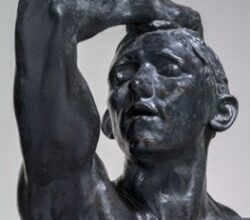
A show comparing the sculptures of Michelangelo and Rodin is, says one writer, a “conversation across the centuries.”. Michelangelo wanted to show both anatomy and how it was animated by the human spirit. Rodin concurred and inspired by Michelangelo, discarded the academic style of his day in favour of “fleshy naturalism”.  That included leaving parts of a sculpture incomplete, conveying a sense that the work was imperfect and “in flux”, qualities that are catnip for twentieth century viewers.

28th April 2026

Marcel Duchamp at MoMA: Five Revelations From the Artist’s First North American Survey in Over 50 Years

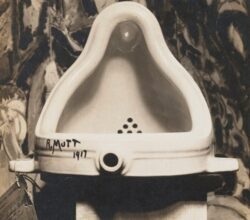
Duchamp is elusive. He lived life, says a writer, “on the cloud of his own airy wit”. Yet he was serious about art, proposing that the idea behind a work can be separate from the work itself. That idea has proved immensely influential, liberating artists to go off in all directions. It is a foundational argument to “dissolve the boundaries between high and low culture.” Further, it foreshadows a “techno-imagination”, images that are constructed to encompass machines and their increasingly central role in human life.

A Landmark Calder Exhibition with Over 300 of His Revolutionary Works Goes on View in Paris

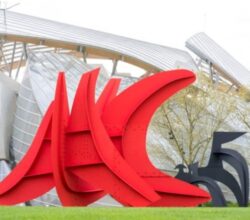
A huge Calder retrospective in Paris marks the 100th anniversary of his arrival there. Mobile sculptures are represented in such numbers as to remind viewers they were a “graceful leap in sculptural syntax”. Sculpture, once characterised by “volume and mass”, could also be dainty and not in a fixed position. Movement introduced time in a work, allowing Calder’s mobiles to” become a fluid part of their own environment.”

Brassaï – the secret signs of Paris

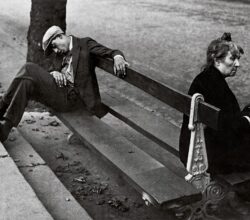
Brassaï got serious about photography around 1930 and just three years later published Paris by night. It established those quintessential Parisien motifs – lamplit cobblestone streets, alleyways, the metro. His even more famous Secret Paris of the 30’s, his “photographic zenith”, appeared in 1976 and remains a key example of “humanist photography”. What gives these images their ageless magic? Says Brassaï’s nephew, they “do not seek to document an environment, but to extract a latent truth from it”. Images are here.

Zumthor earns his L.A. stripes

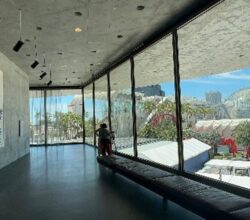
The new LACMA building was once called “suicide by architecture”. Now, after 20 years of work – and $724m – it is open. Despite fatigue from those years of controversy, reactions are unexpectedly positive. Yes, the concretework is imperfect. Bold artworks look great but smaller works can seem overwhelmed. Nonetheless, it is a fresh approach to the relationship between architecture and the display of artwork. “I can’t think of another museum building that operates quite this way.”

Sacred Parallelogram

Two biographies detail why art history records so few female painters. Élisabeth Vigée Le Brun and Maria Cosway, born in the mid eighteenth century, were both regarded as child prodigies. Access to the art world depended on family connections and money. Training opportunities were limited. Marriage was perilous. Cosway’s husband jealously prevented her from selling her work. Le Brun’s husband was more supportive – so he could gamble away the proceeds. Any rational woman would surely just give up.

Hammershøi: The Eye That Listens

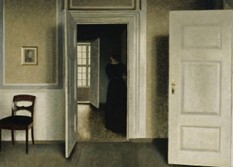
Hammershøi was taciturn, and don’t his paintings reflect it! Most were painted inside his Copenhagen apartment, showing sparsely furnished rooms, open doors, the occasional figure (often his wife) with her back turned, all painted in “dour colours” and conveying “emotional weight”. One writer likens them to Vermeer but with “none of the narrative drive”. Hammershøi did a few landscapes of the Danish countryside. In some the sun breaks through but, like his interiors, there isn’t much warmth.

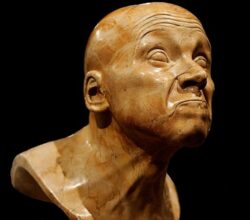
Franz Xaver Messerschmidt and His Bizarre Character Heads

For someone relatively unknown the Viennese late baroque artist Franz Messerschmidt gets lots of exhibitions. The reason it seems is his perplexing series of 60 or so “character head” sculptures. Done in late career, they are highly detailed male faces showing various extreme emotions. Messerschmidt kept them for himself. Were they a reflection of his mental ill-health or just the Enlightenment’s fascination with faces? Says one critic “a lost soul of the European Enlightenment.” A detailed essay is here.