The Easel

22nd March 2022

First major Donatello exhibition in nearly 40 years to open in Florence

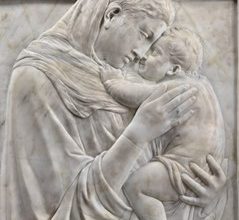
Donatello, says the curator of a huge show in Florence, was “the greatest artist of all time.” Wow! He revolutionized sculpture by reviving the anatomical realism of the ancient Greeks. His bronze sculpture of David, an iconic accomplishment of the Renaissance, perfectly expressed the humanist view that the human form is inherently beautiful. Donatello’s sculptural vision influenced a later revolution in Renaissance painting and “reigned supreme until the arrival of Caravaggio”.
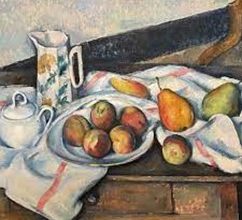
200 Priceless Paintings That Belong to Russia Are Stranded in Paris. Will France Give Them Back?

The priceless Morozov collection of modernist art, usually housed in Moscow, is currently on loan in Paris and due for return. How? All road and air links into Russia are cut. Seizure, as suggested in some French media, is “absurd” although, with emotions running high over Ukraine, who knows? With various art collaborations being cancelled, a Russian-born curator observes “a ban on loans and exhibitions will firmly close the door to Russian culture which will be very difficult to open again.”

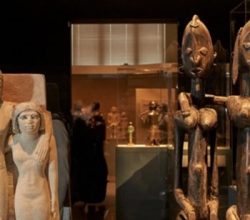
Egypt & Africa at The Met

An exhibition of African art and older Egyptian art bristles with tensions. Were Egyptian culture and much later sub-Saharan African cultures part of one unified civilisation? Should colonial plunder be restituted? No wonder the critics disagree wildly. The show “fails” on visual and historical terms, says one. Another describes it as a group of “displaced masterpieces”. A third says “beautiful”. There is a consensus of sorts, though, that art from sub-Saharan Africa has “head-turning, eye-locking beauty”.

Artist Gerhard Richter at 90

Richter’s storied career is marked by frequent stylistic “disruptions” – abstractions sometimes, but then realist images or landscapes. One reviewer describes his birthday show in Berlin as “tough going”, perhaps not surprising given Richter’s view that “pictures that are interpretable and that contain meaning are bad pictures.” His biographer claims, “Richter rescued painting in the 21st century”. The linked piece is biographical; a good survey of his art is here.

“Picasso: Painting the Blue Period”

Apparently there is more to know about Picasso! From 1900, he was deciding his career direction and the Blue Period works show these deliberations. A nude seems to reflect Rodin. His Blue Room is linked to Degas and Toulouse-Lautrec. Portrayals of women in poverty owe something to Spanish religious works, Mary Magdalene figures “trying to reach out past suffering and toward redemption.” By 1904, Picasso had come to peace with these torments and moved on.

Signs and meaning in the work of Robert Indiana

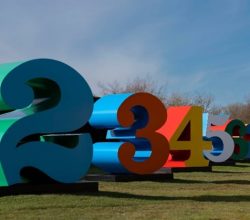
Indiana’s L_O_V_E sculpture is so ubiquitous that it draws attention away from his other, more complex works. During childhood, his family travelled constantly, leaving him with a love of numbers and signage. Later, in New York he used scavenged wooden beams to make pole sculptures that “explored the busted flush of the American dream”. These more personal pieces provide unexpected depth of meaning to Indiana’s “often exquisitely beautiful works”. More images are here.

15th March 2022

Postwar Modern review: That rare thing in a contemporary art gallery – a genuinely polemical exhibition

Conventional wisdom says that postwar Britain was grim and its art “provincial”. Is that accurate? “Proto-pop art” had emerged during the 1950’s, well ahead of Warhol. In popular culture, The Beatles and “swinging London” were about to sweep the world. Everyone knows Bacon and Hockney but in those decades, even lesser-known artists showed a deep radicalism. It was a time “just before our own, which has remained for most of us substantially unknown”.

Russia’s Red-Hot Temple of Contemporary Art, and Its Jet-Setting Cofounder, Are Losing Major Exhibitions

The war in Ukraine has impacted all manner of interactions with Russia. While art is hardly at the top of that list, Moscow’s contemporary art institutions that link to the global art market have also been affected. This is something of a context piece about the current uncertainty and how institutions and individuals are re-positioning themselves. Like the conflict itself, there are no obvious conclusions.

Renaissance radical: Carlo Crivelli – Shadows on the Sky

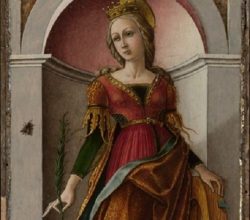
What is it with Crivelli and cucumbers? While Renaissance artists embraced naturalism, Crivelli merged it with Gothic ornamentation and added copious visual trickery like perspective and trompe l’oeil. His over-sized flies, fruit – and cucumbers – are so unconventional as to seem “anti-serious”. However, the curator argues that Crivelli is more than a Renaissance footnote. The artifice in these works has a surrealist touch and poses a very contemporary question – “what do you know, really?

Agents of Malaise

Sustained criticism of museums has led to a loss of “cultural authority”. The causes of discontent include gender imbalances and the holding of artworks of dubious provenance. Museums are also criticized for “artwashing” – conspicuous patronage intended to enhance a donor’s public image. Perhaps aesthetics has lost its primacy and we are now in a time “when art is valued for its social utility” Is the high number of vacant museum directorships in the US a product of this role uncertainty?

A Century of the Artist’s Studio: 1920-2020 review – congealing palettes, fading light and magic

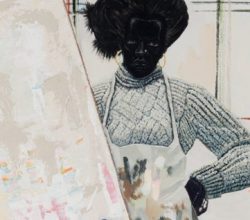
Artists have, for centuries, used their studios as subject matter. Traditionally regarded as private spaces, they hold our interest as places of artistic “alchemy”. Since the advent of superstar artists – think Warhol and his Factory – studios have a second life as places of performance. One critic is less than enthusiastic – “some people are just desperate to see how the sausage gets made”. Not this writer – the show “teems with revelations … a history of art by other means”.

Against De-Materialization: Tom Wolfe in the Age of NFTs

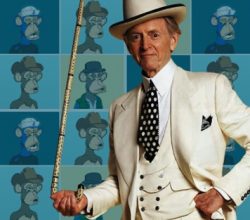
Wolfe, in his famous 1974 satire The Painted Word, argued that the physicality of a modern artwork mattered less than the “abstract theory” behind it. He also argued that collectors sought social kudos from their art purchases. NFT’s validate both of Wolfe’s arguments. “It is the successfully completed business deal, which has nothing to do with aesthetics as traditionally conceived, that validates the NFT as an artwork. The pleasure of ownership is now an aesthetic experience.”

Mondrians and Madeleines, part deux

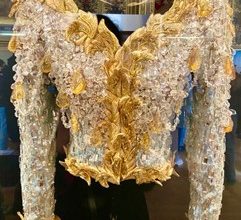
A frolic across Paris museums, looking at the influence of modern art on the designer Yves Saint Laurent. Picasso was a major influence but there were many others – van Gogh, Bonnard, Matisse, various pop artists. Were his designs just copies of their ideas? For Saint Laurent, these were not copies but “homages”, reflecting that “composition and construction [are] fundamental practices shared by art and fashion”.