The Easel

8th March 2022

Why “The Ballad of Sexual Dependency” endures in the twenty first century

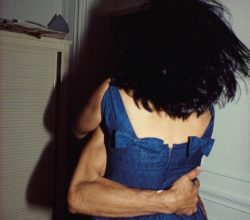
Goldin’s Ballad was the seminal photobook of the 1980’s. Talking about it she sometimes seems to fall into reverie. “I needed to get away. [I wanted] a record of my life … what things really looked like and felt like and smelled like. It’s commonly said that this book is about “marginalized” people. We were never marginalized. We were the world. We were our own world … There was an attitude towards life that doesn’t exist anymore, everything’s been so cleaned up.”
Are bans against Russian arts targeting the right people?

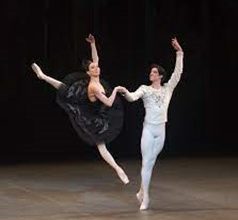
The Ukraine conflict has led to boycotts, cancellations and resignations across the cultural capitals of Europe. Such actions in art are far less potent than they are in finance or sport. Are they worth it? While clearly a legitimate expression of opposition to war, these actions impact all Russian artists, including those who are explicitly anti-war. Says one musician “we must not judge people based on their passports.” Responds another “being a musician does not free you from taking responsibility”.

Renoir. Rococo revival

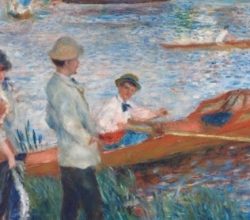
Impressionism’s focus on transient light and mood was a harbinger of modernism. It is thus surprising that Renoir, for one, was so indebted to the Rococo revival of the 19th century. Carefree outdoor activities were a favourite Rococo theme and Renoir studied them at length in the Louvre. Still, what he borrowed he updated – actual park scenes rather than idealized nature; normal people rather than “magnificently dressed” nobility. An admirer he may have been, an imitator he was not.

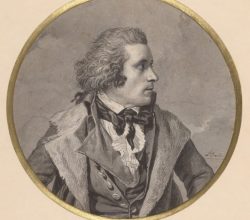
Why was Jacques-Louis David so determined to keep his drawings to himself?

David was the “de facto official painter of the French Revolution”. His stern paintings shaped public perceptions of those dramatic events and then Bonaparte’s reign. Not only did he freely deploy art as propaganda, but his severe neoclassicism helped finish off frivolous rococo, setting French art on a new path. The clarity David achieved in his paintings owed much to detailed preparatory drawings – and a willingness to make his art unmistakably political.

Edo Paintings: Centuries of Japanese art

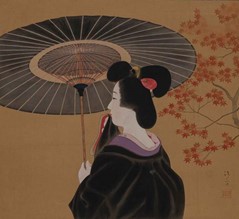
One for Japan buffs. Japan’s Edo period was marked by peace, growth, and … isolation. The ruling Tokugawa clan favoured scroll painting by the Kano school which, for over a century, dominated even the Tosa school (favoured by the imperial court). Other styles eventually emerged – the Rinpa school with its large colour fields and the Shijo school, noted for its naturalism. When Japan opened to the West these all coalesced into the Nihonga school, which remains immensely popular.

Revisiting Robert Mapplethorpe’s Years on West Twenty-Third Street

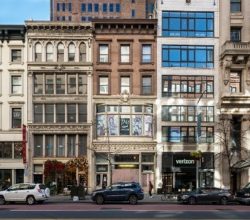
An essay about Mapplethorpe, yes, but also an elegy to the artistic milieu of New York’s West Twenty-Third Street. Writers, artists and musicians rubbed shoulders with ordinary workers and “more marginal types”.  By the time he shifted from No. 21 to No. 35, Mapplethorpe was a celebrity … with AIDS. His birthday party in November 1988, his “final extravagant act”, was attended by actors, royalty and gallerists. “Death be dammed …  Robert made a silent wish and blew out the candles.”

1st March 2022

Whistler’s Woman in White: Joanna Hiffernan at the Royal Academy of Arts

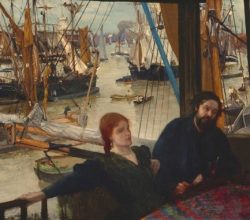
The role of women in portraits can be fraught. What about Whistler’s pretty lover in his famous Woman in White portraits. Are they examples of collaboration or exploitation? Strangely, the critics seem more interested in the biography of their relationship and observations that this era had “strange morality”. The artist Celia Paul, who famously sat for Lucien Freud during their relationship, observes of the works: “She was a great model … sitting was, for her, a consummately creative act”.

Mexico revives a tradition of painting murals with a purpose

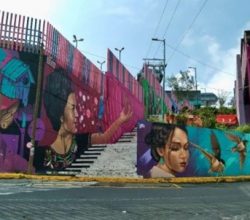
Who says art cannot have social impact? Murals loom large (literally) in the art of Mexico, from their ancient civilisations to Spanish colonial wall frescoes and, more recently, Diego Rivera. Tapping into that tradition, a poor area in Mexica City has sponsored street murals as a way of reducing crime. About 7500 works have been commissioned so far and local officials insist they have helped reduce rates of violence.  Says the mayor “We’re trying to reclaim the streets for women”. More images are here.

Bellerby & Co. Globemakers

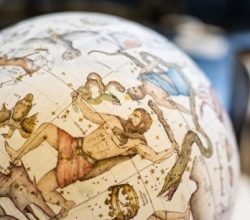
On a list of esoteric traditional crafts, globe making must be right up there. First made around 1500, these bespoke objects are still made by hand, albeit with modern materials. Their complex manufacture and customization to meet client demands requires great artisanship – painting and lettering, cartography, illustration and engraving. If your heart desires something less earthly, the atelier featured also make globes of the moon and the heavens. A video is here.

MoMA celebrates South Asian architecture in the postcolonial era

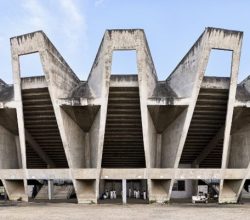
South Asian art is starved of coverage, as is its architecture. An exhibition of this architecture after the British Raj shows how it expressed not just new optimism but also a “new political reality”. Concrete, ideal for adapting a modernist architectural idiom to local conditions, features everywhere – the sustainability designs of India’s Balkrishna Doshi through to the houses of Sri Lanka’s Minette de Silva. Sighs one critic “it’s a joy to see so many projects that aren’t sealed glass boxes”.

Bill Brandt: a world apart

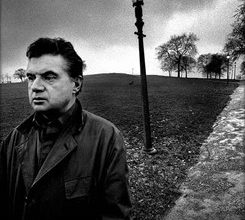
Brandt is widely considered Britain’s great 20th century photographer. He started by photographing English society but moved on. Images of darkened London in the Blitz showed terror and beauty side by side. His portraits convey a moody unease. His nudes show an awareness of sculptural form that owe much to surrealism. And his landscapes, with their “velvety blacks” are “some of the most evocative pictures of Britain ever taken”. More images are here.

Dan Graham on creating art through architecture

“Conceptual artist” doesn’t give much of a clue to Graham’s work. His most acclaimed works are “pavilions” – sculptural/architectural structures of glass that allow viewers to look at others and be looked at themselves. Such works reflect Graham’s enduring interest in the relationship between performer and audience, a common thread of sorts with his other interests – writing, rock music, television and (he wished) fashion. A more comprehensive interview is here.