The Easel

24th August 2021

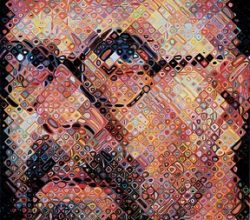
Chuck Close, Creator Of Gigantic Portraits, Has Died At 81

Setting out to be an abstractionist, Close painted multiple de Kooning look-alikes. And then he abruptly switched to portraits. Initially hyper-realistic and “psychologically aggressive”, they gradually became “brushier”, including grids of abstract shapes that, from a distance, resemble the subject. “I am not trying to make facsimiles of photographs,” Close said. “My main objective is to translate photographic information into paint information.”
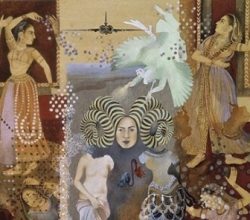
Shahzia Sikander – An Extraordinary Past in Present Time

To the non-specialist, Indo-Persian miniature painting seems a world unto itself, unchanging. Well, not quite. Sikander trained in this artform but has since “blown it open” by bringing abstract elements into these finely detailed works. After her move to the US, Sikander’s work was initially greeted with the ‘rebel Muslim woman’ label. Now it is recognized as a study of womanhood and femininity where Mughal art is a reference point but not its focus.

Tokyo: Art and Photography

How’s this for ambition – a single exhibition covering 400 years of art from Tokyo! Despite being “ordered chaos”, the show somehow works. Tokyo’s printmakers are the star artists – the radical Hokusai, the sensitive Hiroshige. But contemporary artists – especially photographers – are also eye catching. And at least one critic sees threads of continuity across the centuries – an enduring interest not just in the “floating world” but in “modern life in all its strangeness”.

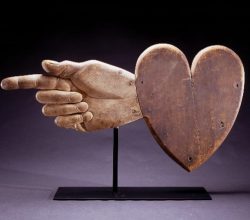
A First-Rate Weathervane Show at the American Folk Art Museum

When people walked everywhere, weathervanes were a building’s “exclamation point”. Besides providing weather information they also declared allegiance, or perhaps just local pride. As such they were a notable area of American craft and “at their finest, as much art as the best American silver and furniture.” At some point, though, when horse and buggies were common, their audience dwindled and weathervanes became merely quaint. More images are here.

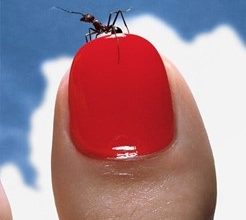
Hiro, fashion photographer with an eye for the surreal, dies at 90

Richard Avedon’s early mentoring of Hiro didn’t last long because Hiro’s talent was so abundant. He changed commercial photography using bold colours and precise, sometimes surreal juxtapositions. Said one critic “he introduced into fashion an extreme formalism that had everything to do with exploring the boundaries of photography and less to do with selling anything. In front of his best photographs we often ask, what are we seeing?”

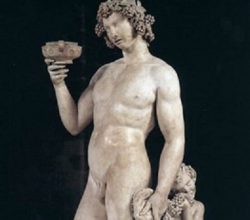
Drunk and disorderly: Michelangelo’s Bacchus

New in Rome and just 22, Michelangelo was commissioned to sculpt Bacchus, the god of wine and revelry. Despite being a “virtuoso” work, it was rejected by the client. What happened? Was Bacchus simply too drunk-looking? Did its effeminate features set off alarm bells? Worse, was the drunkenness of the figure meant to suggest a god “consumed by homosexual desire”? Young Michelangelo was learning that even Renaissance Rome would tolerate only so much.

Purple Prose

While the science of optics advances, our response to colour remains essentially cultural. Cattle farmers in Ethiopia have “eleven colour terms for cows, but none for anything else.” Most of us think red signifies dignity, while yellow is “precariously balanced between the divine and the disagreeable”. Green now refers to a multitude of actions and attitudes; “metaphorical greenness is understood all over the world.” A podcast on the topic is here.

17th August 2021

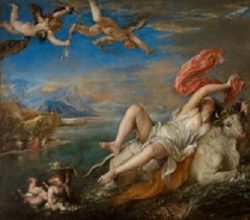
Can We Ever Look at Titian’s Paintings the Same Way Again?

In London, this show was praised to the heavens. Now in New York, there is more rhapsodizing about Titian – “an ingenious dramatist … one of history’s magician paint-movers”. However, there is an elephant in the room. These paintings feature sexual violence and use the female nude as an “erotic emblem”. Titian’s client was a world-conquering ruler, so demure was not an option. Understood – but should we simply ignore the clash of “aesthetics and ethics”?

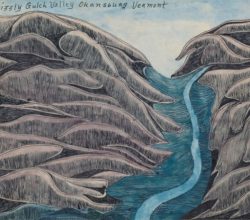
Joseph Yoakum and adventurous facts

Born in 1891, Yoakum didn’t create an artwork until 1962. After that – a torrent, about 2000 “radiant” works up to his death in 1971. Many are landscapes, done with ballpoint pen and coloured pencils and often only vaguely resembling actual places. These works express a “spiritual vision”, with improbable mountains and swaying cliffs. But we are “never entirely mislead … you believe what you see as much as you see what you believe”.

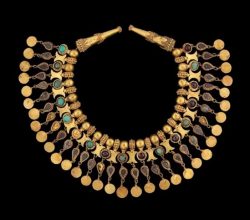
Journey of the treasures

Amidst yet more turmoil, a timely reminder of Afghanistan’s great cultural heritage. Its northern region sat astride the Silk Road trading routes and was part of Bactria, the area ruled by Alexander the Great.  The so-called Bactrian Hoard, discovered in 1979, was one of the greatest archeological finds of the twentieth century. Sadly, much of Afghanistan’s remaining cultural inheritance has been destroyed. Further background on the Hoard is here.

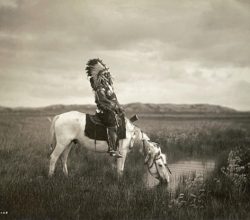
Vanishing Point

Around 1900, Edward Curtis decided to photograph life in the 86 native American tribes. His near 30-year effort created a huge and unique record of indigenous life and culture. Some now think Curtis sanitized and exoticized tribal life, and it is true that Curtis did stage some images. Others, including some indigenous figures, think he was well motivated and created a cultural record that would otherwise not exist. “Truth [in photography] … is often not straightforward”.

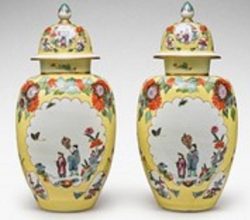
A Meissen porcelain trove is set to shatter auction records

It takes something special for porcelain to get coverage in the art press. In 1720, Meissen was the first European manufacturer to successfully produce “hard paste” porcelain. For about 20 years – Meissen’s “golden age” – it kept this knowhow secret and produced glorious pieces to satisfy aristocratic tastes. Heading to auction soon is “one of the great collections in postwar memory”, eye candy of the highest order.

What’s in a Frame?

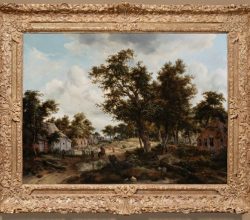
The marriage of painting and frame may or may not be a happy one. Frames are primarily a protective device. Sometimes though, collectors choose a frame that exaggerates a painting’s status – or matches the colour of the sofa. Artists may prefer frames that emphasise the distinctiveness of their style. Museums usually try to match frame and artwork – “if the frame is doing its job correctly, it’ll disappear”.