The Easel

16th August 2016

Danny Lyon’s Prescient Visions

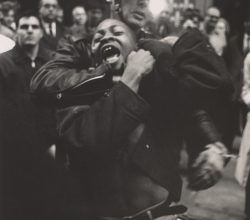
From the start of his career Danny Lyon would embed himself with groups under pressure – the civil rights movement, a biker club, immigrants, Texas prisoners. His photographs take a position – much like Hunter S Thompson did with “gonzo” journalism. As Lyon admits “I’ve never really cared about that line [between professional and non-professional]. I’m more interested in the truth and that the good guys win”. Images are here.

Image: Whitney Museum
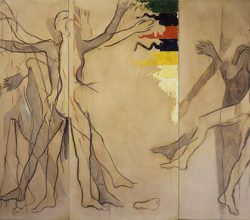
Imagine: New Imagery in Italian Art 1960-1969, Peggy Guggenheim Collection, Venice — review

Postwar Italian art is on a tear, with prices and critical appreciation both on the rise. A group of Rome-based artists, often linked with Pop, is getting particular attention. A show in Venice demonstrates their aesthetic was uniquely influenced by Italy’s classical heritage. “[C]omparisons with Warhol only go so far. His Campbell’s soup cans … have an entirely different charge from… Botticelli’s Venus”.

Bold, provocative art that looks like money

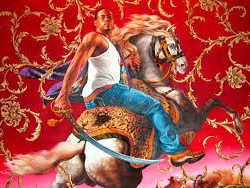
Kehinde Wiley’s prominent travelling retrospective is generating heated views wherever it goes. His images put contemporary black males in heroic poses borrowed from the Great Masters. Is this a commentary on racial politics? Is his work formulaic? This writer takes aim elsewhere. Some of the small scale portraits are “simply fine” but other works “feel as confected and disposable as a good pop song”.

Image: Wikipedia

Review: Art Stage Jakarta

Outside Britain and the US, national art markets configure in a wide variety of ways. Indonesia’s market, emerging from a politically repressive era, is progressing largely on the back of private sector initiatives. Some artists are building international profiles but national public collecting institutions have yet to emerge.  The South-east Asian art market “still resembles a series of spot fires rather than a raging inferno.”

In Honour of Faces

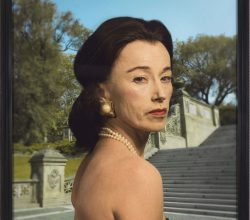
Velazquez’s portraits commemorated a person’s public role. Portraiture after Freud tried to portray psychological truths. Now, selfie portraits seem mostly to be self-promotion. A “lavish” portrait show at New York’s Whitney displays examples of all these possibilities. “[D]ecidedly stale” complains one critic; a genre under “great pressure” state the curators. Images are here.

House Arrest: How One Topsy-Turvey Season At Sotheby’s Could Change The Auction World Forever

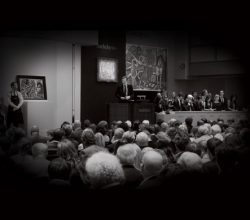
With major art works now worth a squillion dollars, selling art is no longer a genteel business. Soft auction results at Sotheby’s have led to sackings and some big new hires. They now apparently see themselves like an investment bank – “just a big transactional organization that has an advisory division, kind of like Goldman Sachs” says one of the key players; “You can never have a quiet revolution.”

Does technological analysis destroy the romance of art history?

A nostalgic essay about the impact of exact technology on inexact art history. Tools like infrared spectroscopy can upend conventional views and dominate (less exact) scholarly debate. Are great works of art diminished in the process? Sometimes, especially if authenticity is challenged. But new evidence is not always conclusive leading to “duelling opinions rather than resolutions”.

9th August 2016

William Eggleston, review: Much more than the greatest colourist in photographic history

Henri Cartier- Bresson reportedly told Eggleston that colour in photography was “bullshit”. Eggleston was not put off and is now widely regarded as the father of colour photography. The “banality” of his subjects is, according to the writer, not the point. Rather, Eggleston’s genius is an ability to coax from a plain image “the memory of a person or people as much as the physical facts of their presence”. More images are here.

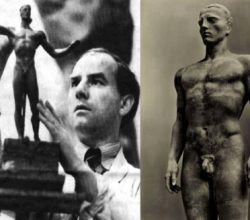
Olympic Medalists in … Art?

With Rio comes a question for the ages: “Can’t arts and sports just get along?” Well, the ever ambitious IOC spent decades up to 1948 trying to show they could. In the Olympic Art Competition medals were given out. “Winning” pieces reveal changing ideas about sport and (even more) the influence of politics. Art in Nazi Berlin, for example, “seemed artistically obsessed with hyper-masculinized, homoerotic imagery”.

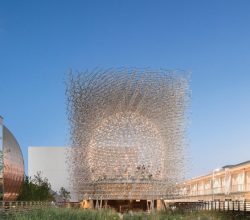
This Sculpture is Controlled by Live Honeybees

Research into honey bees inspired the centerpiece sculpture at Britain’s MilanExpo pavilion. Acclaimed at the time, it has now been reassembled in London’s Kew Gardens. Sensors in a real beehive in a nearby meadow control lights within the sculpture and a soundscape recording. “We can get the idea of the importance of bees to a whole new audience” says the sculptor.

Image: wolfgangbuttress.com

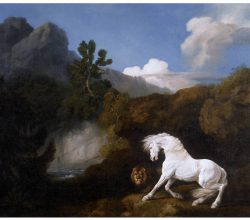
‘Stubbs and the Wild’ Review: The Sublime on Four Legs

Discoveries of new species in Australia and elsewhere stimulated Georgian society’s taste for exotica. With Charles Darwin’s theories still a century away debate about the natural order had both scientific and moral elements. Stubbs was captivated by all this. His horse portraits were famous but, more important, his work combined the detached curiosity of the scientist and his artistic empathy for other living creatures.

Alma Thomas’s Late Blooms

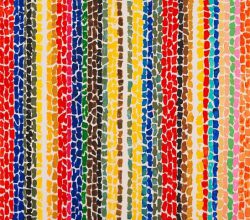
Belated recognition of an artist is hardly a new story. You might say that for Alma Thomas this was not personal but simply standard treatment given her race (African American) and gender. Once free of her day job as a teacher – and as the twentieth century shifted towards greater inclusiveness – she made her mark. One critic describes her work as “gorgeous … like a Monet landscape translated into a grid by Mondrian”.

Fitzwilliam Museum shows off its wonderful watercolours

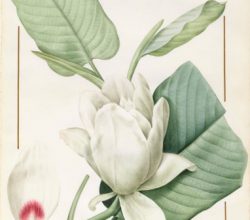
Watercolour paintings go a long way back. But when small colour cakes were developed in 1781 the medium was released from the confines of the studio. The British in particular formed an affection for watercolour that is reflected in the distinguished collection of Cambridge’s Fitzwilliam Museum. Although now somewhat less popular, the medium offers great precision as well as “scope for imaginary evocation and poetic allusion”.

Curating Watteau’s Soldiers – by Aaron Wile

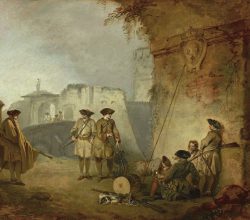
Watteau is renowned for his picnic scenes in idyllic landscape settings. Less well known are his works dealing with military subjects. These were not standard genre scenes. He depicted soldiers in groups, physically close but withdrawn into themselves, forced into “a troubled and uneasy social commerce, which … marks the modernity of his representation of military life” An excellent video (4 min) is here.