The Easel

2nd August 2016

Discover the Unpublished Masterpiece that Defined Dada

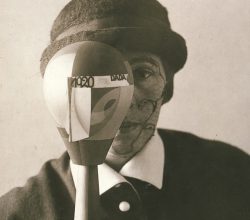
Dada was born in a Vienna coffee shop in 1916.  A MoMA show commemorates its centenary as well as its ongoing influence. Conceived in the ghastly throes of WW1, Dada was determinedly absurdist and that spirit persists. One characterization is “the power of the absurd to undermine a rationality going back to the Enlightenment … using logical methods for irrational conclusions”. A nice background summary is here.
Unearthly Delights

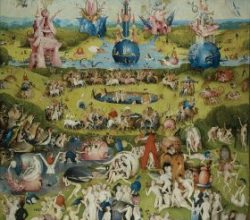
Bosch mania continues unabated at the Prado. “Madrid is presenting one of the greatest art exhibitions of all time”, declares this critic, clearly a big call. The Prado is claiming boasting rights over the preceding Netherlands show. Perhaps that explains some snippiness between their respective curators. Those in the Netherland have suggested that two of the Prado’s own Bosch paintings may not be originals.

Peter Howson: A Survey of Prints

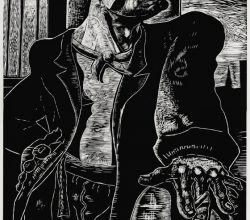
Being official “war artist” is unlikely to be a fun assignment, especially in Bosnia in 1993.  Howson’s output there included a rape image that caused a furore. Perversely, it raised his profile via its eventual buyer, David Bowie. In spite of struggles with mental health and personal demons, his reputation has flourished – he is viewed as one of the leading figurative artists of his generation. More images are here.

Image: Flowers Gallery

‘London Calling’ at the Getty and the tension between abstract and figurative painting

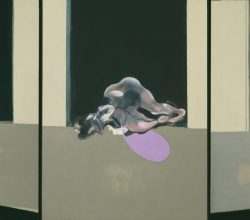
Americans seemingly don’t warm easily to Britain’s grand tradition of figurative art. The reviewer argues that after WW2 British art recovered its zip by “probing the tension between figurative and abstract art”. From there, however, the narrative fades. Auerbach is “riveting” and Bacon “elegant”, but Freud is “the most over-rated of our time”. Others are dismissed. Overall, it is a “pretty loose-limbed show”. Fodder for debate.

15 Short Texts in Search of Hilla Becher

Bernd and Hilla Becher, feeling “roughed up” by the war, looked for “honest” subjects. They chose heavy industrial plant, in the Ruhr and elsewhere. Notwithstanding its documentary style their photography is noted for its “melancholy force … a mourning not so much for each individual demolished object as for prewar optimism itself, all the old beliefs”. This video (7 min) provides a nice overview of their work.

A portrait of the artist: is it time we looked at Turner differently?

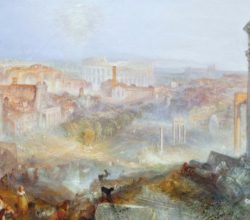
Two new biographies of Turner bring him into sharp focus, even if new revelations are scarce. As a younger man Turner felt guilty that “while [he] was being lauded by fellow academicians, his mother was chained to [an asylum wall] but his reputation came first”. Later life sounds similar -“a mischievous, mani­pulative and thoroughly modern painting machine, a man on the make and on the take, selfish, sexual”.

How To Make Hoarding Into Brilliant Art

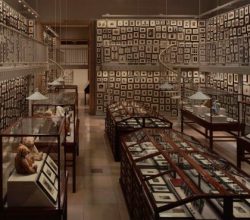
Many artists use found objects in their art. The Surrealists, Joseph Cornell, Rauschenberg, all come to mind. But is collecting found objects the same as collecting (hoarding?) multiple examples of the same thing – teddy bear photos perhaps or coloured paper clips? What does the process of collecting say about us? “What do our collections say about love, loss, the passage of time, and the unpredictable variety of life?”

26th July 2016

Hopper Goes to the Movies

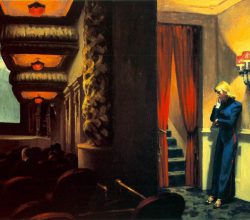
Few would challenge Robert Hughes’ judgement that Edward Hopper is “the quintessential realist painter of twentieth century America”. Hopper’s painterly images of urban isolation have had an enduring impact on the American psyche, conveying that “the distance between the self and the other was bridged by an acute feeling of common predicament”.

Daubigny, Money, Van Gogh and the birth of impressionism

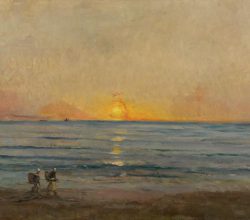
Charles François Daubigny is rarely connected with Impressionism. But a current exhibition puts a boldly contrary view – his looser, brighter style directly inspired artists like Monet and Cezanne.  Further, he was an important defender when their works were attacked by traditionalists. At the end of his life he returned to a more traditional style to generate cash, with his more “Impressionist” works sitting unsold in the studio.

He Shot Andy Warhol’s Factory: Billy Name, Photographer of Edie and the Velvets, Dies at 76

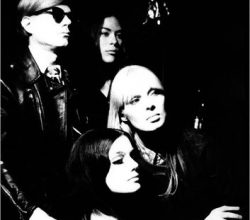
Spotted by Andy Warhol while working as a waiter, Name became live-in technician at the Factory during Pop’s zenith. According to one, he was “protector of the chaos” and, via his photos, its chronicler.  A Factory veteran commented about Name’s images – “Warhol never looked better than he did in these silver pictures, surrounded by all the beauties — shining like a full moon in their reflected light.” Some images are here.

Susan Te Kahurangi King’s Disorienting World

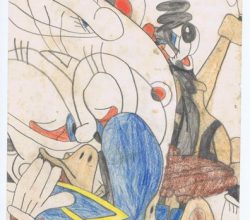
Susan King stopped speaking as a child, due to autism, but revealed an extraordinary artistic talent. Not exhibited until well into her 50’s, her work was spotted at an art fair and acclaimed by Jerry Saltz. King, a New Zealander, now has her first North American museum exhibition. “These are masterpieces of 20th-century drawing” comments the writer. A discussion with the curator is here and a background video (7 min) here.

Van Gogh’s Ear. The True Story

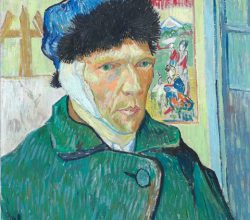
An exhibition in Amsterdam focuses on van Gogh’s last troubled years and canvasses new research about his ear-cutting incident. One claim is that it was caused by the shock of his brother’s engagement. Other work challenges the belief that it was a minor incision. A just discovered note from van Gogh’s doctor shows the ear was nearly completely severed. Neither claim, it seems, is definitive.

There is no difference between computer art and human art

That computer algorithms can generate artistic images is not new. Acclaimed French artist François Morellet spent his career on this – “My systems fix the rules of the game and mathematics execute the composition … if one finds them brilliant or ugly, I am not responsible.” The key issue is perhaps not nitpicking about what is art but rather the merits of art that is devoid of craft, human imperfection or – who knows – emotion.

How the Victorians brought famous artists back from the dead in seances

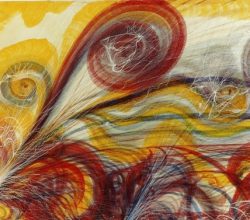
Victorian England was much taken with ideas about spiritualism – and Georgiana Houghton more than most. She believed that her paintings expressed the wishes of long dead artists which led some to dismiss her work as not “true” art. However, a London exhibition shows that she was a pioneer of non-figurative art as a reflection of a state of mind, an idea that echoed throughout twentieth century art. More images are here.