The Easel

26th July 2016

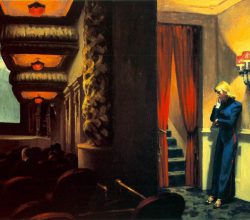
Hopper Goes to the Movies

Few would challenge Robert Hughes’ judgement that Edward Hopper is “the quintessential realist painter of twentieth century America”. Hopper’s painterly images of urban isolation have had an enduring impact on the American psyche, conveying that “the distance between the self and the other was bridged by an acute feeling of common predicament”.
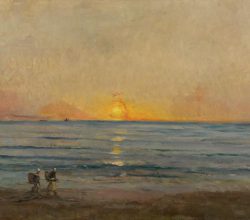
Daubigny, Money, Van Gogh and the birth of impressionism

Charles François Daubigny is rarely connected with Impressionism. But a current exhibition puts a boldly contrary view – his looser, brighter style directly inspired artists like Monet and Cezanne.  Further, he was an important defender when their works were attacked by traditionalists. At the end of his life he returned to a more traditional style to generate cash, with his more “Impressionist” works sitting unsold in the studio.

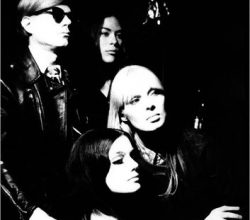
He Shot Andy Warhol’s Factory: Billy Name, Photographer of Edie and the Velvets, Dies at 76

Spotted by Andy Warhol while working as a waiter, Name became live-in technician at the Factory during Pop’s zenith. According to one, he was “protector of the chaos” and, via his photos, its chronicler.  A Factory veteran commented about Name’s images – “Warhol never looked better than he did in these silver pictures, surrounded by all the beauties — shining like a full moon in their reflected light.” Some images are here.

Susan Te Kahurangi King’s Disorienting World

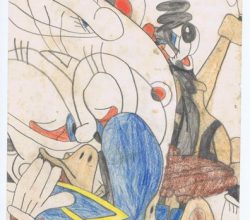
Susan King stopped speaking as a child, due to autism, but revealed an extraordinary artistic talent. Not exhibited until well into her 50’s, her work was spotted at an art fair and acclaimed by Jerry Saltz. King, a New Zealander, now has her first North American museum exhibition. “These are masterpieces of 20th-century drawing” comments the writer. A discussion with the curator is here and a background video (7 min) here.

Van Gogh’s Ear. The True Story

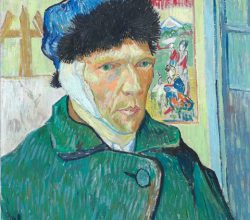
An exhibition in Amsterdam focuses on van Gogh’s last troubled years and canvasses new research about his ear-cutting incident. One claim is that it was caused by the shock of his brother’s engagement. Other work challenges the belief that it was a minor incision. A just discovered note from van Gogh’s doctor shows the ear was nearly completely severed. Neither claim, it seems, is definitive.

There is no difference between computer art and human art

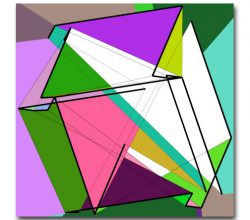
That computer algorithms can generate artistic images is not new. Acclaimed French artist François Morellet spent his career on this – “My systems fix the rules of the game and mathematics execute the composition … if one finds them brilliant or ugly, I am not responsible.” The key issue is perhaps not nitpicking about what is art but rather the merits of art that is devoid of craft, human imperfection or – who knows – emotion.

How the Victorians brought famous artists back from the dead in seances

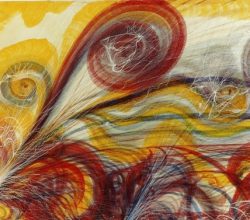
Victorian England was much taken with ideas about spiritualism – and Georgiana Houghton more than most. She believed that her paintings expressed the wishes of long dead artists which led some to dismiss her work as not “true” art. However, a London exhibition shows that she was a pioneer of non-figurative art as a reflection of a state of mind, an idea that echoed throughout twentieth century art. More images are here.

19th July 2016

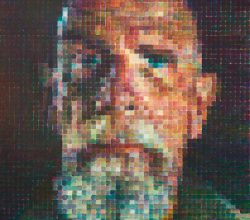
The Mysterious Metamorphosis of Chuck Close

A view of an autumnal artist. “By [2015] it was clear to everyone around Close that something unusual was going on with him.” Disenchantment with the art world and a divorce are contributors. Another speculation – conflict between Close’s desire to “[settle] into a quiet peace with the twilight of his life” and a competing view that “artists don’t retire … the late stage can be very interesting.”

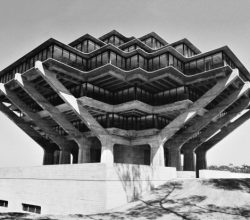
Gorgeous New Book Preaches the Gospel of Brutalist Architecture

Concrete buildings in the brutalist style were cheap to build. Popular in post-war Europe for housing estates, they gradually became a byword for poverty and anti-social behavior. A new book marks a new appreciation of this “big boned” style – even as many are being torn down. As one critic argues “Concrete is a truly innovative material, both socially responsive and aesthetically beautiful,” More images are here.

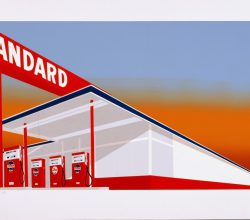
As Los Angeles Changes, Ed Ruscha Stays the Same

Ruscha’s first job, at an ad agency, was a sign of things to come. Indifferent to the charms of abstract expressionism, he wanted to be “completely premeditated”. Hence, his career has been spent making word images and buildings that express a West Coast vernacular. This style doesn’t seem to have a name, just a general description: “he takes something incredibly familiar and gives it this level of ambiguity.”

Baron Guy Ullens puts Beijing’s UCCA on Sale

The Ullens Centre for Contemporary Art is widely seen as “the most important contemporary art institution in China”. A major collector well before local museums showed any interest, it also runs a “linchpin” exhibition space in Beijing. With its founder and benefactor now departing, the hybrid philanthropic / entrepreneurial venture has an uncertain future. One collector describes it as the “Brexit event of the art world.”

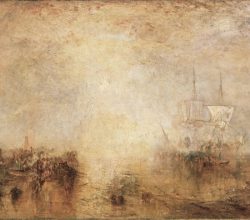
“Turner’s Whaling Pictures” at The Metropolitan Museum of Art, New York, NY

Turner repeatedly chose maritime settings where the power of Nature was on full display. Whaling pictures were a brief sideline, not as lucrative as he hoped. What catches the eye now is not a whaling narrative but the innovation in Turner’s style – the subtlety of light and image and, even more, his astonishingly rich surfaces. “Turner’s work can’t help but make the surfaces of most art look like thin gruel.” Images are here.

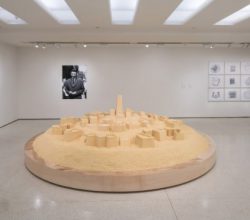
“But a Storm Is Blowing from Paradise”: Guggenheim UBS Map Middle East and North Africa

The Guggenheim is trying to develop a more international collection. Its show of contemporary Middle Eastern art is part of that effort. The curation of the show has been praised with Guggenheim’s director claiming it “bristles with challenging ideas and uncompromising artistic strategies”. But there is another narrative – the show is “peculiarly benign”, due to the museum’s controversial Abu Dhabi building project.

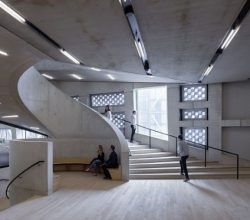
Wonders and blunders: what makes a great museum?

Ambitious cities all want to have a great museum. A smorgasbord of collected opinions provides some clues about the ideal building. Artists want “neutral, beautifully lit space … that is uplifting”. Curators dislike spaces with “strange angles”. Everyone wants scale without sacrificing intimacy.  ““Starchitecture” probably hinders one’s experience of art” admits an architect – but everyone seems to envy Bilbao.