The Easel

9th August 2016

William Eggleston, review: Much more than the greatest colourist in photographic history

Henri Cartier- Bresson reportedly told Eggleston that colour in photography was “bullshit”. Eggleston was not put off and is now widely regarded as the father of colour photography. The “banality” of his subjects is, according to the writer, not the point. Rather, Eggleston’s genius is an ability to coax from a plain image “the memory of a person or people as much as the physical facts of their presence”. More images are here.

Olympic Medalists in … Art?

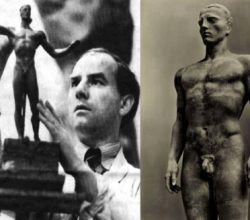
With Rio comes a question for the ages: “Can’t arts and sports just get along?” Well, the ever ambitious IOC spent decades up to 1948 trying to show they could. In the Olympic Art Competition medals were given out. “Winning” pieces reveal changing ideas about sport and (even more) the influence of politics. Art in Nazi Berlin, for example, “seemed artistically obsessed with hyper-masculinized, homoerotic imagery”.

This Sculpture is Controlled by Live Honeybees

Research into honey bees inspired the centerpiece sculpture at Britain’s MilanExpo pavilion. Acclaimed at the time, it has now been reassembled in London’s Kew Gardens. Sensors in a real beehive in a nearby meadow control lights within the sculpture and a soundscape recording. “We can get the idea of the importance of bees to a whole new audience” says the sculptor.

Image: wolfgangbuttress.com

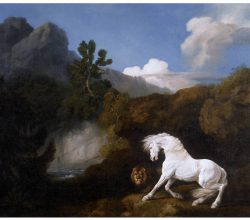
‘Stubbs and the Wild’ Review: The Sublime on Four Legs

Discoveries of new species in Australia and elsewhere stimulated Georgian society’s taste for exotica. With Charles Darwin’s theories still a century away debate about the natural order had both scientific and moral elements. Stubbs was captivated by all this. His horse portraits were famous but, more important, his work combined the detached curiosity of the scientist and his artistic empathy for other living creatures.

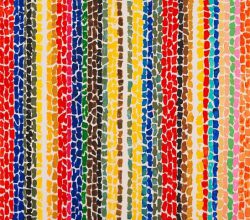
Alma Thomas’s Late Blooms

Belated recognition of an artist is hardly a new story. You might say that for Alma Thomas this was not personal but simply standard treatment given her race (African American) and gender. Once free of her day job as a teacher – and as the twentieth century shifted towards greater inclusiveness – she made her mark. One critic describes her work as “gorgeous … like a Monet landscape translated into a grid by Mondrian”.

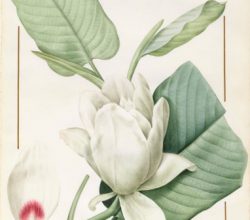
Fitzwilliam Museum shows off its wonderful watercolours

Watercolour paintings go a long way back. But when small colour cakes were developed in 1781 the medium was released from the confines of the studio. The British in particular formed an affection for watercolour that is reflected in the distinguished collection of Cambridge’s Fitzwilliam Museum. Although now somewhat less popular, the medium offers great precision as well as “scope for imaginary evocation and poetic allusion”.

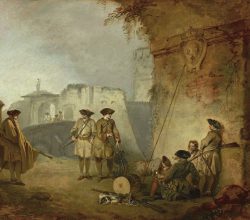
Curating Watteau’s Soldiers – by Aaron Wile

Watteau is renowned for his picnic scenes in idyllic landscape settings. Less well known are his works dealing with military subjects. These were not standard genre scenes. He depicted soldiers in groups, physically close but withdrawn into themselves, forced into “a troubled and uneasy social commerce, which … marks the modernity of his representation of military life” An excellent video (4 min) is here.

2nd August 2016

Discover the Unpublished Masterpiece that Defined Dada

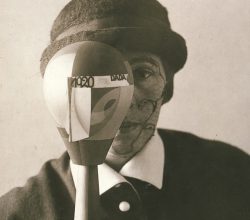
Dada was born in a Vienna coffee shop in 1916.  A MoMA show commemorates its centenary as well as its ongoing influence. Conceived in the ghastly throes of WW1, Dada was determinedly absurdist and that spirit persists. One characterization is “the power of the absurd to undermine a rationality going back to the Enlightenment … using logical methods for irrational conclusions”. A nice background summary is here.

Unearthly Delights

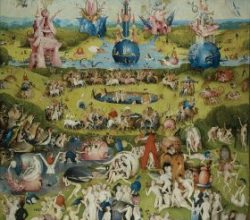
Bosch mania continues unabated at the Prado. “Madrid is presenting one of the greatest art exhibitions of all time”, declares this critic, clearly a big call. The Prado is claiming boasting rights over the preceding Netherlands show. Perhaps that explains some snippiness between their respective curators. Those in the Netherland have suggested that two of the Prado’s own Bosch paintings may not be originals.

Peter Howson: A Survey of Prints

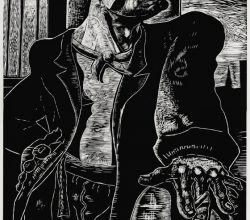
Being official “war artist” is unlikely to be a fun assignment, especially in Bosnia in 1993.  Howson’s output there included a rape image that caused a furore. Perversely, it raised his profile via its eventual buyer, David Bowie. In spite of struggles with mental health and personal demons, his reputation has flourished – he is viewed as one of the leading figurative artists of his generation. More images are here.

Image: Flowers Gallery

‘London Calling’ at the Getty and the tension between abstract and figurative painting

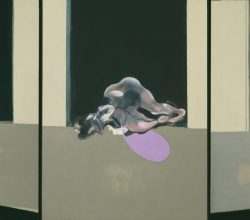
Americans seemingly don’t warm easily to Britain’s grand tradition of figurative art. The reviewer argues that after WW2 British art recovered its zip by “probing the tension between figurative and abstract art”. From there, however, the narrative fades. Auerbach is “riveting” and Bacon “elegant”, but Freud is “the most over-rated of our time”. Others are dismissed. Overall, it is a “pretty loose-limbed show”. Fodder for debate.

15 Short Texts in Search of Hilla Becher

Bernd and Hilla Becher, feeling “roughed up” by the war, looked for “honest” subjects. They chose heavy industrial plant, in the Ruhr and elsewhere. Notwithstanding its documentary style their photography is noted for its “melancholy force … a mourning not so much for each individual demolished object as for prewar optimism itself, all the old beliefs”. This video (7 min) provides a nice overview of their work.

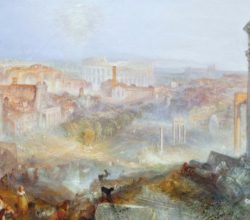
A portrait of the artist: is it time we looked at Turner differently?

Two new biographies of Turner bring him into sharp focus, even if new revelations are scarce. As a younger man Turner felt guilty that “while [he] was being lauded by fellow academicians, his mother was chained to [an asylum wall] but his reputation came first”. Later life sounds similar -“a mischievous, mani­pulative and thoroughly modern painting machine, a man on the make and on the take, selfish, sexual”.

How To Make Hoarding Into Brilliant Art

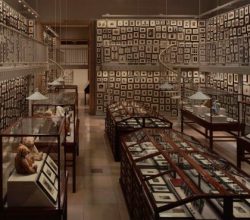
Many artists use found objects in their art. The Surrealists, Joseph Cornell, Rauschenberg, all come to mind. But is collecting found objects the same as collecting (hoarding?) multiple examples of the same thing – teddy bear photos perhaps or coloured paper clips? What does the process of collecting say about us? “What do our collections say about love, loss, the passage of time, and the unpredictable variety of life?”