The Easel

31st May 2016

GALLERY ESSAY Richard Smith: The Incredible Lightness Of Being

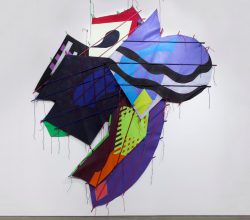
Arriving in New York from London, Smith quickly became prominent as a Pop artist. But he never fully signed up. An art critic at the time noted that Smith had “colour and a kind of newness absolutely separate from Pop Art”. By 1970 he had developed his iconic “kite” paintings. Art historian Barbara Rose argues that, while anything but orthodox, these works nonetheless sit inside the traditions of painting. “[T]he kites are shaped paintings– but only in their own and not any generic sense. They are paintings that come out of a tradition of painting and push it in new directions. They remain fascinating because they … are neither this nor that, not entirely image nor entirely object. They are brilliantly resolved in terms of composition and color relationships, but not in terms of their status as things in the world.”

Richard Smith died in April just after the close of his latest New York show.  This essay is reproduced with the kind permission of Barbara Rose and Flowers Gallery London and New York.

At the Barbican

A London exhibition featuring the work of foreign photographers has been widely reviewed. Many images focus on the north of the country, but the reviewer is skeptical of an overarching class narrative – “with rare exceptions, photographers find what they come looking for”. If so, perhaps they have unwittingly found the communities that made Britain Britain. Background on key photographers is here and more images here.

Image: Magnum

Guggenheim opens US’s largest László Moholy-Nagy exhibition in 50 years

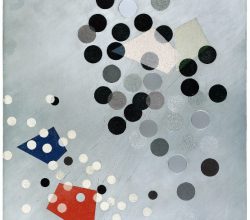
Moholy-Nagy taught at the legendary Bauhaus and embodied its ideal: the unity of art and technology. He experimented widely – painting, photography, assemblages and more. In a “powerful” retrospective, the coherence of this diverse output is evident – “light, transparency, planes, and depth”, underpinned by Bauhaus optimism that art and technology will make a better world. More images are here.

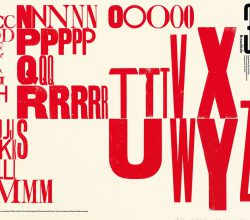
“I always try to have some logic to the job, to the work”: we interview letterpress legend Alan Kitching

Letterpress printing, invented by Gutenberg in 1440, dominated nearly into the 20th century. Alan Kitching, one of the world’s foremost letterpress printmakers, exemplifies its reinvention as an art form. So how does it differ from offset printing? “Anyone can see it … it puts a bite into the paper … crisp, tangible, deferential to classical typography”.  A charming video (5 min) is here and fascinating backstory here.

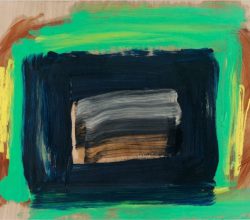
Howard Hodgkin’s paintings get better and better

Asked to explain his paintings, Hodgkin tends to dodge and weave. His admits only that he “hates” painting and is a “representational artist of emotional situations.” Having said that, his paintings are distinctive in their spare brushstrokes and ravishing colour. An earlier review provides a characterisation as good as any: “Emotion is his fuel but, as Wordsworth said of a good poem, it is “emotion recollected in tranquility””.

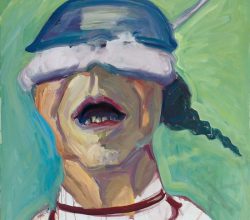
Maria Lassnig: under the skin

Maria Lassnig was devoted to one subject: self-portraits. Not a literal depiction, but the sensation of her body. Recognition came after decades of being ignored – when she died in her 90’s she was described as a rising star. And perhaps those years in obscurity rankled: “An avant-gardist discovered late isn’t an avant-gardist. In hindsight it can’t be appreciated how advanced my work was.” An interview with the artist is here.

Image: Maria Lassnig Foundation

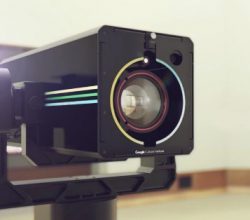
Google Unlocks the Art in the Details with the Art Camera

Google Cultural Institute observes, without fear of contradiction, that close scrutiny of van Gogh’s six portraits of the Roulin family would involve plane trips. To solve the problem – and help preserve cultural masterworks – it has developed a robotic camera that creates super high resolution images of works of art. Twenty such cameras are being loaned to museums around the world. Initial results can be seen here.

25th May 2016

A Five-Point Guide to the Work of Francis Bacon

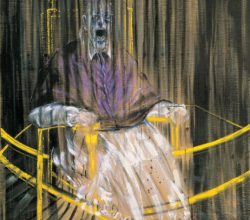
Bacon firmly considered himself a realist painter. Considering the nightmarishly contorted bodies that populate his paintings, this surprises – until Bacon’s true purpose is clear. He was not trying to represent the person but the sensation of that person. “His paintings strive not to tell stories but to clamp themselves [directly] on the viewer’s nervous system”. Interesting comments by other artists, and images, are here.Image: Tate

Jenny Saville: ‘I used to be anti-beauty’

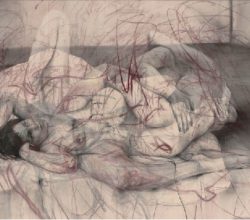
Life changes us all. In the case of British artist Jenny Saville she came to prominence in the 1990’s painting large nudes that challenged male concepts of female beauty. Now, observing her own children, she is re-evaluating the role of beauty in her art. “I don’t think there is anything wrong with beauty. It’s just what women think is beautiful can be different.” Further background on Saville’s art is here.

Rodin: sculptor as wrecking ball

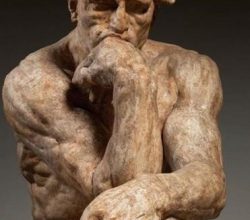
This Rodin sculpture show, previously reviewed, has moved to a new location and attracted a quite different review. For this writer, the highlight is Rodin’s ability to express not only carnality but also torment. When “The Thinker” is viewed from the front “notice how awkward and asymmetrical he is. It suggests … a mind and body working at cross purposes. It could easily have been called, “The Over-Thinker,” or “Stuck. Again.”

James Turrell Almost Stole a Painting by Juan Gris

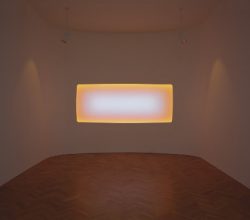
Why would an artist focus their art on the mixing and projecting of light? Turrell responds that light as an artistic raw material is no more difficult than sound.  Interest in the perception of light has an honourable ancestry – Turner, the Impressionists, Rothko. “[I]t’s just that I didn’t want to depict light, I wanted to use light itself.” Or, as one critic put it, Turrell’s art “happens behind your eyes, not in front of them”.

Nice Museum. Where’s the Art?

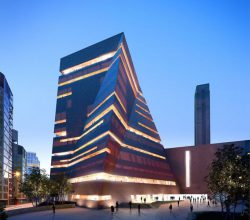
Academic research shows that gallery goers, on average, look at a masterpiece for just 28 seconds. If you are already the world’s most visited contemporary art gallery, what is the best way to use a big new building? Tate Modern has decided to emphasize more “participatory spaces” rather than contemplation of art, annoying the reviewer. “Art isn’t always about participation and popularity … Museums shouldn’t be, either.”

Perceptual Inventory: A New Anthology by Barry Schwabsky

“It’s abundantly clear”, the above writer argues, that grand theories of art’s progress have fallen apart. Art criticism does not offer a “master narrative” that distinguishes high art from kitsch. So, what do art critics have to offer? Aesthetic judgement, an ability to link current art to its antecedents, and the memorable phrase: “Gauguin’s Polynesian women … remained as mysterious to him as he was to himself.”

Robert Irwin’s Art Takes New Forms Right Before Your Eyes at the Hirschhorn

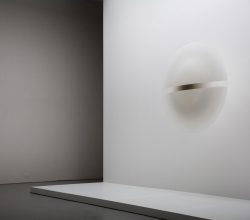
It must take courage for an artist to abandon something that is proven for the unknown. After experimenting with abstract expressionism Irwin steadily abandoned images because “they implied messages to be deciphered, messages to be read, and he wanted to get away from all that. By 1970 he … put away his tools, closed his studio and announced that environments alone, perception altering spaces, would be his concern”