The Easel

3rd May 2016

Essay: Bosch Mania

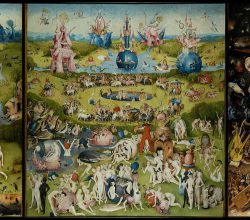
The Noordbrabants Museum, a regional museum in sensible Holland, is hosting an exhibition of the work of Hieronymus Bosch. Astonishingly, it has its doors open every night into the wee hours to cope with overwhelming public interest. Easel Contributing Editor, Morgan Meis, ponders the phenomenon of this Renaissance artist. “[T]he images in Bosch’s paintings were so unprecedented that they must come from the mind of someone who stood apart, a radical of sorts, an outsider for sure. [The paintings of Bosch’s contemporary, da Vinci], for all their innovations in form and technique, take up orthodox and well-worn subject matter in orthodox and well-worn ways. [E]ven The Mona Lisa is a more or less straightforward portrait, due respect paid to her mysterious smile.”

The Natural Geometries of Ellsworth Kelly’s Photographs

Alongside his feted career as an abstract painter, Kelly had a little-known side activity – photography. A first ever exhibition of this work reveals his painter’s eye at work. While the camera was, for him, a tool for experimentation, there is evident common ground with his paintings –“a desire to capture and elevate form, to celebrate the compositions already visible in the world around him.” More images are here.

A Different Guernica

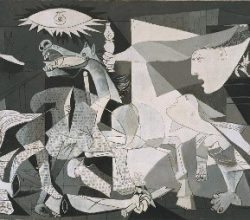
Picasso’s Guernica has been called the “last great history-painting”. A new book has emerged about the notorious event that it depicts but Picasso’s biographer, in reviewing the book, bends the story back toward the painting. The Paris-based Picasso apparently said “I know I am going to have terrible problems with this painting”. Prophetic – over 40 years elapsed before it reached Spain, its intended destination.

Why Moscow Has Suddenly Been Filled with Tacky, Terrible Art

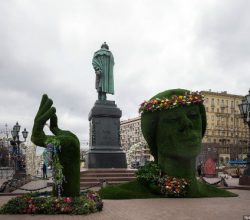
Moscow is holding a Spring Festival – that’s the straight forward part. From there the story becomes rather odd. A “weird, gigantic shrubbery head”, bigger than a house, has suddenly been moved out of the main square. There are allegations of irregularities in payments. Above all, the art is deemed awful – “as if the city had been invaded by a horde of aliens with flamboyantly bad taste.” Make of it what you will.

Sicily: Culture and Conquest, exhibition review – This show will make you itch to visit the island

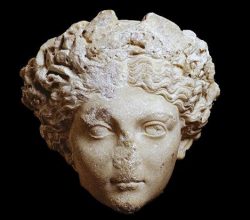
Before Sicily belonged to Italy – long before – it was a Mediterranean superpower. Equally surprising, the “lethal” Normans were benevolent rulers presiding over a liberal Sicilian society in which the arts flourished. Among the treasures on display is a 10th century Koran“ with dancing and flowing horizontal strokes whose play of positive and negative space (black shapes and white shapes) rivals Jackson Pollock”.

Post-Consumer Report: A Conversation with Rodney McMillian

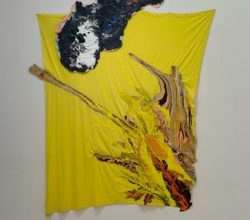
With three concurrent exhibitions on the US east coast, Rodney McMillian demands attention. One of his New York shows – “Landscapes” – uses painting on bedsheets to express his politicized (though not necessarily political) perspective on this time-honored painting genre. “The notion of a landscape as a vista, a reprieve from urban life, a place to get back in touch with nature—that seems to be a bit of a fiction”. More images are here.

How Klee’s ‘angel of history’ took flight

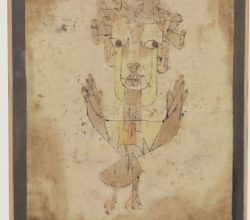
Centre Pompidou’s retrospective of Paul Klee’s work is boasting a coup – his rarely seen masterpiece, Angelus Novus. This drawing was purchased at Klee’s first exhibition and has had a sequence of illustrious owners. “His head is topped by a mess of curls… and his jug ears stick so far out from his cylindrical face that they’re almost flush with his jiggly eyes… [A] fearsome but fragile seraph: afloat, aghast, going who knows where.”

26th April 2016

A New Hong Kong Museum Confronts the Difficult History of Chinese Contemporary Art (Part 1)

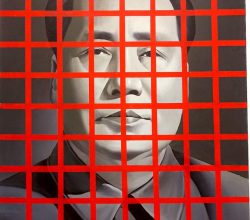
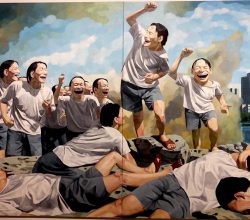
The end of China’s Cultural Revolution ushered in some increase in freedom of expression. Uli Zigg was a frequent visitor on business and started what has become perhaps the largest collection anywhere of contemporary Chinese art. This excellent survey summarises the most important art movements up to the rupture of Tiananmen Square. A part of the Zugg collection has just been on show in Hong Kong.

A New Hong Kong Museum Exposes China’s Censored Memories (Part 2)

The Tiananmen “incident” crushed the optimism of contemporary artists, even while western collectors were becoming supportive. Multiple art movements have since emerged but Tiananmen casts a long shadow. “A culture such as China’s can’t interpret the meaning of a representation it doesn’t know anything about.” The Zugg collection has been donated to Hong Hong’s M+ museum and will be displayed in full from 2019.

Cindy Sherman Takes on Aging (Her Own)

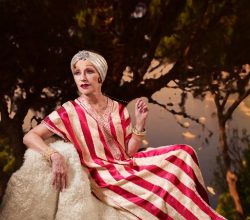
Cindy Sherman has appeared in front of her own camera in many, many guises. Throughout she has disclaimed any autobiographical element to these images. Having just ended a five year sabbatical, her new work is different. It comprises images of older women, perhaps Hollywood stars, of which she says “I, as an older woman, am struggling with the idea of being an older woman”.

Elizabeth Price creates the art work of the year

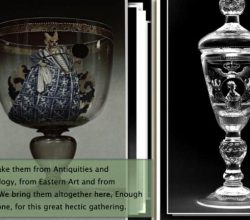
Sir Arthur Evans excavated the ancient city of Knossos – and then undertook “restorations” according to his own designs. When does conservation go beyond preservation and become “reckless damage”? This is the subject of a video work that this critic hails as “remarkably original and exciting video art, which you will actually want to watch.” Background on Evans is here and an interview with Price (28 min) here.

James McNeill Whistler: Prints, The Fine Art Society

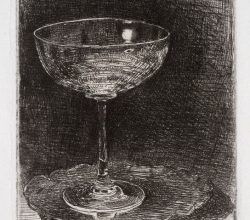
Whistler hated putting narrative into art. Believing in art for art’s sake he sought out the perfect moment. His paintings and atmospheric etchings won the respect of Manet and Degas, and it was to etching that he resorted when sent to Venice to stave off bankruptcy. Some of that output, now in a London exhibition, shows an artist of great capability. However, many now consider he was outshone by the Impressionists.

‘Helen Lundeberg: A Retrospective’ Review

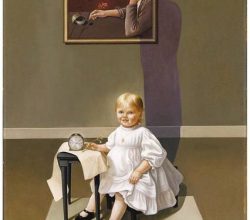
Lundeberg was all of 26 when she wrote that the Surrealist heroes such as Dali were “of no historical value”. She pioneered “post-surrealism” which kept the incongruous but dispensed with the weird, dream like objects of European Surrealism. A mid-career shift toward geometric abstraction is a point of focus in her first full retrospective. Whether this was a successful move is now the subject of some debate.

5 Lessons in Today’s Art Market From a Sotheby’s Advisor

Cappellazzo is the quintessential art market insider – star executive at auction house Christie’s, co-creator of her own art advisory business and now at Sotheby’s. She cheerfully accepts that artistic merit is far from the only factor that motivates collectors. “I’m an expert in an esoteric asset class that happens to be an excellent reservoir of value. Some days I think I’m in the alternative-currency business.”