The Easel

19th April 2016

Malick Sidibe: Mali’s Party Photographer Par Excellence

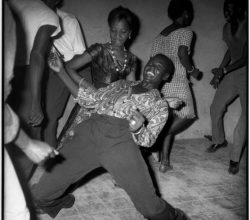
Because his camera had a flash Sidibe got invited to parties – sometimes four a night. His joyful party images, which ultimately won him international acclaim, celebrated youth and chronicled Mali’s changing social norms. “It was a very powerful moment for young Malian men to see themselves dancing with a girl. That didn’t exist before.” Sidibe died last week. A recent interview and images are here.

Image: L’Oeil de la Photographie

An Under-the-Radar Artist Enjoys a Posthumous Revival

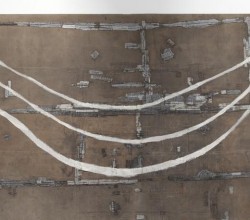
Variously thought of as a Surrealist or (after moving to New York) an Abstract Expressionist, Hedda Sterne was neither. She painted in her own style, perhaps at her own commercial cost. But some thought hers was one of the stand out pieces in last year’s inaugural show at the new Whitney. The linked piece is a scant review of a current show but a particularly helpful bio piece is here. More images are here.

Image: blouinartinfo

Interview with Carsten Höller who brings new ways of perceiving reality + ‘doubt’ to hangarbicocca, Milan

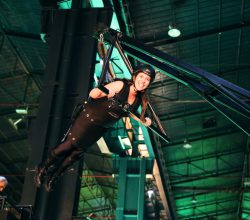
Last summer, Holler had a multi-story slide installed against a London art gallery. Some more of his “experiential” works are now in Milan. Undoubtedly they fulfil one of his objectives – changing the quiet contemplative museum experience. Some think it’s just a giggle but the artist hopes for more – “different states of mind, such as joy, illusion and [doubt], opening the door to new ways of perceiving reality.”

Conceptual Art in Britain 1964-1979 review – an antiseptic archive of archives

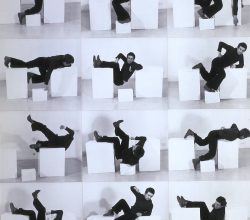
Even in conceptual art’s 1970’s heyday some were skeptical about its credentials. Robert Hughes’ acidic comment “at least you could not accuse it of bourgeois lushness” acknowledged that some attempt was being made at social criticism. But was humour an important part of the conceptualist arsenal? This reviewer thinks so. “There was plenty of joy in the art of those times, even if Tate Britain stints it.”

Image: Tate Britain

Painter asks people to probe his mind

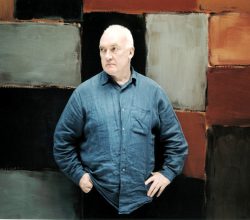
China’s Global Times reportedly said ‘there is a Sean Scully hurricane blowing through China’. His first show was immensely popular and a new survey show has just opened. Scully’s remarks about his art are interesting but there seems to be a bigger theme. Even for a tough minded artist accustomed to art market praise, he is reeling just a little from the reception he is getting. Scully has written about China here.

Lovely Decorative Tentacles

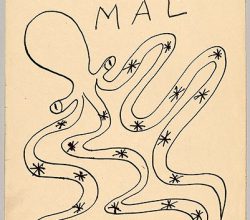
There is enthusiasm for all things Matisse. Recently his “scissorworks” have been celebrated and now it’s his book illustrations.  For him, books were works of art. “”He wanted to supplement the book with images that were fundamental, not superficial, to the text. Matisse felt that illustrations should not be subservient to the text … [but] an expression of kindred spirit [between artist and author]””

Geoffrey Farmer’s art at the ICA: Once you’ve seen it, you can’t shake it

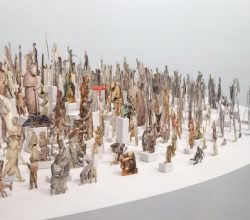
Geoffrey Farmer’s work is category-defying. “Theatrical sculpture” and “exploded-collage installations” are two attempts at describing his room-sized arrangements of hundreds of little sculptures. Each figure is a collaged version of the human form or a photograph of a sculpture.  Difficult to describe but not difficult to appreciate –these displays that feel crowded and random are “more than a bit marvelous”.

13th April 2016

At the End of My Pencil

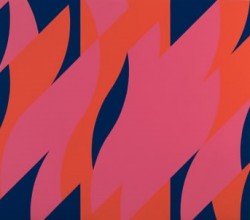
Bridget Riley, the acclaimed Op-Art British artist, really knows how to write. This classic essay recounts her long journey from drawing to black and white paintings to, most recently, coloured shapes. “It was seven years before I found a way of even beginning to work with colour … You cannot deal with thought directly outside practice as a painter: ‘doing’ is essential in order to find out what form your thought takes.”

LACMA and Getty’s impressive Robert Mapplethorpe exhibit reveals Andy Warhol’s lasting influence

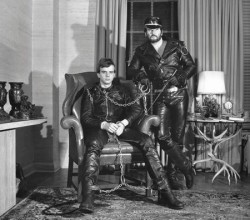
LA’s big Mapplethorpe retrospective shows there still are divided opinions. His elegant and meticulous flower photos gather praise but the homoerotic images set some teeth on edge. “Is there more to it than a fashionable interest in extreme sex?” asks one critic. Knight takes a broader perspective:  “This is about Mapplethorpe’s determination to close the … gap between photography and art.” Some images are here.

The Art of Secrecy

Mossack Fonseca is reluctantly a famous law firm, courtesy of the Panama Papers. And, it seems, they are very active art market intermediaries. Art masterpieces are an attractive (no pun intended) way to hold wealth beyond the reach of the tax man, divorce lawyers and (perhaps) family squabbles. The linked piece describes this trade in eye popping detail. A nice summary nails it – “The secrecy of the art world … is a cancer”

MoMA Takes on the 60’s in a Welcome Shakeup of the Permanent Collection Galleries

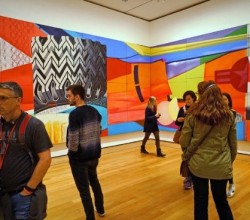
MoMA has done a new hang of art drawn from its permanent collection. It is impressive, as one would expect given their mammoth holdings. Some effort has gone into expanding the number of curators involved in the decision-making. A good idea, right? Well maybe. As this writer says of MoMA’s curators “They know everything. Unfortunately, they don’t know anything else”.

New and unimproved: the spectacle of Julian Schnabel

Since the 1980’s Schnabel has sought publicity or, if needs be, controversy. He once said “I’m the closest thing to Picasso that you’ll see in this fucking life”. A subsequent move into film making brought general acclaim. However, a survey show in Los Angeles indicates that critics remain unimpressed by his art. “[T]he arrogance and bombast here are suffocating. Even a whiff of the sardonic would be refreshing.”

ROLE REVERSAL: ethical traps when curators become artists

Those who carry the roles of both artist and curator get put under the spotlight. As artists, do they enjoy undue advantage because of their ready-made art world networks? As curators, can they stand independent of their own tastes and exercise “disinterested judgement”? Glenn Barkley reflects on some of these complexities from the perspective of a curator – ceramicist, here.

The 10 Most Important Takeaways from the 2016 TEFAF Art Market Report

The TEFAF report is kind of the art world’s scoreboard. Global sales in 2015 were down by 7%. US sales made up 43% of the total market but China tumbled, due partly to a crackdown on “elegant bribery”. “Ultra-high end” sales (over $US10m) grew to 29% of turnover. Post-war and contemporary art remains most popular while a generational decline in Old Masters continues. Online sales grew modestly.