The Easel

26th April 2016

A New Hong Kong Museum Confronts the Difficult History of Chinese Contemporary Art (Part 1)

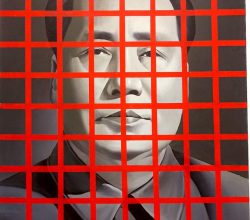
The end of China’s Cultural Revolution ushered in some increase in freedom of expression. Uli Zigg was a frequent visitor on business and started what has become perhaps the largest collection anywhere of contemporary Chinese art. This excellent survey summarises the most important art movements up to the rupture of Tiananmen Square. A part of the Zugg collection has just been on show in Hong Kong.
A New Hong Kong Museum Exposes China’s Censored Memories (Part 2)

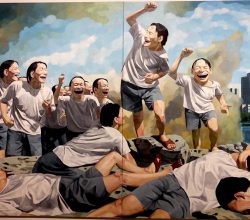
The Tiananmen “incident” crushed the optimism of contemporary artists, even while western collectors were becoming supportive. Multiple art movements have since emerged but Tiananmen casts a long shadow. “A culture such as China’s can’t interpret the meaning of a representation it doesn’t know anything about.” The Zugg collection has been donated to Hong Hong’s M+ museum and will be displayed in full from 2019.

Cindy Sherman Takes on Aging (Her Own)

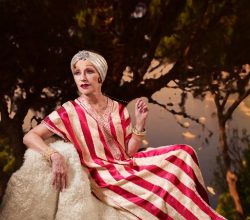
Cindy Sherman has appeared in front of her own camera in many, many guises. Throughout she has disclaimed any autobiographical element to these images. Having just ended a five year sabbatical, her new work is different. It comprises images of older women, perhaps Hollywood stars, of which she says “I, as an older woman, am struggling with the idea of being an older woman”.

Elizabeth Price creates the art work of the year

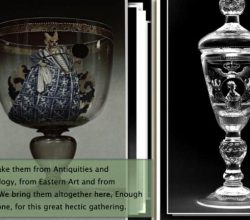
Sir Arthur Evans excavated the ancient city of Knossos – and then undertook “restorations” according to his own designs. When does conservation go beyond preservation and become “reckless damage”? This is the subject of a video work that this critic hails as “remarkably original and exciting video art, which you will actually want to watch.” Background on Evans is here and an interview with Price (28 min) here.

James McNeill Whistler: Prints, The Fine Art Society

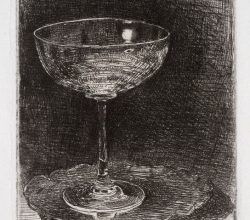
Whistler hated putting narrative into art. Believing in art for art’s sake he sought out the perfect moment. His paintings and atmospheric etchings won the respect of Manet and Degas, and it was to etching that he resorted when sent to Venice to stave off bankruptcy. Some of that output, now in a London exhibition, shows an artist of great capability. However, many now consider he was outshone by the Impressionists.

‘Helen Lundeberg: A Retrospective’ Review

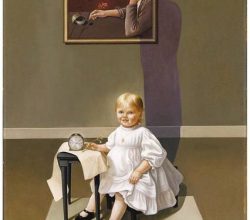
Lundeberg was all of 26 when she wrote that the Surrealist heroes such as Dali were “of no historical value”. She pioneered “post-surrealism” which kept the incongruous but dispensed with the weird, dream like objects of European Surrealism. A mid-career shift toward geometric abstraction is a point of focus in her first full retrospective. Whether this was a successful move is now the subject of some debate.

5 Lessons in Today’s Art Market From a Sotheby’s Advisor

Cappellazzo is the quintessential art market insider – star executive at auction house Christie’s, co-creator of her own art advisory business and now at Sotheby’s. She cheerfully accepts that artistic merit is far from the only factor that motivates collectors. “I’m an expert in an esoteric asset class that happens to be an excellent reservoir of value. Some days I think I’m in the alternative-currency business.”

19th April 2016

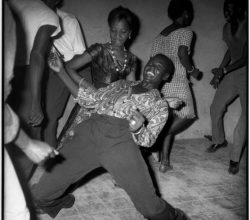
Malick Sidibe: Mali’s Party Photographer Par Excellence

Because his camera had a flash Sidibe got invited to parties – sometimes four a night. His joyful party images, which ultimately won him international acclaim, celebrated youth and chronicled Mali’s changing social norms. “It was a very powerful moment for young Malian men to see themselves dancing with a girl. That didn’t exist before.” Sidibe died last week. A recent interview and images are here.

Image: L’Oeil de la Photographie

An Under-the-Radar Artist Enjoys a Posthumous Revival

Variously thought of as a Surrealist or (after moving to New York) an Abstract Expressionist, Hedda Sterne was neither. She painted in her own style, perhaps at her own commercial cost. But some thought hers was one of the stand out pieces in last year’s inaugural show at the new Whitney. The linked piece is a scant review of a current show but a particularly helpful bio piece is here. More images are here.

Image: blouinartinfo

Interview with Carsten Höller who brings new ways of perceiving reality + ‘doubt’ to hangarbicocca, Milan

Last summer, Holler had a multi-story slide installed against a London art gallery. Some more of his “experiential” works are now in Milan. Undoubtedly they fulfil one of his objectives – changing the quiet contemplative museum experience. Some think it’s just a giggle but the artist hopes for more – “different states of mind, such as joy, illusion and [doubt], opening the door to new ways of perceiving reality.”

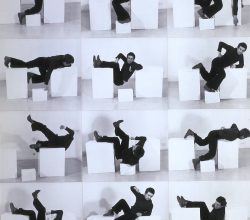
Conceptual Art in Britain 1964-1979 review – an antiseptic archive of archives

Even in conceptual art’s 1970’s heyday some were skeptical about its credentials. Robert Hughes’ acidic comment “at least you could not accuse it of bourgeois lushness” acknowledged that some attempt was being made at social criticism. But was humour an important part of the conceptualist arsenal? This reviewer thinks so. “There was plenty of joy in the art of those times, even if Tate Britain stints it.”

Image: Tate Britain

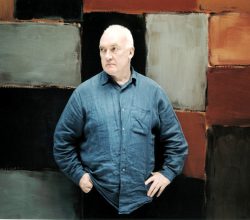
Painter asks people to probe his mind

China’s Global Times reportedly said ‘there is a Sean Scully hurricane blowing through China’. His first show was immensely popular and a new survey show has just opened. Scully’s remarks about his art are interesting but there seems to be a bigger theme. Even for a tough minded artist accustomed to art market praise, he is reeling just a little from the reception he is getting. Scully has written about China here.

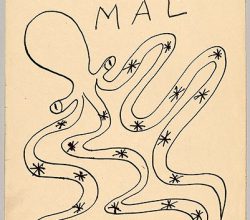
Lovely Decorative Tentacles

There is enthusiasm for all things Matisse. Recently his “scissorworks” have been celebrated and now it’s his book illustrations.  For him, books were works of art. “”He wanted to supplement the book with images that were fundamental, not superficial, to the text. Matisse felt that illustrations should not be subservient to the text … [but] an expression of kindred spirit [between artist and author]””

Geoffrey Farmer’s art at the ICA: Once you’ve seen it, you can’t shake it

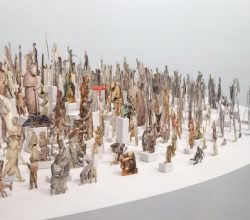
Geoffrey Farmer’s work is category-defying. “Theatrical sculpture” and “exploded-collage installations” are two attempts at describing his room-sized arrangements of hundreds of little sculptures. Each figure is a collaged version of the human form or a photograph of a sculpture.  Difficult to describe but not difficult to appreciate –these displays that feel crowded and random are “more than a bit marvelous”.