The Easel

10th May 2016

Revisiting Marisol, years after her heyday

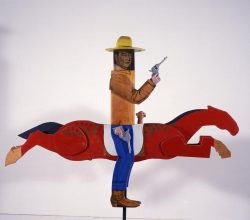
Sometimes artists just drop off the radar screen. Marisol Escobar, who died last week, was a star of New York’s art world in the 1960’s. Her pop / folk art sculptures, widely acclaimed in 1970, were by 2000 all but forgotten. A retrospective in 2014 signaled new interest and brought the judgement that she was “more interesting, more accomplished, and more original than [most of] her generation”. Some images are here.

From the archives: Wallpaper’s 2008 profile of the late Zaha Hadid

The recent death of star architect Zaha Hadid was widely covered, and appropriately so. A good video piece by Will Gompertz (2 min) is here and images of her work here. The linked piece is perhaps the pick of the lot. “[Zaha’s] architecture is the greatest art of the moment.” Her Cincinnati Contemporary Arts Centre is “a delightful architectural metaphor for the cliché of blurred boundaries between art and life.”

The Wondrous Critic

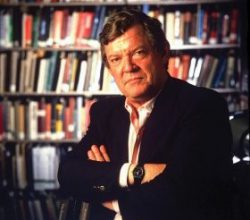
Robert Hughes’ strong views and vivid prose thrilled many. But not all. One writer complains that some essays in a newly published anthology have “a skunk stripe of nastiness”. The above review takes a broader perspective.  “Hughes’s excellence could not be contained in the relatively narrow, not to say paltry, confines of his stated profession. [He] had perhaps the best eye of any critic of his age.”

Nicole Eisenman’s Paintings Stand Out from the Crowd at the New Museum

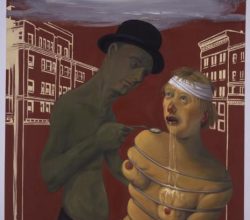
Ignoring the popularity of abstract art, Nicole Eisenman’s preferred style is figuration. One critic’s description of her as “great” may be hasty but her humorous and allegorical work is widely praised. “I paint the figure because I know the world through my body and I understand my desires and my anxieties through my body, and the desires and anxieties of our culture.” A short (3 min) video of the artist is here.

‘It is what it is.’ Dan Flavin’s iconic light fittings in the Ikon Gallery

The popularity of Flavin’s minimalist light sculptures endures – as does their ability to intrigue. Although he trained for the priesthood Flavin discouraged interpretations that emphasized the spiritual element of his work. He felt, according to one critic, that “all humanistic content in art was mushy and to be avoided”. Or, in Flavin’s own words “Everything is clearly, openly, plainly delivered”.

How Identity Politics Conquered The Art World

Jerry Saltz tries to answer a tough question – what is the defining character of contemporary artistic activity? “After the ’80s, we seem to have lost the reflex to recognize or name new art movements. Art in this era has veered dramatically toward an approach that hasn’t been seen in the West for more than 1,000 years… [Its] a real aesthetic movement – the art of the first person.” (His core argument is at the start of this lengthy article.)

Against the Widening Gulf: Arab Art in Tehran

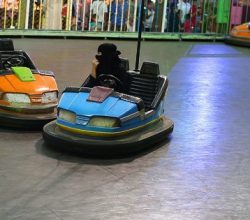
Contemporary art in Tehran is, it seems, always viewed through a political lens – even more so when the art on show is drawn from other Gulf countries. Not surprisingly, key social tensions are a common theme – modernization, religious strictures, regional rivalries. One image on display features women “gleefully playing bumper cars—the closest women can come to driving in Saudi Arabia.”

3rd May 2016

Essay: Bosch Mania

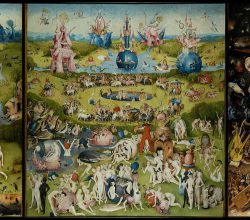
The Noordbrabants Museum, a regional museum in sensible Holland, is hosting an exhibition of the work of Hieronymus Bosch. Astonishingly, it has its doors open every night into the wee hours to cope with overwhelming public interest. Easel Contributing Editor, Morgan Meis, ponders the phenomenon of this Renaissance artist. “[T]he images in Bosch’s paintings were so unprecedented that they must come from the mind of someone who stood apart, a radical of sorts, an outsider for sure. [The paintings of Bosch’s contemporary, da Vinci], for all their innovations in form and technique, take up orthodox and well-worn subject matter in orthodox and well-worn ways. [E]ven The Mona Lisa is a more or less straightforward portrait, due respect paid to her mysterious smile.”

The Natural Geometries of Ellsworth Kelly’s Photographs

Alongside his feted career as an abstract painter, Kelly had a little-known side activity – photography. A first ever exhibition of this work reveals his painter’s eye at work. While the camera was, for him, a tool for experimentation, there is evident common ground with his paintings –“a desire to capture and elevate form, to celebrate the compositions already visible in the world around him.” More images are here.

A Different Guernica

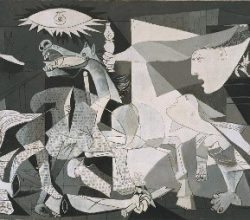
Picasso’s Guernica has been called the “last great history-painting”. A new book has emerged about the notorious event that it depicts but Picasso’s biographer, in reviewing the book, bends the story back toward the painting. The Paris-based Picasso apparently said “I know I am going to have terrible problems with this painting”. Prophetic – over 40 years elapsed before it reached Spain, its intended destination.

Why Moscow Has Suddenly Been Filled with Tacky, Terrible Art

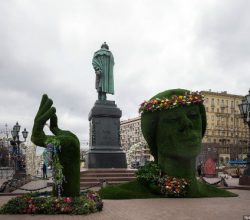
Moscow is holding a Spring Festival – that’s the straight forward part. From there the story becomes rather odd. A “weird, gigantic shrubbery head”, bigger than a house, has suddenly been moved out of the main square. There are allegations of irregularities in payments. Above all, the art is deemed awful – “as if the city had been invaded by a horde of aliens with flamboyantly bad taste.” Make of it what you will.

Sicily: Culture and Conquest, exhibition review – This show will make you itch to visit the island

Before Sicily belonged to Italy – long before – it was a Mediterranean superpower. Equally surprising, the “lethal” Normans were benevolent rulers presiding over a liberal Sicilian society in which the arts flourished. Among the treasures on display is a 10th century Koran“ with dancing and flowing horizontal strokes whose play of positive and negative space (black shapes and white shapes) rivals Jackson Pollock”.

Post-Consumer Report: A Conversation with Rodney McMillian

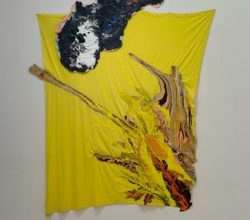
With three concurrent exhibitions on the US east coast, Rodney McMillian demands attention. One of his New York shows – “Landscapes” – uses painting on bedsheets to express his politicized (though not necessarily political) perspective on this time-honored painting genre. “The notion of a landscape as a vista, a reprieve from urban life, a place to get back in touch with nature—that seems to be a bit of a fiction”. More images are here.

How Klee’s ‘angel of history’ took flight

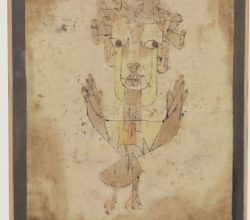
Centre Pompidou’s retrospective of Paul Klee’s work is boasting a coup – his rarely seen masterpiece, Angelus Novus. This drawing was purchased at Klee’s first exhibition and has had a sequence of illustrious owners. “His head is topped by a mess of curls… and his jug ears stick so far out from his cylindrical face that they’re almost flush with his jiggly eyes… [A] fearsome but fragile seraph: afloat, aghast, going who knows where.”