The Easel

8th April 2016

The Full Bradley: A Painter’s Painter Talks About Painting

A gallerist said of Bradley’s first show “There was something extraordinarily great in its badness.” A decade or so later he is a star, with telling inclusions in major survey shows. He has a reputation for carefully considering ideas but also for quickly changing styles. And the mixed feelings thing is still there. As a MoMA curator commented ‘[his paintings] seem stupid, but they’re very profound.” A good bio piece is here.
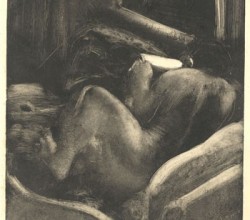
Intimate Impressions: MOMA’S ‘EDGAR DEGAS: A STRANGE NEW BEAUTY’ is a Sumptuous Feast for the Eyes

Degas was not exactly Mr. Popularity. Shy and cantankerous, he never married and had few friends. Now considered a misogynist his meticulously observant art nonetheless frequently focused on women and their bodies. His worked monotype prints (featured in a current exhibition) present images that convey movement more than they show detail. “At times, you’ll think you’re looking at an uncanny memory.”

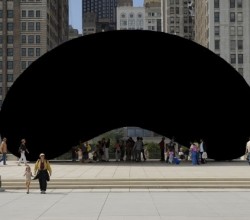
Anish Kapoor Coats “Cloud Gate” in the Darkest Black Known to Humanity

Having secured exclusive rights to Vantablack – the world’s blackest black – Kapoor has put it to immediate use. His hugely popular sculpture in Chicago that had a mirror finish is now, in the writer’s words, a “towering blob of blackness”. Or, you may prefer the artist’s description: “I think the [new] version is more about introspection, about becoming disoriented, lost, and enveloped in an overwhelming void of nothingness.”

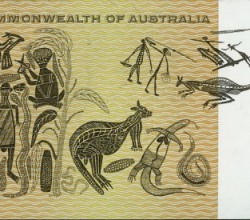
‘Dollar Dave’ and the Reserve Bank: a tale of art, theft and human rights

A ghastly story from a different era. Australia redesigned its currency in 1966 and, on one banknote, incorporated aboriginal art. What followed is a woeful tale of the treatment that country accorded its indigenous people. The only positive to be noted is that, within months of the copyright “settlement”, a national referendum affirmed aboriginal political rights with an unprecedentedly large affirmative vote.

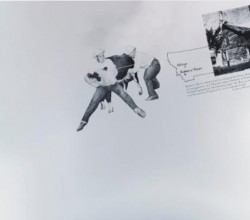
COWBOYS MILKING Formerly Attributed to Cady Noland

The vexed topic of authenticity just got more so. An American artist has disavowed several works restored without her consent. Whether she can legally disclaim authorship is perhaps beside the point because art world practice is that an artist’s word on authenticity is final. What word describes the limbo these works now occupy? As the writer notes “Authenticity no longer inheres in the object, just as art no longer does.”

Image: hyperallergic.com

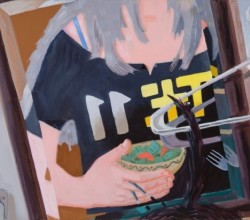
Catalogue essay: Robert Storr on Elena Sisto

This handsome essay reviews the latest paintings of Emily Sisto, a senior American artist. Her works cover a time-honoured subject – the artist herself and her studio. Midstream the writer segues to his main interest – painting itself. “If this sounds like an affirmation of the self-sufficiency of painting … you have read this essay accurately.” More images are here.

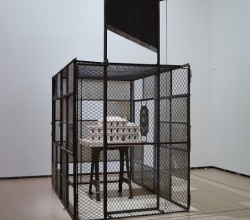
“Her name is Bourgeois, but she is not bourgeois”: Jerry Gorovoy on a lifetime working with Louise Bourgeois

Bourgeois moved to New York as a newlywed but for decades was peripheral in the art world. Her focus was internal – “work was more her than her own physical existence”. Turning 70 she began making autobiographical “cell” sculptures which addressed the female experience and her troubled childhood. Of these works she said “The work needs no words, it’s a visual work. If I could say it, I wouldn’t make it.”

29th March 2016

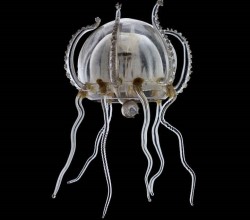
Interview With Guido Mocafico On His Current Exhibition, Blaschka

Before making Harvard’s famous glass flowers, the Blaschkas made models of marine animals. These exquisite objects are the subject of a photography exhibition. “[T]hey would spend days … just studying and copying from life. I sometimes compare them to the copyist monks of the 11th century, who dedicated their whole lives to copying the Bible. There’s something so mysterious and meditative about it.” More images are here.

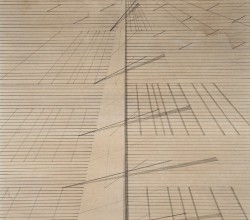
The “radical” drawings of Indian artist Nasreen Mohamedi

In her diary Mohamedi wrote “THE NEED FOR REAL AUSTERITY”. She showed this quality both in life and art. Rather than following India’s tradition of colourful figuration, Mohamedi’s delicate geometric abstractions hark back to older Islamic traditions. Little known outside India at her death in 1990, her reputation is now growing rapidly. Multiple images are in this short (1.7 min) video.

A Critic’s Job of Work

Why do we need art critics? In today’s hot art market “[t]he critic no longer has the power to participate in forming a consensus of value”. The argument here is that the critic’s real role lies elsewhere. “[T]he creative act is not performed by the artist alone; the spectator brings the work in contact with the external world. [Hence] the work can never be completed because … others will always be making their own contribution”.

Is that a Donatello in the MFA’s storage?

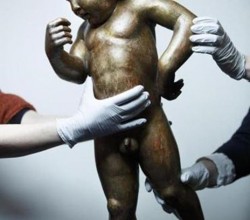
Two interesting stories in one. Donatello is a big name in Renaissance sculpture and the discovery of a new work by him is headline news. Between the lines, though, is a glimpse of the painstaking – and not always conclusive – art scholarship that produces these finds. “You see dozens, hundreds of things that are still missing …These things are out there — they’re floating around.”

Stephen Shore: Retrospective

Success came early to Stephen Shore – MoMA bought some of his photos when he was just fourteen. Over a long career he has been a notable innovator, such as being one of the first to expand from black and white into colour. Never a believer in the importance of the “decisive moment” his acclaimed work focuses on supposedly mundane urban landscapes – a “chronicler of the unspectacular”. A video of images is here.

Patrick Hughes: the Pop Art pioneer who’s gone viral

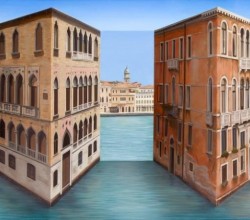
Hughes is a senior British artist and a gallerygoer’s video of his work has gone viral, with 19 million views. That is the kind of exposure that no gallery could hope to provide. Does this justify the writer’s hope that social media is a friend of the visual arts? Well, maybe. Hughes work – that uses perspective illusion to create an “Ah-Ha” moment– may be particularly suited to video. But who can tell what will go viral?

Looking forward through photography

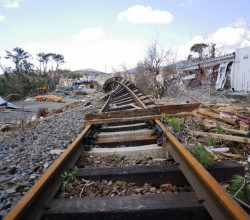
Two photography exhibitions of Japan’s 2011 tsunami tell different stories. A Tokyo exhibition, comprising recovered household photos “relentlessly” conveys the scale of the human tragedy. A New York exhibition of photographs by artists goes to a different issue. Even though Japan is culturally homogeneous …”a collective [reaction to the disaster] should not be taken for granted“. More images are here.