The Easel

13th April 2016

At the End of My Pencil

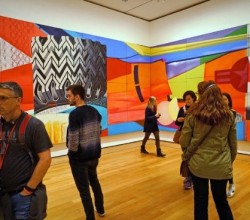
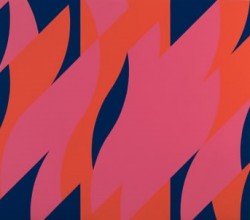
Bridget Riley, the acclaimed Op-Art British artist, really knows how to write. This classic essay recounts her long journey from drawing to black and white paintings to, most recently, coloured shapes. “It was seven years before I found a way of even beginning to work with colour … You cannot deal with thought directly outside practice as a painter: ‘doing’ is essential in order to find out what form your thought takes.”
LACMA and Getty’s impressive Robert Mapplethorpe exhibit reveals Andy Warhol’s lasting influence

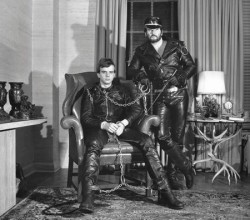
LA’s big Mapplethorpe retrospective shows there still are divided opinions. His elegant and meticulous flower photos gather praise but the homoerotic images set some teeth on edge. “Is there more to it than a fashionable interest in extreme sex?” asks one critic. Knight takes a broader perspective:  “This is about Mapplethorpe’s determination to close the … gap between photography and art.” Some images are here.

The Art of Secrecy

Mossack Fonseca is reluctantly a famous law firm, courtesy of the Panama Papers. And, it seems, they are very active art market intermediaries. Art masterpieces are an attractive (no pun intended) way to hold wealth beyond the reach of the tax man, divorce lawyers and (perhaps) family squabbles. The linked piece describes this trade in eye popping detail. A nice summary nails it – “The secrecy of the art world … is a cancer”

MoMA Takes on the 60’s in a Welcome Shakeup of the Permanent Collection Galleries

MoMA has done a new hang of art drawn from its permanent collection. It is impressive, as one would expect given their mammoth holdings. Some effort has gone into expanding the number of curators involved in the decision-making. A good idea, right? Well maybe. As this writer says of MoMA’s curators “They know everything. Unfortunately, they don’t know anything else”.

New and unimproved: the spectacle of Julian Schnabel

Since the 1980’s Schnabel has sought publicity or, if needs be, controversy. He once said “I’m the closest thing to Picasso that you’ll see in this fucking life”. A subsequent move into film making brought general acclaim. However, a survey show in Los Angeles indicates that critics remain unimpressed by his art. “[T]he arrogance and bombast here are suffocating. Even a whiff of the sardonic would be refreshing.”

ROLE REVERSAL: ethical traps when curators become artists

Those who carry the roles of both artist and curator get put under the spotlight. As artists, do they enjoy undue advantage because of their ready-made art world networks? As curators, can they stand independent of their own tastes and exercise “disinterested judgement”? Glenn Barkley reflects on some of these complexities from the perspective of a curator – ceramicist, here.

The 10 Most Important Takeaways from the 2016 TEFAF Art Market Report

The TEFAF report is kind of the art world’s scoreboard. Global sales in 2015 were down by 7%. US sales made up 43% of the total market but China tumbled, due partly to a crackdown on “elegant bribery”. “Ultra-high end” sales (over $US10m) grew to 29% of turnover. Post-war and contemporary art remains most popular while a generational decline in Old Masters continues. Online sales grew modestly.

8th April 2016

The Full Bradley: A Painter’s Painter Talks About Painting

A gallerist said of Bradley’s first show “There was something extraordinarily great in its badness.” A decade or so later he is a star, with telling inclusions in major survey shows. He has a reputation for carefully considering ideas but also for quickly changing styles. And the mixed feelings thing is still there. As a MoMA curator commented ‘[his paintings] seem stupid, but they’re very profound.” A good bio piece is here.

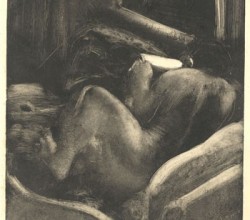
Intimate Impressions: MOMA’S ‘EDGAR DEGAS: A STRANGE NEW BEAUTY’ is a Sumptuous Feast for the Eyes

Degas was not exactly Mr. Popularity. Shy and cantankerous, he never married and had few friends. Now considered a misogynist his meticulously observant art nonetheless frequently focused on women and their bodies. His worked monotype prints (featured in a current exhibition) present images that convey movement more than they show detail. “At times, you’ll think you’re looking at an uncanny memory.”

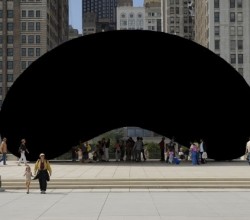
Anish Kapoor Coats “Cloud Gate” in the Darkest Black Known to Humanity

Having secured exclusive rights to Vantablack – the world’s blackest black – Kapoor has put it to immediate use. His hugely popular sculpture in Chicago that had a mirror finish is now, in the writer’s words, a “towering blob of blackness”. Or, you may prefer the artist’s description: “I think the [new] version is more about introspection, about becoming disoriented, lost, and enveloped in an overwhelming void of nothingness.”

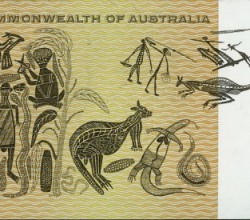
‘Dollar Dave’ and the Reserve Bank: a tale of art, theft and human rights

A ghastly story from a different era. Australia redesigned its currency in 1966 and, on one banknote, incorporated aboriginal art. What followed is a woeful tale of the treatment that country accorded its indigenous people. The only positive to be noted is that, within months of the copyright “settlement”, a national referendum affirmed aboriginal political rights with an unprecedentedly large affirmative vote.

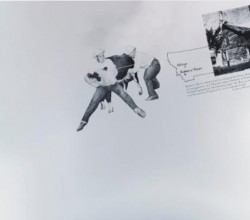
COWBOYS MILKING Formerly Attributed to Cady Noland

The vexed topic of authenticity just got more so. An American artist has disavowed several works restored without her consent. Whether she can legally disclaim authorship is perhaps beside the point because art world practice is that an artist’s word on authenticity is final. What word describes the limbo these works now occupy? As the writer notes “Authenticity no longer inheres in the object, just as art no longer does.”

Image: hyperallergic.com

Catalogue essay: Robert Storr on Elena Sisto

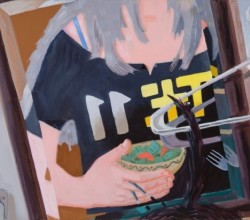
This handsome essay reviews the latest paintings of Emily Sisto, a senior American artist. Her works cover a time-honoured subject – the artist herself and her studio. Midstream the writer segues to his main interest – painting itself. “If this sounds like an affirmation of the self-sufficiency of painting … you have read this essay accurately.” More images are here.

“Her name is Bourgeois, but she is not bourgeois”: Jerry Gorovoy on a lifetime working with Louise Bourgeois

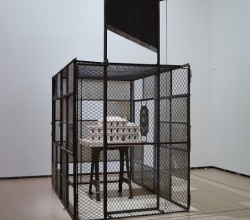
Bourgeois moved to New York as a newlywed but for decades was peripheral in the art world. Her focus was internal – “work was more her than her own physical existence”. Turning 70 she began making autobiographical “cell” sculptures which addressed the female experience and her troubled childhood. Of these works she said “The work needs no words, it’s a visual work. If I could say it, I wouldn’t make it.”