The Easel

15th March 2016

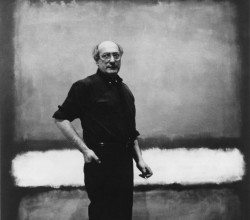
Illuminating the Ethereal: Mark Rothko’s Work from His Son’s Point of View / Interview with Christopher Rothko by David Ebony

Although not an artist, Chris Rothko has forever been questioned about his famous father’s work. Now he has written a book that is a mix of personal reflections and art commentary. It challenges conventional wisdom about Rothko’s late black and grey paintings: “[T]hey are not dark. He was very depressed at the time … but the works themselves are very active. They are not about depression, they are full of determined energy.”
The Battle for Picasso’s Multi-Billion-Dollar Empire

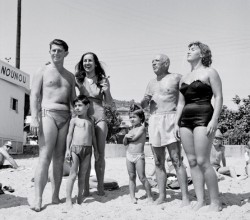
Picasso holds an endless fascination. When he died his estate contained 45,000 works (mostly uncatalogued) but no will. Family squabbles and ongoing authentication issues abound but there is no doubt about ongoing interest. “In 2016 he is the most reproduced, most widely exhibited, most faked, most stolen, and most pirated artist in the world …. “Everyone wants a piece of Picasso.””

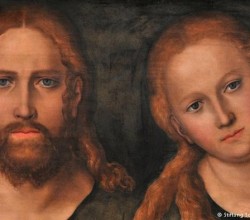
Reunited in Moscow, Cranach paintings tell tale of Soviet-looted art

Works by the important German Renaissance artist Cranach the Elder were taken by the Russians in WWII. Ownership is still being disputed. Russian and German museums have sidestepped the issue to allow the first display of many works since 1945. And ownership? -“We Germans have to learn to understand the moral approach. These works came to Russia as compensation for all of the Russian art treasures which had been destroyed”

Know Your Critics: How to Understand Hal Foster, Godfather of Postmodern Art Theory

Art theory is not everyone’s cup of tea but this piece is worth dipping into. Hal Foster is an influential critic and art historian. He helped articulate the idea of post-modernism – art that is not the beautiful object (Rothko, Pollock) but something that is contingent on its context for meaning (Cindy Sherman). Most recently Foster has railed against at blockbuster exhibitions as “quick, superficial consumption”.

Roslyn Bernstein: Coloring the Grey Zone

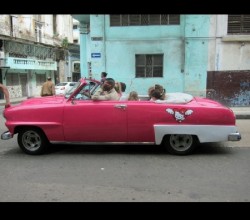
Senior Cuban artists are getting recognition abroad but what is happening inside Cuba? Quite a lot, it seems. The resumption of diplomatic relations with the US has created expectations of major change in the arts sector. Havana’s few official galleries all struggle to “replicate the model of the modern international gallery … Unofficially, art, both professional and amateur, can be found all over Havana these days”.

Van Dyck. The Anatomy of Portraiture

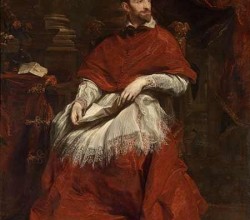
Van Dyck was his century’s greatest portraitist. Preferring to paint from life, he needed his sitters to make multiple studio visits. This gave him an opportunity to observe personality which became the intangible but animating quality of the portrait. “Great portraits bounce us back and forth between then and now, us and them … Great portraits have everything to do with what makes us all unique, and uniquely human.”

Image: Frick Collection

Kiki Kogelnik: Works from 1962-68

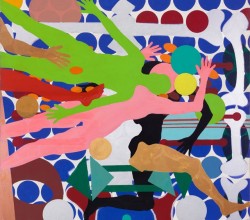
When Kogelnik moved to New York in 1961, she fell in with Pop’s heavy hitters – Lichtenstein, Warhol, Oldenberg. Unsurprisingly, this milieu impacted her own art, especially her use of colour. But she did not share Pop’s fascination with commercialism and always denied belonging to that club. Perhaps in vain – her native Austria celebrates her as a pop artist and the Tate’s big 2015 Pop survey included her work.

8th March 2016

How Robert Mapplethorpe went from America’s pariah to America’s sweetheart

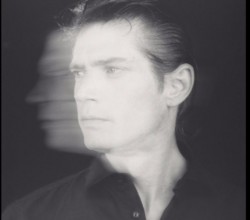
Robert Mapplethorpe’s reputation is on the rise. After his death in 1989, his work was denigrated as part of the culture war between liberals and conservatives. But generational change has blunted the conservative cause and allowed a new appreciation his work. “The animus directed toward Mapplethorpe’s art … was partly simple scapegoating [reflecting] a deep vein of homophobia running through American life.”

The Armory Show review – a more thoughtful, less cash-and-carry art week

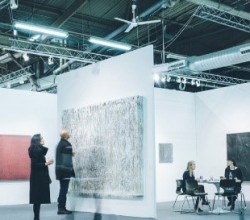
Art aficionados are heading to New York this week. Besides the imminent opening of the Met Breuer building, multiple art fairs are underway, clustered around the Armory Show. A few big ticket sales have failed to lift an underlying anxiety. “[T]he professionalization of Independent [show] comes with a downside: formerly free, it’ll now cost you $25 to get in. Given the soft market, that might be the most anyone spends.”

Botticelli and Treasures from the Hamilton Collection @ the Courtauld Gallery

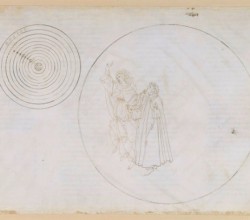
Botticelli’s illustrations of Dante’s poem The Divine Comedy were sold in the 1880’s to pay off gambling debts. Their return to London for the first time since the sale gives first hand evidence of the scale of Botticelli’s achievement. However, as he worked Gutenberg’s printing press foreshadowed an end to the “precious book” genre. An interview with the Courtauld Director is here.

The Bouvier Affair

Not exactly a new story but certainly a colourful one, nicely recounted. Yves Bouvier was a shipper of art works, became an art intermediary and then a dealer when he cornered a lucrative relationship with an art loving Russian oligarch. “Specialist logistics companies … are the quiet butlers of the art world. Bouvier … offered them his services more generally. “I have the information,” he said. “I can sell you paintings.””

Hilma Af Klint, Serpentine Gallery

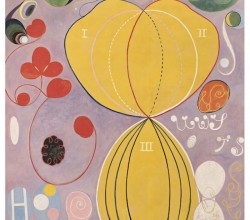
In a burst of mid-career productivity Af Klint painted nearly 200 works that anticipated modern abstraction years before the likes of Kandinsky and Delaunay. Often dismissed as a “spiritualist”, a few recent group exhibitions have stimulated interest in her native Sweden and abroad. Many of her works still sit in a basement outside Stockholm – but perhaps not for much longer. Interesting background information is here.

When Titian Met Tuymans: The Metropolitan Museum of Art Elegantly Occupies the Whitney’s Breuer Building

New York’s Metropolitan has a remit to collect the art of the last 50 centuries. “Unfinished”, the inaugural show in its new building, signals an effort to be more contemporary. Is it an institution transformed? Jerry Saltz is skeptical – “not a fresh or invigorating perspective on postwar art”. Most critics, though, are more positive. “This is a golden age for Manhattan’s art museums and … the Met is upping its game.”

Are Painters Out of Ideas?

Appropriation – borrowing with acknowledgement – is different to copying, and everyone knows it. So why is the market elevating young painters whose work seems highly derivative?   “[T]he art world had seen an explosion of simplistic wall works over its recent boom years … [Has] the once-desirable quality of being original… finally lost its appeal in the art world, and if so, what quality or qualities now fill its void?”