The Easel

1st March 2016

Fischli and Weiss’s Serious Fun

The Swiss duo Peter Fischli and David Weiss pursued in their art what they called “the pleasure of misuse.” Everyday objects, freed from their intended use, could suddenly acquire an eccentric beauty or a new meaning. A major retrospective of their influential work is full of humorous conundrums, such as:  “Is it true that traces of aliens have been found in yogurt?”  Some great videos are here.
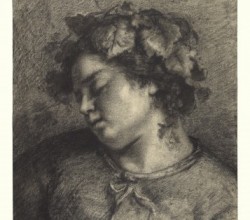
Romance and Subtleties of Black in French Art at Getty

Technology can change the trajectory of art. Nineteenth century innovations in paper and drawing materials, seen as radical at the time, dramatically changed – and elevated – charcoal drawing. On studying one such drawing, a Getty curator was astonished: “I realized the complexity of the drawing was mindboggling.”” An interesting video by the Getty (5 min) is here.

A conversation with Philip Dodd

This discussion about private museums bristles with controversy. Most new museums (especially in Asia) will be private. Is that such a bad thing? “The old [British and American] public museums … are not integrating the histories of China, Japan or the Middle East into the story of modern art. I’m not sure if I prefer the tyranny of curators in public institutions to that of the tyranny of private collectors.”

Anish Kapoor Angers Artists by Seizing Exclusive Rights to ‘Blackest Black’ Pigment

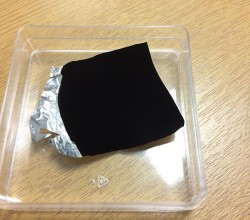
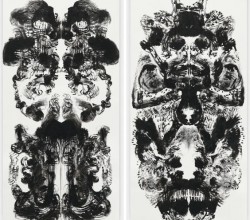
Artists are “outraged” because Anish Kapoor has gained exclusive rights to the blackest black ever. Vantablack is a hi tech nanotube “paint” that absorbs 99.96% of all light and can create weird, disorienting effects. Kapoor explains in interview why it suits his artistic practice. One critic comes to his defence but most seem to share the view that “In the creative world… nobody should have a monopoly.”

What to know about the new Picasso exhibit at the Barnes

There is a long running debate about Picasso’s shift back to more representational styles around 1918. After a decade exploring cubism had he lost faith? A new exhibition suggests that Picasso toned down his cubist style because it was perceived by the media as Germanic. “He was positioning himself in France at that particular time. Who better to look at than past French masters?”

Margaret Grimes on Ruth Miller

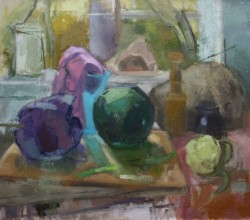
Abstraction’s popularity crowds out discussion of other painting styles. This essay on still life artist Ruth Miller both highlights a notable artist and reminds us of a visual vocabulary we rarely hear about. “In Cabbage, Melon, Window Still Life … an intensely saturated fabric, which drapes over a similarly saturated clear vase, hurries forward, while the twin dark planets of melon and cabbage in front firmly hold it back.” More images are here.

Mark Wallinger: Turner Prize-winning artist’s new exhibition shows he still has a sense of humour and mischief

Mark Wallinger, who won the Turner Prize in 2007, is an important British artist. But Turner Prize winners do seem to get extra attention from the local press. His new show is notable but probably not well served by a commentary that is sometimes turgid. “[T]he … works in the South Gallery hint that he has not quite reached the end of the well-trodden path that leads from satire to metaphysics”.

23rd February 2016

Edvard Munch’s The Scream Arrives in New York Just in Time for Existential-Dread Season

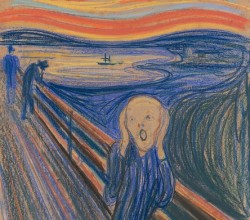
Sex and psychological turbulence animated Munch’s art. His startling imagery provided a role model for artists such as Kirschner, Beckmann and Schiele. Their work was tapping into larger themes roiling society such as urbanization and the role of women. But Munch remained immersed in his personal dramas making each of his works, in the words of one critic, feel like “a one-off personal emergency.”

Dubuffet makes a comeback

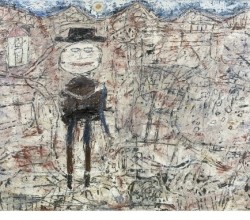
Opinions differ about Jean Dubuffet. His “art brut” style found favour among critics, notably the American Clement Greenberg. However, not everyone was smitten. Richard Serra, for example, complained about his “primitivism that rings false because it’s too calculated”. He influenced artists such as David Hockney and Keith Haring and his work is gaining popularity at auction. A video (4 min) with more images is here.

The Iconographers

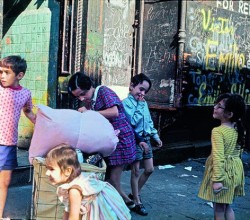
Anyone with a smartphone can be a photographer. Well, maybe. A new Canberra exhibition leans in the opposite direction. “[A]t a time when the so-called democratisation of photography has made many people skeptical of photographic greatness [this exhibition makes] a powerful case for the continuing relevance of the iconic image, the one that among all the others really does deserve to stand out.” More images are here.

Strokes of genius

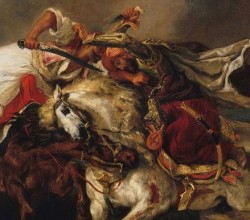
Following last week’s background piece on Delacroix, here is a review of the London exhibition that assesses his enduring influence. “[T]he followers [Van Gogh, Gauguin, Cézanne] supply the wow factor, while the master sets the example. Delacroix … invented the passionate brush stroke, but it was his followers who freed that brush stroke from its prosaic descriptive duties. Delacroix himself could never do that.”

Performing for the Camera at Tate Modern Is an Exhilarating Survey of a Timely Subject

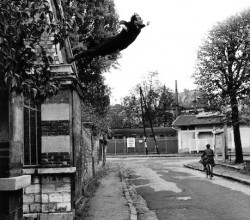
Cult duo Harry Shunk and János Kender loved photographing performance art. Posthumously their large archive has been distributed among five institutions. In acknowledgement, Tate Modern has mounted a show about photography and performance that puts Shunk and Kender together with other famous names and Instagram notables. “Don’t we all, at times, “put on a brave face”… “What is performing? How is it different from posing?”

Laura Poitras at the Whitney: redrawing the war on terror

Laura Poitras’ documentation of her collaboration with whistle blower Edward Snowden won her an Oscar and a Pulitzer Prize. Now, the Whitney is hosting an “immersive installation” of her surveillance art, including security documents and footage of interrogation sessions. A core purpose of museums is to show new material. However, this critic muses “was there any element of the art that wouldn’t translate to a blog post?”

Christo prepares to walk on water

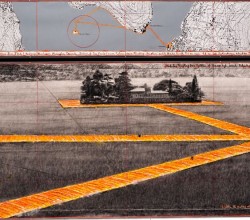
The temporary “artistic interventions” of Christo and his late partner Jeanne-Claude have included the Reichstag, New York’s Central Park and Sydney’s Little Bay. Christo is now hurrying to install a floating walkway on Italy’s Lake Iseo this June. Funding comes from the sale of preparatory drawings, an exhibition of which has just opened in Switzerland. Multiple images are here. Next up, Arkansas River.