The Easel

17th February 2016

Five hundred years of Hieronymus Bosch

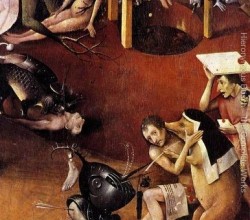
Den Bosch is a little Dutch town with a big name artist son – Hieronymus Bosch. To mark his 500th anniversary, it has assembled an “exhibition of a lifetime”. Resurrected by the Surrealists after centuries of neglect, Bosch was “the first great artist who refused to accept that reality was logical”. Startlingly, the reviewer argues he now is much more influential than his contemporary Leonardo da Vinci. More images are here.

Image: hieronymus-bosch.org
The Iconic Images Behind Beyoncé’s ‘Formation’ Video

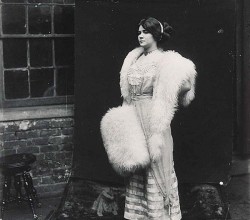
Beyonce’s new single has been linked to the Storyville photos of EJ Bellocq. Bellocq was an early 20th century white commercial photographer who privately recorded New Orleans city life including of its red light district. These images have been widely acclaimed and were the subject of a 1970 MoMA exhibition. “[U]ltimately, the reason for [the Storyville portraits] staying power is that they capture their subjects’ dignity”.

Picture Perfect

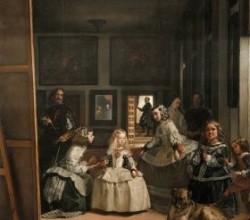
Velazquez’ intruiging masterpiece Las Meninas led the art historian Michael Jacobs to write the painting’s history. It is a hair raising tale, especially during the wars of the twentieth century. As for the image, it was the first “painting about the art of painting… [few works] are open to so many interpretations that have mirrored to such an extent the changing preoccupations of each succeeding era”

A fake of art

“Authenticity is an important concept but how far do we go?” When the Albertina Museum periodically replaces delicate Durer engravings with replicas, in order to preserve the originals, is the visitor short changed? “[A] replica of King Tut’s tomb is an interesting case study, where you can pay less to see better [a] copy of the original” So, where lies the unreproducible magic of an original?

“Marcel Broodthaers”: a Knot of Riddles in a MoMA Retrospective

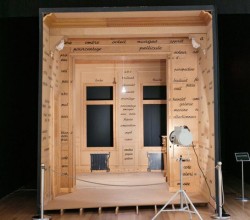
It’s difficult to pin down Broodthaers work. Influenced by fellow Belgian Rene Magritte he gave up poetry and began making assemblages and sculptures. An older review concurs that he is hard to categorise. “Rather than providing answers, Broodthaers’s work raises questions, often about the very nature of art and the institutions that protect and foster it.” More images are here.

Delacroix and the Rise of Modern Art: From the Louvre to the National Gallery, the great Romantic’s art lives through fictions

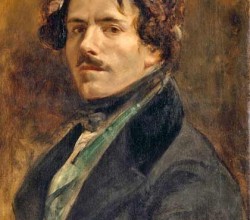
Delacroix’s energetic brush strokes and bold use of colour were a break from classical realism. His view that “cold exactitude is not art” opened a door for the Impressionists and others. Ahead of a major retrospective, a reviewer surveys some of Delacroix’s major works in Paris. “[He] was, as Baudelaire once wrote, “a volcanic crater artistically concealed behind bouquets of flowers””. A short (2 min) video is here.

Nikolai Astrup: Painting Norway, Dulwich Picture Gallery

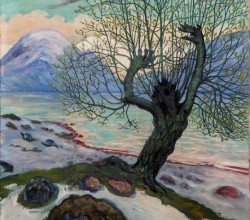
Scandinavia discloses another artistic gem. Like Vilhelm Hammerschoi (Easel, 19 January), Astrup hardly travelled and thus was unknown outside Norway. “It is riveting to see his paintings close up, with their extraordinarily varied brushstrokes, and tender explorations of the most subtle colours … Whether major minor master, or minor major master, it hardly matters: special, unmissable, and – yes – although of his time, unique.”

9th February 2016

Anselm Kiefer @ Pompidou Centre

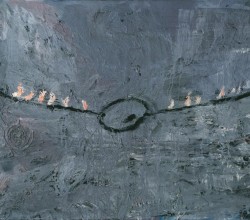
Kiefer’s art is concerned with big themes – notably time and the memory of German history. Over a long and hugely successful career, he has developed a dense visual language that is both eloquent and difficult. One reviewer commented “There are some people whose creativity verges on the demonic and he is one of them.” An excellent background video on the artist (15 min) is here.

Meet the Met

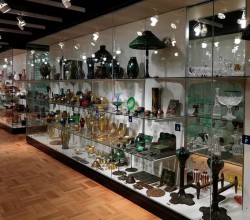
James Panero sets out to visit all 400 plus rooms of New York’s Metropolitan Museum in one day. “The journey [took] seven hours—about a minute a room. Yet for all of the six-million-plus visitors …, there are many quiet oases. This means that Gallery 632, a room of Vermeers that might otherwise be swamped if included elsewhere in some blockbuster exhibition, I could enjoy in near solitude.”

El Anatsui

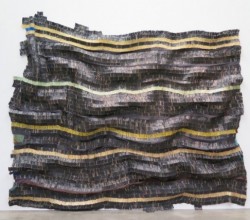
Coming from the outer provinces of the art world Anatsui (from Ghana) was nearly 50 before he gained gallery representation in London (a decade later in New York). His reputation was established with dramatic wall sculptures, often made from recycled materials such as flattened bottle tops wired together to form “metallic fabrics”. More images and a short video (4 min) are here.

Alison Britton: Content and Form traces 40 years of maveric ceramics at the V&A

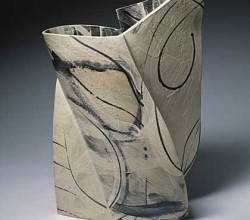
Picasso, among others, showed that in the right hands, ceramics becomes sculpture. A London retrospective of Alison Britton’s “wildly abstract” pots shows that her work belongs in this category. This review gives a fairly brief description of her fusion of sculpture and painting. More illuminating, perhaps, is a series of short discussions of her work “Big White Jug”.

Bruegel in Black and White: Three Grisailles Reunited, Courtauld Gallery

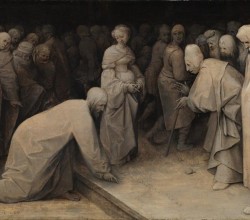
Three small paintings are making a splash in London. The great 16th century artist Pieter Bruegel the Elder is best known for colourful folksy scenes. However, a few of his works were in monochrome grey and he regarded them as special. “Many of the qualities that distinguish Bruegel’s use of black and white would recur in the 20th century as the subject of heated debates on photography”. An interview (6 min) with the curator is here.

“Painter-painter,” and the Lingering Specter of Greenberg

Is the medium of painting losing its edge? Two of last year’s most prominent painting shows get scrutinized for evidence and towards its end, the essay opens up into an interesting general discussion. “Medium limitations have lost their stranglehold on what a work of art could be. [A]s sculpture has expanded to include art activities not traditionally considered sculpture, so too has painting extended its possibilities.”