The Easel

9th February 2016

Anselm Kiefer @ Pompidou Centre

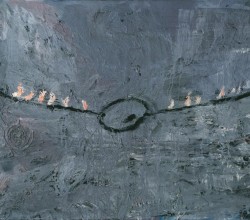
Kiefer’s art is concerned with big themes – notably time and the memory of German history. Over a long and hugely successful career, he has developed a dense visual language that is both eloquent and difficult. One reviewer commented “There are some people whose creativity verges on the demonic and he is one of them.” An excellent background video on the artist (15 min) is here.
Meet the Met

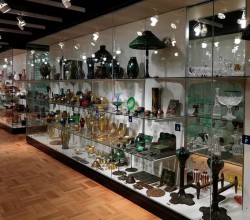
James Panero sets out to visit all 400 plus rooms of New York’s Metropolitan Museum in one day. “The journey [took] seven hours—about a minute a room. Yet for all of the six-million-plus visitors …, there are many quiet oases. This means that Gallery 632, a room of Vermeers that might otherwise be swamped if included elsewhere in some blockbuster exhibition, I could enjoy in near solitude.”

El Anatsui

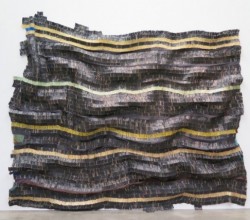
Coming from the outer provinces of the art world Anatsui (from Ghana) was nearly 50 before he gained gallery representation in London (a decade later in New York). His reputation was established with dramatic wall sculptures, often made from recycled materials such as flattened bottle tops wired together to form “metallic fabrics”. More images and a short video (4 min) are here.

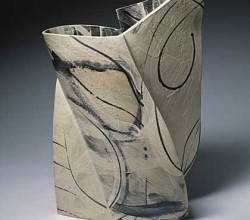
Alison Britton: Content and Form traces 40 years of maveric ceramics at the V&A

Picasso, among others, showed that in the right hands, ceramics becomes sculpture. A London retrospective of Alison Britton’s “wildly abstract” pots shows that her work belongs in this category. This review gives a fairly brief description of her fusion of sculpture and painting. More illuminating, perhaps, is a series of short discussions of her work “Big White Jug”.

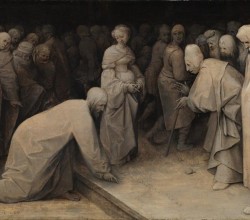
Bruegel in Black and White: Three Grisailles Reunited, Courtauld Gallery

Three small paintings are making a splash in London. The great 16th century artist Pieter Bruegel the Elder is best known for colourful folksy scenes. However, a few of his works were in monochrome grey and he regarded them as special. “Many of the qualities that distinguish Bruegel’s use of black and white would recur in the 20th century as the subject of heated debates on photography”. An interview (6 min) with the curator is here.

“Painter-painter,” and the Lingering Specter of Greenberg

Is the medium of painting losing its edge? Two of last year’s most prominent painting shows get scrutinized for evidence and towards its end, the essay opens up into an interesting general discussion. “Medium limitations have lost their stranglehold on what a work of art could be. [A]s sculpture has expanded to include art activities not traditionally considered sculpture, so too has painting extended its possibilities.”

2nd February 2016

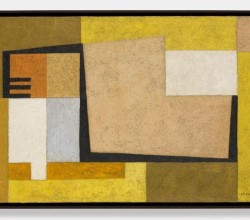
Q&A: Abigail McEwen on “Concrete Cuba”

Havana in the late 1950’s aspired to be the “New York of the Caribbean”. Reflecting this a group of local artists emerged whose shared style was global, hard edged abstraction. Castro didn’t share this taste and the group scattered once he came to power. Only now, with a relaxation in travel restrictions are their works being rediscovered, to much acclaim. Multiple images are in this video (7 min).

Painting the Modern Garden: Monet to Matisse review – ravishing visions

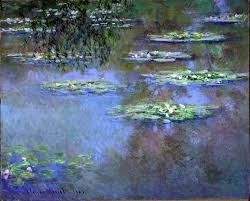
Several Impressionists were hobby gardeners – but not Monet. Gardening was his lifelong passion and the lily ponds at Giverny a focus of great artistic contemplation. Not surprisingly his works stand out in a Royal Academy exhibition. “[T]he three-part panorama of water lilies [is] magnificent. There is no up or down, no end to the beauty of these constellations of colour in liquid space and air. Monet’s garden is beautiful beyond measure”.  Image: Google

The Critic as Artist

Here’s a surprise – “it is the sacred duty of the critic to be wrong”. AO Scott is a noted film critic but his observation is applicable to art in all its forms. Art is a conversation. Critics are important because they help describe – and shape – what that conversation is. The cardinal sin of a critic is thus to not have an opinion – “A critic needs to take a side or we’ll never get anywhere”

It’s Time To Stop Ignoring South Korean Abstract Art

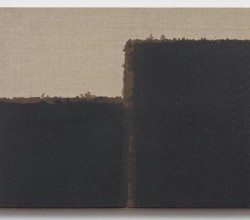
A number of octogenarian Korean artists are suddenly hot art market property after decades of neglect. They belong to the monochrome painting school that, despite similarities to postwar abstraction, has distinctly Korean roots. “To Barnett Newman’s rhetorical question “Who’s afraid of red, yellow, and blue?” [these] painters might well have replied, “We’re not afraid; we just couldn’t care less.”” Some images are here.

Revolution from Another Angle

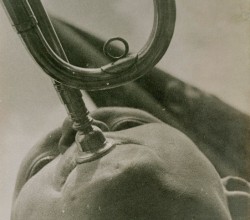
In 1932 artists in Russia lost their freedom of expression. Henceforth, art was to be the servant of propaganda. However, what gave subsequent propaganda images their oomph were the conceptual advances of the earlier, more liberal period. “[I]t was in photography in its many guises that the perceptual innovations of the Russian avant-garde lived on the longest, to leave an indelible… legacy”. More images are here.

Face time: Kelly Grovier on the reinvention of portraiture since 1989

Excerpt from a new book by the American writer Kelly Grovier, on the meaning and value of portraits. “The years since the fall of the Berlin Wall in 1989 have seen as great an upheaval in our comprehension of the human face as any age in history. The challenge for contemporary portraitists has been to … emphasise the complex tissue of tensions—political, sexual, religious—from which contemporary identity is woven.”

When the internet got nasty: art on the electronic superhighway

The impact of computer and internet technologies on life and art has been rapid and profound. New production tools, presentation platforms and art concepts pop up all the time. But where this London exhibition surprises is its reminder of how we first thought about the internet – “cheerful language and unfettered optimism about computational technology … a cybernetic meadow”.