The Easel

23rd February 2016

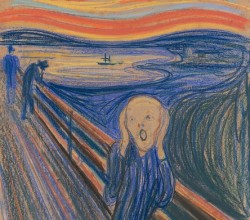
Edvard Munch’s The Scream Arrives in New York Just in Time for Existential-Dread Season

Sex and psychological turbulence animated Munch’s art. His startling imagery provided a role model for artists such as Kirschner, Beckmann and Schiele. Their work was tapping into larger themes roiling society such as urbanization and the role of women. But Munch remained immersed in his personal dramas making each of his works, in the words of one critic, feel like “a one-off personal emergency.”
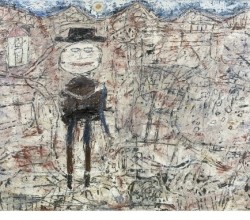
Dubuffet makes a comeback

Opinions differ about Jean Dubuffet. His “art brut” style found favour among critics, notably the American Clement Greenberg. However, not everyone was smitten. Richard Serra, for example, complained about his “primitivism that rings false because it’s too calculated”. He influenced artists such as David Hockney and Keith Haring and his work is gaining popularity at auction. A video (4 min) with more images is here.

The Iconographers

Anyone with a smartphone can be a photographer. Well, maybe. A new Canberra exhibition leans in the opposite direction. “[A]t a time when the so-called democratisation of photography has made many people skeptical of photographic greatness [this exhibition makes] a powerful case for the continuing relevance of the iconic image, the one that among all the others really does deserve to stand out.” More images are here.

Strokes of genius

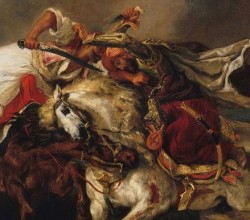
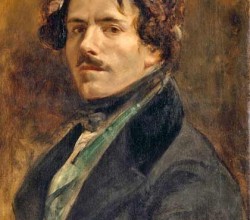
Following last week’s background piece on Delacroix, here is a review of the London exhibition that assesses his enduring influence. “[T]he followers [Van Gogh, Gauguin, Cézanne] supply the wow factor, while the master sets the example. Delacroix … invented the passionate brush stroke, but it was his followers who freed that brush stroke from its prosaic descriptive duties. Delacroix himself could never do that.”

Performing for the Camera at Tate Modern Is an Exhilarating Survey of a Timely Subject

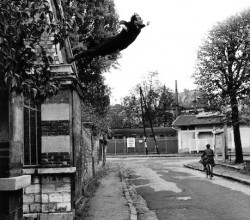
Cult duo Harry Shunk and János Kender loved photographing performance art. Posthumously their large archive has been distributed among five institutions. In acknowledgement, Tate Modern has mounted a show about photography and performance that puts Shunk and Kender together with other famous names and Instagram notables. “Don’t we all, at times, “put on a brave face”… “What is performing? How is it different from posing?”

Laura Poitras at the Whitney: redrawing the war on terror

Laura Poitras’ documentation of her collaboration with whistle blower Edward Snowden won her an Oscar and a Pulitzer Prize. Now, the Whitney is hosting an “immersive installation” of her surveillance art, including security documents and footage of interrogation sessions. A core purpose of museums is to show new material. However, this critic muses “was there any element of the art that wouldn’t translate to a blog post?”

Christo prepares to walk on water

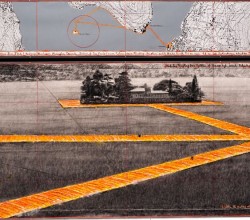
The temporary “artistic interventions” of Christo and his late partner Jeanne-Claude have included the Reichstag, New York’s Central Park and Sydney’s Little Bay. Christo is now hurrying to install a floating walkway on Italy’s Lake Iseo this June. Funding comes from the sale of preparatory drawings, an exhibition of which has just opened in Switzerland. Multiple images are here. Next up, Arkansas River.

17th February 2016

Five hundred years of Hieronymus Bosch

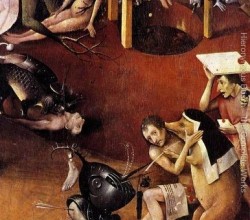
Den Bosch is a little Dutch town with a big name artist son – Hieronymus Bosch. To mark his 500th anniversary, it has assembled an “exhibition of a lifetime”. Resurrected by the Surrealists after centuries of neglect, Bosch was “the first great artist who refused to accept that reality was logical”. Startlingly, the reviewer argues he now is much more influential than his contemporary Leonardo da Vinci. More images are here.

Image: hieronymus-bosch.org

The Iconic Images Behind Beyoncé’s ‘Formation’ Video

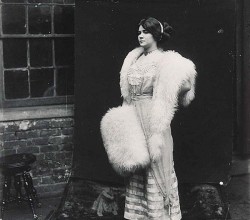
Beyonce’s new single has been linked to the Storyville photos of EJ Bellocq. Bellocq was an early 20th century white commercial photographer who privately recorded New Orleans city life including of its red light district. These images have been widely acclaimed and were the subject of a 1970 MoMA exhibition. “[U]ltimately, the reason for [the Storyville portraits] staying power is that they capture their subjects’ dignity”.

Picture Perfect

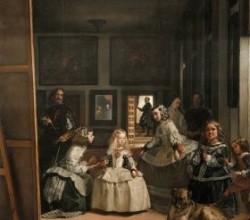
Velazquez’ intruiging masterpiece Las Meninas led the art historian Michael Jacobs to write the painting’s history. It is a hair raising tale, especially during the wars of the twentieth century. As for the image, it was the first “painting about the art of painting… [few works] are open to so many interpretations that have mirrored to such an extent the changing preoccupations of each succeeding era”

A fake of art

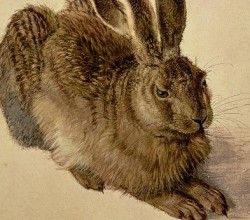
“Authenticity is an important concept but how far do we go?” When the Albertina Museum periodically replaces delicate Durer engravings with replicas, in order to preserve the originals, is the visitor short changed? “[A] replica of King Tut’s tomb is an interesting case study, where you can pay less to see better [a] copy of the original” So, where lies the unreproducible magic of an original?

“Marcel Broodthaers”: a Knot of Riddles in a MoMA Retrospective

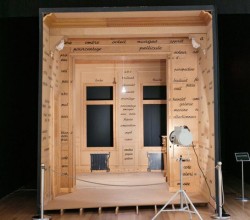
It’s difficult to pin down Broodthaers work. Influenced by fellow Belgian Rene Magritte he gave up poetry and began making assemblages and sculptures. An older review concurs that he is hard to categorise. “Rather than providing answers, Broodthaers’s work raises questions, often about the very nature of art and the institutions that protect and foster it.” More images are here.

Delacroix and the Rise of Modern Art: From the Louvre to the National Gallery, the great Romantic’s art lives through fictions

Delacroix’s energetic brush strokes and bold use of colour were a break from classical realism. His view that “cold exactitude is not art” opened a door for the Impressionists and others. Ahead of a major retrospective, a reviewer surveys some of Delacroix’s major works in Paris. “[He] was, as Baudelaire once wrote, “a volcanic crater artistically concealed behind bouquets of flowers””. A short (2 min) video is here.

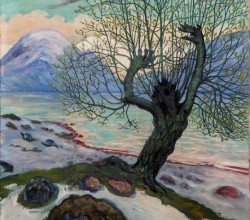
Nikolai Astrup: Painting Norway, Dulwich Picture Gallery

Scandinavia discloses another artistic gem. Like Vilhelm Hammerschoi (Easel, 19 January), Astrup hardly travelled and thus was unknown outside Norway. “It is riveting to see his paintings close up, with their extraordinarily varied brushstrokes, and tender explorations of the most subtle colours … Whether major minor master, or minor major master, it hardly matters: special, unmissable, and – yes – although of his time, unique.”