The Easel

26th January 2016

Zhang Hongtu

When Hongtu emigrated to the US in the early 1980’s, he was, as the son of Chinese Muslims, a quintessential outsider. By the time of Tiananmen Square, he had adopted a hybrid Chinese / Western style for which he is now renowned. “[T] the works set up a kind of cross-cultural viewing experiment: which does one see first, a classical Chinese composition or its Post-Impressionist brushwork?” More images are here.
A Catherine Opie moment in Los Angeles at MOCA and the Hammer

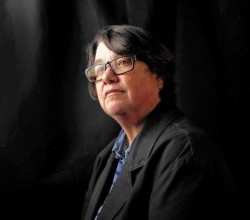
Opie came to prominence with her photos of the Los Angeles gay and lesbian community. They were distinctive not just because they dignified the person but also because they clearly drew on the tradition of art portraiture. Her work is now highly diverse, recently including pictures of Elizabeth Taylor’s home. But there is a common thread – to go “beyond the idea of … voyeurism and into ideas of what is human”.

The Shame and Pride of Empire

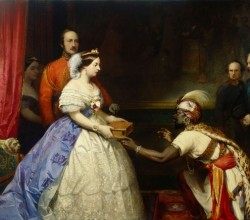
One critic fumed that this exhibition at Tate Britain is “just not good enough” but this reviewer’s description seems better – “brave”. Possessing an imperial empire had a huge cultural impact on the British – exactly as its art shows.  So is the art admirable or appalling? “How much can [one] appreciate an individual work of art, or indeed a genre, when the context is so dominant?”

Porcelain mastery is in delicate details

Meissen, the most famous of all porcelain makers, started out with a monopoly on porcelain manufacturing know-how. These secrets soon leaked out but Meissen’s reputation grew further, based on the work of its great modelmaster, Johann Kaendler. Never less than expensive, the witty and graceful rococo style of its figurines has attracted collectors and the wealthy for over two centuries. Contemporary images are here.

Dada: 100 Years Later

Zurich was a safe place to be in 1916. From the intellectuals and artists that it gathered came the Dada movement – a belief that spontaneity in art could save mankind. While this idea may sound quaint, it has been hugely influential – think photomontage in art and David Bowie and Lady Gaga in music. “The idea of embracing your inner freak is pure Dada. Don’t put on a mask; develop your personal spirit.”

Meet the British art director hoping to spark a revolution within Italy’s museums

The state of Italy’s museums is a national disgrace. Woeful management has resulted in low attendance levels, demoralized staff and run-down buildings. Photos of Venice’s Galleria dell’Accademia are scarcely believable. Recently the Culture Heritage minister replaced the heads of 19 of the country’s 20 top museums in one swoop, referring to “decades of backwardness”. Ruffled feathers doesn’t even come close.

How Art Star Mark Grotjahn Became Art Star Mark Grotjahn: By Repainting Signs for Local Mom-and-pop Stores in L.A.

The way artists arrive at a unique style that defines their work is, by its nature, mysterious. Transformations that look logical after the event are never preordained. For one rising American artist this journey involved painting copies of small shop signs. “The young Jasper Johns talked about this moment of breaking through to making one’s own work. He said, “You do what is helpless and unavoidable.”

19th January 2016

At Home with Vilhelm Hammershøi

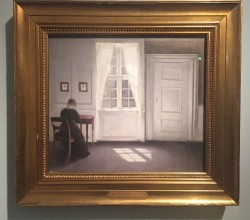
Vermeer was not the only one who could paint enigmatic interiors. The Danish realist Vilhelm Hammershøi specialized in pale, elusive portraits of women in empty rooms and was once described as “the weirdest soul ever to grace Danish painting.” Forgotten outside Denmark for nearly a century, his work is being newly appreciated due to the modern feel of its psychological complexity. More images are here.

Vermeer as Scientist

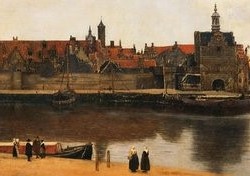
Vermeer’s paintings have a timeless appeal but we know little about what he wanted his works to say. “A student once described his encounter with the “Girl with a Pearl Earring” as tantamount to meeting the love of his life and forgetting to ask her name. [This painting] is an appropriate emblem for Vermeer’s work as a whole: what we know, and what we think is familiar, is forever vexed by its remaining unknowable and inaccessible.”

Max Beckmann at the Berlinische Galerie

The turbulence of twentieth century Germany hugely influenced Max Beckman. The traumas of the first World War gave him a gloomy outlook and seemingly drained bright colours from his work. He tried to capture Berlin’s collective unconscious – “ jagged puzzles of men and women — in coffee-houses, strip clubs … who appear both suffocated by proximity and yet oblivious to each other’s presence.”

Strange Tools: Art and Human Nature

What is art and why do artists want to make stuff?  The cognitive philosopher Alva Noe argues that man-made objects and technology structure our lives but they are so familiar that we fail to notice. The job of art is philosophical – “Art is… a way of investigating the world and ourselves. We start out not seeing what is there. By interrogating . . . we come to see it. The work of art challenges us to reorganize our seeing.”

Image: alvanoe.com

Joaquín Torres-García: A Global Modernist Before His Time

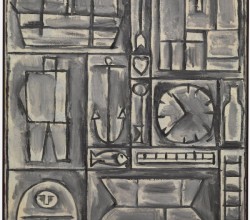
Artists can be ignored if they are seen as not fitting into the global modern art narrative. Torres-Garcia was one such artist, partly because he refused to keep abstraction and figurative art separate. This work “cements his unique place in art history. Long before making something that looks slipshod became fashionable, Torres-Garcia recognized that making something that looks sophisticated was also a convention.”

Shock art needs to grow up

Shock art is, as this article demonstrates, a slippery topic. Does it still shock us? Is it sufficiently coherent? The writer ultimately pinpoints what is bothering him – art’s presumption that it has “special privileges”. In a heterogeneous society, art needs to “learn some humility… and somehow overcome, the vast gulf between [its] own strange world, so wrapped up in its own jargon, and ordinary humanity.”

The Vanishing Man: in Pursuit of Velázquez by Laura Cumming, book review: Saga of a lost masterpiece

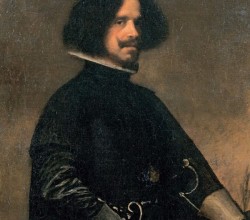
The art critic Laura Cummings has just written an art history detective story. A 19th century English bookseller buys a supposedly “lost” portrait by Velazquez but then becomes embroiled in a controversy over its authenticity. Besides mounting a defence of the bookseller, the book casts an adoring light on Velazquez and resurrects a tantalizing sub-plot in his little understood life. An interview with the author is here.