The Easel

27th October 2015

The ‘double life’ of Alberto Giacometti

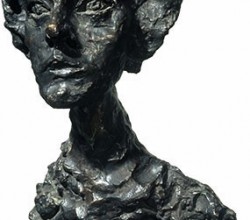
Giacometti focused on what he could observe. The Surrealists in 1920’s Paris tried but failed to win him over. Back home in Switzerland, his father pushed him to portray beauty, not Parisian avant-garde styles. Francis Bacon noticed that when he and Giacometti went to museums, his friend liked the “wrong” pictures. What he wanted to see was the “presence” of an object.  The result – some of the most intense art of the century.
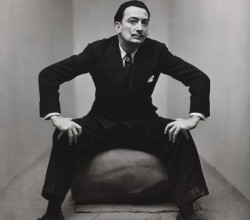
‘Beyond Beauty’ is beyond words

A young Irving Penn hoped that the art muses would anoint him a painter. They didn’t. The iconic photographer thus came to photography only as a fallback option. His taste for stark simplicity was married to a concept of beauty that, over his career, became increasingly edgy – “less an accepted ideal and much more about the ragged edge of beauty”. More images are here.

The World of Charles and Ray Eames review – prodigious and abundant talent

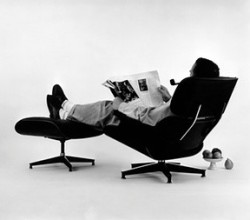
An Eames chair is still a byword for urban sophistication. However, what surprises in a current London exhibition is the sheer scale of the inventiveness – furniture, films, architecture, textiles and more. Charles and Ray Eames were a polymath couple, exemplifying the cheerful outlook of postwar California – “the fun side of the industrial-military complex [producing] modernism without angst”.

Crackpot Gothic

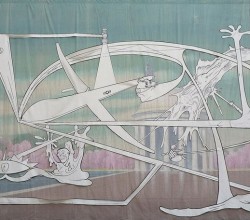
There seems to be agreement that Jim Shaw is a visionary artist but reviewers do struggle with how to characterize his work. Is it comic art, Surrealism, Conceptualism, kitsch or just strange? Besides making his own art, Shaw also trawls through thrift shops for “outsider art” – items for which he is often the only bidder. The reviewer provides his own summation – “cheerful [and] enigmatic … crackpot gothic”.

Museums Take a New Look at Art Nouveau

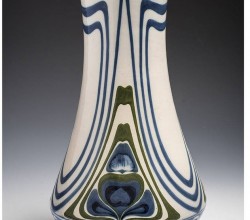
Art nouveau is sometimes associated with the hippies of the 1970’s. Of course, it has much older roots and a distinct philosophical outlook. One historian characterised this outlook as “Nature against History, private intimacy against public monumentality, feminine caprice against male rationality…” Growing museum interest (and auction room results) suggests the tide of critical appreciation is turning.

In Bed with the Avant-garde: The Peggy Guggenheim Story

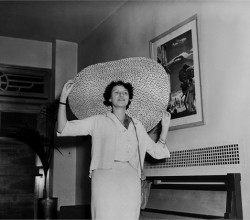
Notwithstanding the headlines, most art collectors have little impact on the art world. Not so Peggy Guggenheim. Undeterred by sexist attitudes, she assembled an art collection of enduring significance. Her support of living artists and backing of commercial galleries significantly influenced the course of contemporary art. The Peggy Guggenheim Collection in Venice remains a major tourist attraction.

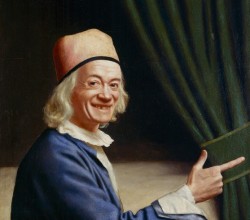
Jean-Etienne Liotard, Royal Academy

Artists are easily forgotten. In the case of Etienne Liotard, his profile may have fallen because his superlative work has been hard to transport. But one critic suspects there is more. He was“[a] happy man with happy skills… working happily in happy places. That isn’t nothing he’s pointing to in that mad … self-portrait. It’s everything. No wonder they couldn’t find a place for him in the twisty, angsty, neurotic meta-narrative of the rococo.”

20th October 2015

Musée d’Orsay becomes world’s first gallery to stage prostitution exhibition – but French art critics aren’t happy

The Musee d’Orsay suddenly has a PR problem. Its major current show, on prostitution in nineteenth century Paris, has been praised for recognizing this aspect of the city’s rapid urbanization. However, local critics are questioning the recurring erotic content in recent shows. One writer has likened Musee d’Orsay to an art house cinema that shows “difficult films one week and pornographic films the next to make up their losses”.

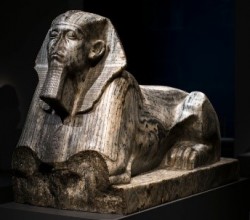
An Ancient Egyptian Show That’s Low on Bling but High on Beauty

After a long civil war, Egypt emerged into the 400 year “Middle Kingdom” period during which the arts flourished. For both pharaohs and commoners, art was a status symbol and facilitated one’s journey to the afterlife. Non-regal objects have a particular contemporary appeal: “[W]e tend to identify with Egyptians … they drank beer, collected cats and wore flip flops. Who can’t relate to that?” More images are here.

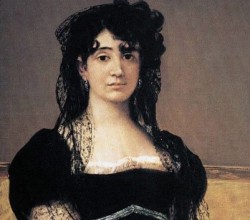
To look a courtier in the mouth: how to see beyond the stiff upper lips in Goya’s portraits

The English poet Craig Raine is a highly original writer on art, providing you can tolerate weighty literary references. His assessment of Goya’s portraits (see last week’s Easel) is focused on mouths. “Mouths in nature are often wrong…There are many brilliant mouths on show here – for example, the vacant, open mouth of the Infante Don Luis de Borbón (1783). You can almost hear him trying to breathe through his blocked nose”.

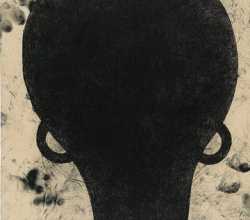
Head to Head With Martin Puryear at the Morgan Library

Before art school, Martin Puryear went to Africa with the Peace Corps. Fifty years on, that experience still influences his art. But his complex sculptures in wood and metal are not easy to categorize. Perhaps this suits him – he has said an appreciation of his art “doesn’t require knowledge of or immersion in the aesthetic of a given time or place.” More images are here.

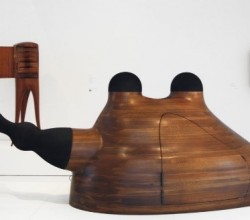
The Rebel and the Robot: Wendell Castle Is Still America’s Furniture Maverick

If ever there was an artist who makes redundant the distinction between art and craft, it is Wendell Castle. As a sculpture student he started thinking about art-furniture and has spent a long career “going off the normal course of action”. He is enjoying a burst of late career creativity – and his first museum retrospective. Some images are here.

The Shoes Under the Art World

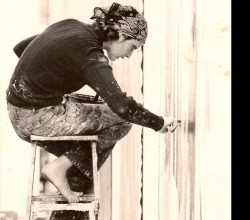
The art world’s neglect of female artists is well known. Here it is described beautifully with the voice of lived experience. “[My dealer] was trying to pitch [a picture] of mine. Bob talked about… “a Lipsky on your wall,” and sometimes he said the name “Pat.” And then I noticed—he never said “her” or “she.” You could buy without knowing you’d be going home with something female.”

Andreas Gursky Museum Freider Burda Exhibition – Wonders Of Colour Photography

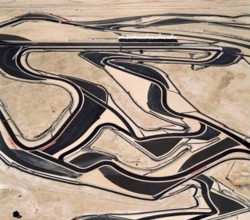
A few years ago, one of Gursky’s images became the most expensive photo ever sold at auction. It was a characteristic work – a hyper-real image taken from a height. His signature style is to use elevation, plus digital trickery, to distort visual depth cues. You cannot tell whether you are near or far – the image, often brimming with detail, is “being seen from nowhere”.  A better but longer review is here.