The Easel

6th August 2024

Silversmith & tastemaker

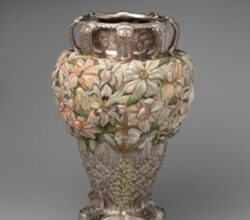
Charles Moore was Tiffany’s “house genius”. Not only a gifted designer, he collected objects from everywhere, opening his eyes to more sophisticated designs and varied technique. By the 1890’s Tiffany had driven an “aesthetic revolution”, shifting American tastes from rococo “nostalgia” to an embrace of Japanese and Islamic influences. Occasionally, it seems, Moore appreciated technique to excess. A vase from 1895, a technical “marvel”, is also the “ugliest thing Moore ever designed”. Images are here.
How Jeremy Frey changed the way the art world sees Wabanaki basketmaking

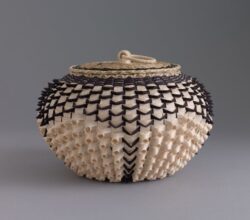
The Wabanaki, a group of Maine First Nations, have always made both decorative and working baskets. Frey was born into that tradition of weaving ash wood and sweetgrass but was inclined to “tweak”. His intricate baskets are now seen as contemporary art and have revitalised basketry as a form of Indigenous self-expression. Intones New York’s Met, which now has one of his works, Frey “merges Wabanaki Indigenous weaving methods with the symmetrical forms of classical European ceramics”.

Music for the Eyes: “Crafting the Ballets Russes” at the Morgan Library & Museum

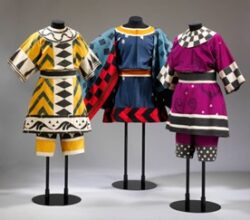
Gesamtkunstwerk is a mouthful – it’s the German word for combining multiple art forms into a “total work of art”. Nowhere is the idea better applied than to Ballets Russes, a 1909 spin off from Russia’s Imperial Ballet. It was an all-star affair – music by Stravinsky and Debussy, set designs by Picasso and Matisse, and dancers like the incomparable Nijinsky. On all measures, Ballets Russes was a cultural sensation, described by one writer as “an attempt of the twentieth century to create civilized pleasure.”

Massive tapestries at the Kimbell depict 1525 Battle of Pavia in impressive detail

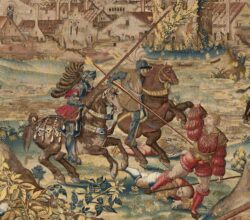
The Battle of Pavia in 1525 saw the Holy Roman Emperor (Charles V) vanquish the French. To commemorate, Charles turned to the most highly prized art form of the Renaissance, tapestries. Woven in fine wool and silk, with gold and silver highlights, the seven “monumental” Pavia tapestries took years to complete. Amidst many sumptuous details is the interplay of northern Europe’s attention to detail with the Italian preference for buff bodies. “Tapestries were indispensable to the articulation of authority”.

Here’s What You Need to Know About Chicago Imagist Christina Ramberg and Her ‘Furtive Figuration’

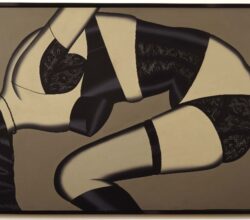
Ramberg came to prominence as one of the Imagists, a loose grouping of Chicago artists working in that city’s tradition of expressive figuration. From the start, she had a distinct aesthetic – a flat pictorial space showing isolated female hands, hair or torsos. A bit like comics, this was figuration with limited information. Ramberg’s paintings are especially striking, says one writer, because of their “strangeness … the byproduct of following a certain line of thought … often beautiful, deeply strange pictures”.  Images are here.

Captivating memories with traces of violence and death

Sami started painting in Saddam Hussein’s Iraq before fleeing to Sweden. A group of his works are on show at Blenheim Palace, a grand country house that celebrates “war and aristocracy”. Sami, though, is a refugee and his work – a mix of figurative and abstract – sits oddly in these bellicose surroundings. Yes, some paintings show military men but, with faces obscured, the tone is melancholy, not victorious. Unexpectedly, says the writer, art and house are “a marriage made in heaven”. (Google translate)

30th July 2024

From Taylor Swift to Kawaii: Why Museums Are Obsessed With Pop Culture

Wanting to attract younger audiences, UK museums are mounting pop-themed shows – Taylor Swift at the V&A, Barbie at the Design Museum, kawaii at Somerset House. Boosting revenues is important but perhaps that’s not all that’s going on. Past pop culture is so easy to access that it doesn’t go away (think Bowie) leading to a merging of old pop with new. Previously the gate keepers to high culture museums now “validate the aristocracy of pop”.

A tribute to Kenneth Grange, Britain’s best kept secret industrial designer

Ex-Apple designer Jony Ive is legendary but was preceded by the British designer Kenneth Grange. He entered product design when post-war British industry clung to ideas of craft production. Grange drew on new industrial technologies to create iconic designs for household appliances, trains, the London cab, cameras and more. His key objective was that products be a pleasure to use. Ive has called Grange “a hero of British design [who had] an enormous impact on visual culture”. Images are here.

There is Light Somewhere at the Hayward Gallery: an emotional exploration of history and belonging

Strachan’s diverse art is nothing if not ambitious. Observing that black figures are regularly omitted from western versions of history, he creates “hidden histories” about black figures whose achievements were overlooked. Perhaps the show needs some “editing down”, as one critic complains. Still, Strachan’s creativity makes the powerful point that “if we don’t see ourselves in the pages of history … it is hard to imagine where we fit in and how we belong”.

Stained Glass Windows of Notre Dame at the Heart of Controversy

Should the restoration of Notre Dame cathedral include a “contemporary architectural gesture”? The French government thinks so, proposing that some less prominent windows be replaced with contemporary stained glass. The writer says this is “heritage being sacrificed on the altar of contemporary ideology”. Stained glass windows, though, are continually repaired and replaced. One writer defines the issue in similar terms to the restoration of artworks: “if all the parts have been updated, is the object still the same?”

Glamour, Glory and Gone

Around 1960, Marisol was a star of New York’s art scene. Not only did her bulky totemic figurative sculptures grab attention, but she also stood out as a glamorous female sculptor in a macho art world. Her works dealt explicitly with families, female roles and male privilege. International acclaim peaked in the late 1960’s and, although remaining prolific she faded from view. Her death, decades later, brought the headline the “forgotten star of Pop Art”. Art history, it seems, is now writing Marisol back in.

The inventor of the Renaissance

Vasari is remembered not for his competent paintings and architecture but because he wrote the first “modern” book on art history. It advocated for artists to be seen not as tradesmen but as “gifted”. He launched the unfinished debate about whether colour or composition is more important in a painting. Guilty of being a gossip, and of ignoring the Northern Renaissance, his description of the Italian Renaissance is nonetheless an influential part of our intellectual inheritance.