The Easel

11th June 2024

Now You See Us: Women Artists in Britain 1520-1920, Tate Britain review – a triumph

Major museums are giving more exhibitions to contemporary female artists. Now, past female artists are also getting attention.  This London show demonstrates the huge revisions still needed to art history. Talented female artists were numerous, not an “exotic anomaly”. Most still await recognition – one critic notes that “for every celebrated [artist] … there are at least 10 unfamiliar names”. And these ambitious women had the agency to skilfully navigate a male-heavy art world and create great work.

Enzo Mari: Design for the people

Mari was a giant of Italian design whose work spanned new products, graphics and art. Trained in design-intensive Milan in the 1950’s, his focus on simplifying form yielded elegant products somewhat at odds with post-war consumerism. He was also a design theorist who published widely and wasn’t afraid to express his opinion, once calling Ikea “genocide”. Among Mari’s best-known works are a calendar, a children’s puzzle and a fruit bowl made from a piece of steel I-beam.

“In my experience there is no precedence for a work like the Madrid Ecce Homo”

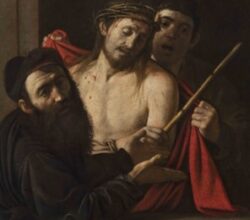
Following its sensational discovery, a previously unknown Caravaggio work has been restored and put on display at Madrid’s Prado. Christiansen, an expert consulted on the work’s authenticity, can scarcely hide his enthusiasm for the work, or for the “revolutionary and persistently experimenting” artist. The painting, says one writer, makes Caravaggio “the precursor of the greatest minds of the European seventeenth century: from Franz Hals and Rembrandt to … Velázquez.” (Google translate)

Mickalene Thomas is “All About Love” in her new retrospective

Kehinde Wiley is renowned for his portraits of black male subjects in classical poses. Thomas, a contemporary art “luminary”, is doing likewise with black female subjects. Her paintings and collages show female subjects in provocative poses, surrounded by bold prints. Sometimes rhinestones are embedded in these pictures to emphasise their “libidinous content”. Says Thomas, “By portraying real women with their own unique history … I’m [diversifying] the representations of black women in art”.

Still life, still going

It was Dutch flower painting that established still life as a genre. Later, the French decided that it was the least prestigious genre – women’s art in other words. Despite its lowly status, the narrative capability of still life painting has proven to be substantial, because objects can speak eloquently to human themes like mortality, status and love. Like all great art, it has the capacity to “leave the viewer space to imagine themselves in the painting, in a different world.”

Breathtaking: Mary Cassatt at Work, at the Philadelphia Museum of Art

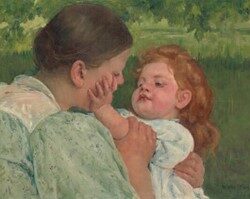
Cassatt’s many portraits of mothers and children have seen her tagged as a sentimental painter. A new show suggests otherwise. Despite family wealth, she was actually a hard worker. Reflecting this, curators now think her paintings intended to show the hard work of raising a family. Further, Cassatt was technically innovative, especially in printmaking. Perhaps she was not as innovative as her fellow Impressionists, one critic observes. Yet, Degas was a life long supporter and he knew a thing or two about art.

What the NFT Phenomenon Tells Us About the Monetary and Creative Value of Art

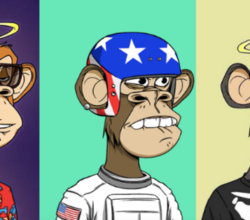
A post-mortem on the NFT bubble and its art connections. The 17th century Dutch tulip mania is nicely outlined here but the linked piece better captures how NFT’s became an “inscrutable religion”. At the heart of the craze was a “fundamental lie: merit equals money. [One artist admitted] digital art was usually a sentence of poverty, It seemed obvious that the cartoons of bored apes and pixelated punks that were being traded for millions of dollars would soon wilt like the Dutch flower.”

4th June 2024

Sonia Delaunay: Living Art

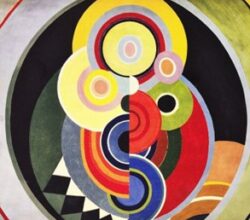
To say Delaunay was prolific is an understatement. Her output spanned painting, embroidery, textiles, couture, tapestry, graphics, mosaics and décor. She established her modernist credentials in the 1920’s by applying “singular” geometric designs to fashions such as the flapper dress. Although she moved on to painting after WW2, the peak of her career was her textile and fashion work that anticipated Pop and Op art. Delaunay noted ruefully that she had ”been born forty years too early”. Images are here.

Piero della Francesca: the world knew him not

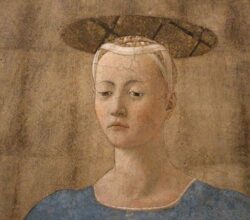
Coming from regional Italy, Piero was a forgotten outsider of the early Renaissance. Rediscovered in the mid-19th century, his work differs from the styles of the key Renaissance cities. He rarely painted human feelings, portraying instead an “ideal proportional world” with “unerring apportioning of light and shadow”. Such works include some of the “supreme masterpieces” of Italian art, making him “a worthy predecessor to Leonardo and Vasari”. Having accomplished all that, Piero gave up art to study maths.

Whitney Biennial 2024: Even Better Than the Real Thing

A biennial is, by definition, a mélange. Good reason to expect controversy, which is kind of the point. Sadly, the commentary coming out of the Whitney show is not lively criticism, but conveys an air of weariness. The biennial itself has a feel that one critic describes as “I can’t go on/I must go on”. Another wonders whether it’s a “a grand intellectual battle, or just an insiders’ chinwag?” Says the above writer, “As we lean into what divides us—the cracks and fissures … we choose tribalism and separatism.”

Marc Camille Chaimowicz Was Not Really of This Masculinist World

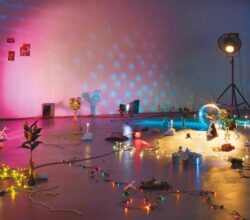
Chaimowicz felt that his art school disapproved of his interest in applied arts – “colour was seen as decadent and pleasure as reactionary”. His response, it seems, was to go all in, becoming renowned for  “uncategorizable and gloriously chaotic room-size installations [containing] objects one might find in a flea market”. He was trying, suggests one critic, to represent “memory and the mists in which it necessarily resides”. Often Chaimowicz would be part of the installation, available for a cup of tea and a chat.

Stroke of Genius: How 34-Year-Old Flora Yukhnovich’s 21st-Century Spin on Rococo Turned Her Into an Art-World Phenomenon

When does a young artist become noteworthy? If they make brilliantly original work, undoubtedly. A contemporary alternative is to get huge prices at auction. Yukhnovich has done the latter and, perhaps, also the former. Her semi-abstract paintings riff on the rococo style of 18th century France, and a major London museum will hang two of these over the summer. Does that justify the triumphant headline above? Not really, but then Yukhnovich’s achievements are not nothing either. A video (2 min) is here

Sir Elton John and David Furnish talk us through their upcoming V&A exhibition ‘Fragile Beauty’

Does a celebrity’s photography collection deserve a show in a public gallery? The problem is that there is a fine line between a show that celebrates great images and a show that is simply a homage to the collector. That risk is even greater when the collector is Elton John, a name that will pull in the crowds. The show is “rammed full of iconic images” says one critic. It works because its link to the singer gives it “a story, and an iconic story at that”. More images are here.

On the Dot: Vienna’s Albertina Celebrates Roy Lichtenstein’s Centennial

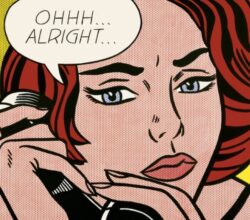
It’s hard to disagree with one critic’s characterisation that Lichtenstein was “the most cerebral of the Pop artists”. His comic-like paintings were challenging on several levels. They displayed (flaunted!) a mass production aesthetic in a hand made object. And, of course, they presented a seemingly “low culture” image as high culture. Coming hard on the heels of individualistic abstract expressionism further amplified his challenge. Plagiarism? Yes … and no. Comics don’t deal in parody.