The Easel

23rd August 2016

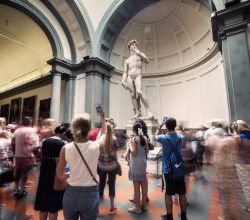
David’s Ankles: How Imperfections Could Bring Down the World’s Most Perfect Statue

A love letter to the sculpture that defines Florence. Michelangelo, “a savant of marble” had to work with an imperfect block of stone. As a result, the figure is slightly off balance and now has structurally weak ankles. “Destruction happens in any number of ways, for any number of reasons, at any number of speeds – and it will happen and no amount of reverence will stop it”.

The power and glory of red

Colour, observes the writer, is all about culture. Red has always been associated with power – hence “the impulse to make red vermilion spanned the old world from end to end”. The chemical discoveries of the 19th century demystified much but new conundrums now exist. Neuroscience defines colour as a sensation: ““Is a red dress still red when there is no one to look at it?” asked Goethe…. The answer then and now is ‘No’”.

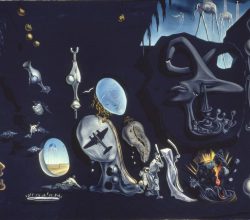
Salvador Dali: a life less ordinary

Surrealism started as a small literary movement until it attracted the attention of Paris-based Dali. His decade of work from the late 1920’s gave the movement artistic expression; he took the role of cheerleader. After that came a half-lifetime of relentless self-promotion and commercialism. Many dismiss his later work. One critic’s mixed assessment – “dubious Catalan genius” seems close to the consensus.

Does this image sum up Britain?

In the wake of the Brexit vote there is a nagging uncertainty about what it means to be British. A current London show demonstrates the answer isn’t simple and perhaps never was. It is more exciting and interesting than “that awful bland vision of bowling greens on a Saturday afternoon with high tea. That’s a part of Britain too, but it’s only a little part. It’s not a pattern for the whole country.” More images are here.

At the MFA, Renaissance mastery on display

The Florentine sculptor Luca della Robbia had one really big idea. He perfected the technique of making glazed terra cotta sculptures that were colourful, durable and cheaper than marble or bronze. Artistic genius, plus his family’s ability to keep secret its production techniques, led to a century of masterpieces from the family firm. A “resplendent show” is the local critic’s assessment.

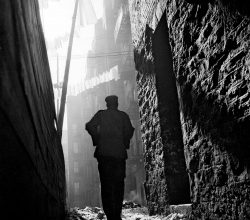
Gordon Parks and Ralph Ellison’s Collaborative Visions of Harlem

“Damage imagery”- the idea that black Americans were psychologically damaged by segregation – was a major debate in postwar America. Acclaimed novelist Ralph Ellison and renowned photojournalist Gordon Parks contributed with two illustrated essays about Harlem, “a place of outward suffering and internal turmoil”. Neither piece was published but one has now been reassembled. A short video (2 min) is here.

Contemporary Art Not Really Avant Garde Just Truly Irrational

During August, when the art world is at its slowest, a longtime critic vents his pessimism. Are artists truly radical anymore? Have the main protagonists all been “captured” – museums chasing big audiences, dealers and auction houses chasing big deals and artist chasing bigger personal profiles? “[T]he great age of radical re-invention, both of what was seen and also of ways of seeing it, has come to an end”.

Coming up next week …

The Easel’s Contributing Editor, Morgan Meis, reflects on the sea change in attitudes toward figurative painting.

16th August 2016

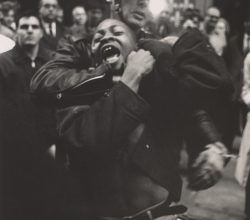
Danny Lyon’s Prescient Visions

From the start of his career Danny Lyon would embed himself with groups under pressure – the civil rights movement, a biker club, immigrants, Texas prisoners. His photographs take a position – much like Hunter S Thompson did with “gonzo” journalism. As Lyon admits “I’ve never really cared about that line [between professional and non-professional]. I’m more interested in the truth and that the good guys win”. Images are here.

Image: Whitney Museum

Imagine: New Imagery in Italian Art 1960-1969, Peggy Guggenheim Collection, Venice — review

Postwar Italian art is on a tear, with prices and critical appreciation both on the rise. A group of Rome-based artists, often linked with Pop, is getting particular attention. A show in Venice demonstrates their aesthetic was uniquely influenced by Italy’s classical heritage. “[C]omparisons with Warhol only go so far. His Campbell’s soup cans … have an entirely different charge from… Botticelli’s Venus”.

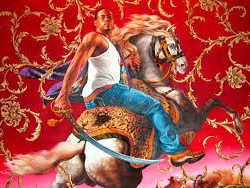
Bold, provocative art that looks like money

Kehinde Wiley’s prominent travelling retrospective is generating heated views wherever it goes. His images put contemporary black males in heroic poses borrowed from the Great Masters. Is this a commentary on racial politics? Is his work formulaic? This writer takes aim elsewhere. Some of the small scale portraits are “simply fine” but other works “feel as confected and disposable as a good pop song”.

Image: Wikipedia

Review: Art Stage Jakarta

Outside Britain and the US, national art markets configure in a wide variety of ways. Indonesia’s market, emerging from a politically repressive era, is progressing largely on the back of private sector initiatives. Some artists are building international profiles but national public collecting institutions have yet to emerge.  The South-east Asian art market “still resembles a series of spot fires rather than a raging inferno.”

In Honour of Faces

Velazquez’s portraits commemorated a person’s public role. Portraiture after Freud tried to portray psychological truths. Now, selfie portraits seem mostly to be self-promotion. A “lavish” portrait show at New York’s Whitney displays examples of all these possibilities. “[D]ecidedly stale” complains one critic; a genre under “great pressure” state the curators. Images are here.

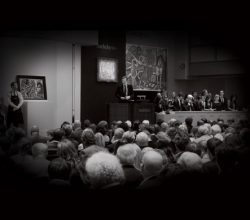
House Arrest: How One Topsy-Turvey Season At Sotheby’s Could Change The Auction World Forever

With major art works now worth a squillion dollars, selling art is no longer a genteel business. Soft auction results at Sotheby’s have led to sackings and some big new hires. They now apparently see themselves like an investment bank – “just a big transactional organization that has an advisory division, kind of like Goldman Sachs” says one of the key players; “You can never have a quiet revolution.”

Does technological analysis destroy the romance of art history?

A nostalgic essay about the impact of exact technology on inexact art history. Tools like infrared spectroscopy can upend conventional views and dominate (less exact) scholarly debate. Are great works of art diminished in the process? Sometimes, especially if authenticity is challenged. But new evidence is not always conclusive leading to “duelling opinions rather than resolutions”.