The Easel

2nd February 2016

Q&A: Abigail McEwen on “Concrete Cuba”

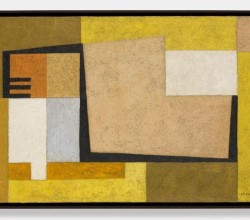
Havana in the late 1950’s aspired to be the “New York of the Caribbean”. Reflecting this a group of local artists emerged whose shared style was global, hard edged abstraction. Castro didn’t share this taste and the group scattered once he came to power. Only now, with a relaxation in travel restrictions are their works being rediscovered, to much acclaim. Multiple images are in this video (7 min).
Painting the Modern Garden: Monet to Matisse review – ravishing visions

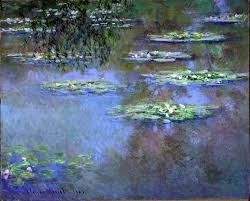
Several Impressionists were hobby gardeners – but not Monet. Gardening was his lifelong passion and the lily ponds at Giverny a focus of great artistic contemplation. Not surprisingly his works stand out in a Royal Academy exhibition. “[T]he three-part panorama of water lilies [is] magnificent. There is no up or down, no end to the beauty of these constellations of colour in liquid space and air. Monet’s garden is beautiful beyond measure”.  Image: Google

The Critic as Artist

Here’s a surprise – “it is the sacred duty of the critic to be wrong”. AO Scott is a noted film critic but his observation is applicable to art in all its forms. Art is a conversation. Critics are important because they help describe – and shape – what that conversation is. The cardinal sin of a critic is thus to not have an opinion – “A critic needs to take a side or we’ll never get anywhere”

It’s Time To Stop Ignoring South Korean Abstract Art

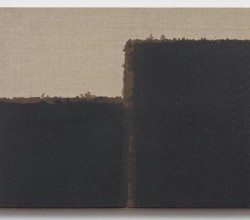
A number of octogenarian Korean artists are suddenly hot art market property after decades of neglect. They belong to the monochrome painting school that, despite similarities to postwar abstraction, has distinctly Korean roots. “To Barnett Newman’s rhetorical question “Who’s afraid of red, yellow, and blue?” [these] painters might well have replied, “We’re not afraid; we just couldn’t care less.”” Some images are here.

Revolution from Another Angle

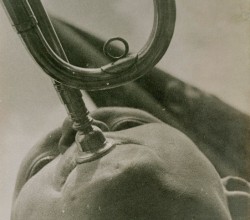
In 1932 artists in Russia lost their freedom of expression. Henceforth, art was to be the servant of propaganda. However, what gave subsequent propaganda images their oomph were the conceptual advances of the earlier, more liberal period. “[I]t was in photography in its many guises that the perceptual innovations of the Russian avant-garde lived on the longest, to leave an indelible… legacy”. More images are here.

Face time: Kelly Grovier on the reinvention of portraiture since 1989

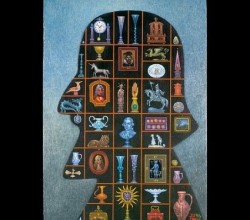
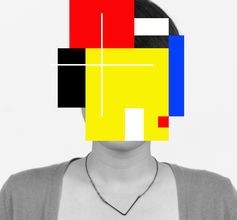
Excerpt from a new book by the American writer Kelly Grovier, on the meaning and value of portraits. “The years since the fall of the Berlin Wall in 1989 have seen as great an upheaval in our comprehension of the human face as any age in history. The challenge for contemporary portraitists has been to … emphasise the complex tissue of tensions—political, sexual, religious—from which contemporary identity is woven.”

When the internet got nasty: art on the electronic superhighway

The impact of computer and internet technologies on life and art has been rapid and profound. New production tools, presentation platforms and art concepts pop up all the time. But where this London exhibition surprises is its reminder of how we first thought about the internet – “cheerful language and unfettered optimism about computational technology … a cybernetic meadow”.

26th January 2016

Zhang Hongtu

When Hongtu emigrated to the US in the early 1980’s, he was, as the son of Chinese Muslims, a quintessential outsider. By the time of Tiananmen Square, he had adopted a hybrid Chinese / Western style for which he is now renowned. “[T] the works set up a kind of cross-cultural viewing experiment: which does one see first, a classical Chinese composition or its Post-Impressionist brushwork?” More images are here.

A Catherine Opie moment in Los Angeles at MOCA and the Hammer

Opie came to prominence with her photos of the Los Angeles gay and lesbian community. They were distinctive not just because they dignified the person but also because they clearly drew on the tradition of art portraiture. Her work is now highly diverse, recently including pictures of Elizabeth Taylor’s home. But there is a common thread – to go “beyond the idea of … voyeurism and into ideas of what is human”.

The Shame and Pride of Empire

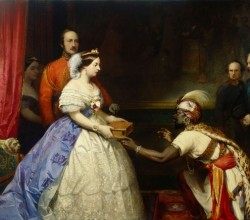
One critic fumed that this exhibition at Tate Britain is “just not good enough” but this reviewer’s description seems better – “brave”. Possessing an imperial empire had a huge cultural impact on the British – exactly as its art shows.  So is the art admirable or appalling? “How much can [one] appreciate an individual work of art, or indeed a genre, when the context is so dominant?”

Porcelain mastery is in delicate details

Meissen, the most famous of all porcelain makers, started out with a monopoly on porcelain manufacturing know-how. These secrets soon leaked out but Meissen’s reputation grew further, based on the work of its great modelmaster, Johann Kaendler. Never less than expensive, the witty and graceful rococo style of its figurines has attracted collectors and the wealthy for over two centuries. Contemporary images are here.

Dada: 100 Years Later

Zurich was a safe place to be in 1916. From the intellectuals and artists that it gathered came the Dada movement – a belief that spontaneity in art could save mankind. While this idea may sound quaint, it has been hugely influential – think photomontage in art and David Bowie and Lady Gaga in music. “The idea of embracing your inner freak is pure Dada. Don’t put on a mask; develop your personal spirit.”

Meet the British art director hoping to spark a revolution within Italy’s museums

The state of Italy’s museums is a national disgrace. Woeful management has resulted in low attendance levels, demoralized staff and run-down buildings. Photos of Venice’s Galleria dell’Accademia are scarcely believable. Recently the Culture Heritage minister replaced the heads of 19 of the country’s 20 top museums in one swoop, referring to “decades of backwardness”. Ruffled feathers doesn’t even come close.

How Art Star Mark Grotjahn Became Art Star Mark Grotjahn: By Repainting Signs for Local Mom-and-pop Stores in L.A.

The way artists arrive at a unique style that defines their work is, by its nature, mysterious. Transformations that look logical after the event are never preordained. For one rising American artist this journey involved painting copies of small shop signs. “The young Jasper Johns talked about this moment of breaking through to making one’s own work. He said, “You do what is helpless and unavoidable.”