The Easel

19th January 2016

At Home with Vilhelm Hammershøi

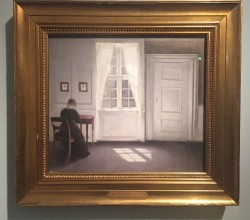
Vermeer was not the only one who could paint enigmatic interiors. The Danish realist Vilhelm Hammershøi specialized in pale, elusive portraits of women in empty rooms and was once described as “the weirdest soul ever to grace Danish painting.” Forgotten outside Denmark for nearly a century, his work is being newly appreciated due to the modern feel of its psychological complexity. More images are here.
Vermeer as Scientist

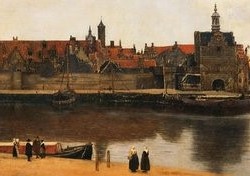
Vermeer’s paintings have a timeless appeal but we know little about what he wanted his works to say. “A student once described his encounter with the “Girl with a Pearl Earring” as tantamount to meeting the love of his life and forgetting to ask her name. [This painting] is an appropriate emblem for Vermeer’s work as a whole: what we know, and what we think is familiar, is forever vexed by its remaining unknowable and inaccessible.”

Max Beckmann at the Berlinische Galerie

The turbulence of twentieth century Germany hugely influenced Max Beckman. The traumas of the first World War gave him a gloomy outlook and seemingly drained bright colours from his work. He tried to capture Berlin’s collective unconscious – “ jagged puzzles of men and women — in coffee-houses, strip clubs … who appear both suffocated by proximity and yet oblivious to each other’s presence.”

Strange Tools: Art and Human Nature

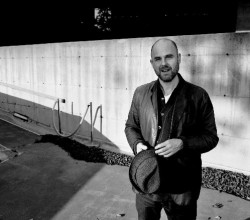
What is art and why do artists want to make stuff?  The cognitive philosopher Alva Noe argues that man-made objects and technology structure our lives but they are so familiar that we fail to notice. The job of art is philosophical – “Art is… a way of investigating the world and ourselves. We start out not seeing what is there. By interrogating . . . we come to see it. The work of art challenges us to reorganize our seeing.”

Image: alvanoe.com

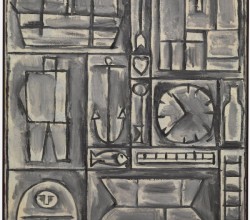
Joaquín Torres-García: A Global Modernist Before His Time

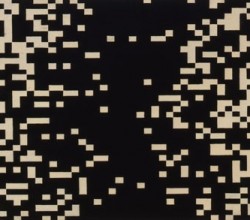
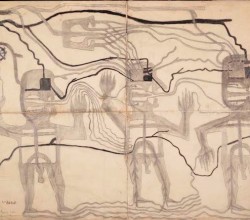
Artists can be ignored if they are seen as not fitting into the global modern art narrative. Torres-Garcia was one such artist, partly because he refused to keep abstraction and figurative art separate. This work “cements his unique place in art history. Long before making something that looks slipshod became fashionable, Torres-Garcia recognized that making something that looks sophisticated was also a convention.”

Shock art needs to grow up

Shock art is, as this article demonstrates, a slippery topic. Does it still shock us? Is it sufficiently coherent? The writer ultimately pinpoints what is bothering him – art’s presumption that it has “special privileges”. In a heterogeneous society, art needs to “learn some humility… and somehow overcome, the vast gulf between [its] own strange world, so wrapped up in its own jargon, and ordinary humanity.”

The Vanishing Man: in Pursuit of Velázquez by Laura Cumming, book review: Saga of a lost masterpiece

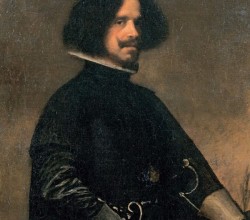
The art critic Laura Cummings has just written an art history detective story. A 19th century English bookseller buys a supposedly “lost” portrait by Velazquez but then becomes embroiled in a controversy over its authenticity. Besides mounting a defence of the bookseller, the book casts an adoring light on Velazquez and resurrects a tantalizing sub-plot in his little understood life. An interview with the author is here.

13th January 2016

How Art Became Irrelevant

Michael Lind’s provocative essay Why Do Intelligent People No Longer Care About Art? was widely read but a concurrent piece by Michael Lewis makes a similar point even more precisely. ”The fine arts and performing arts have ceased to matter in Western culture, and they no longer shape in meaningful ways our image of ourselves. This collapse in the prestige and consequence of art is the central cultural phenomenon of our day.”

Why Do We Only Discover Artists When They Die?

Ellsworth Kelly, the great American abstract painter died just before New Year. Robert Hughes described his work as “an art of spare, authoritative and infinitely refined forms, Matissean in [its] intelligent use of colour, on the basis of constant drawing from the observed world”. An illuminating interview with the artist, done in 2013 when he turned 90, is here (28 min).

ZENG FANZHI with Phong Bui

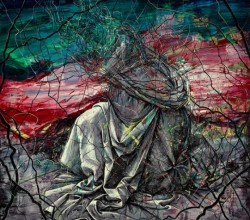
Zeng Fanzhi is a prominent Chinese artist who emerged after the Cultural Revolution. This interview, which coincides with a New York show, outlines the stop-start exposure of Chinese artists to Western art. “Cézanne rendered the world flat. Van Gogh saw colors rather than three-dimensional objects. In that sense they are very similar to Eastern painters.”

Old Master’s Prices are No Laughing Matter

The boom in contemporary art is having an impact in the august area of Old Masters. Recent auction results have fallen well short of even “low estimates”. A dearth of great new pieces coming to market may be partly to blame but this may simply reflect pessimism about likely sale prices. “It’s naïve not to realise we are at a pretty serious moment … There has been a massive taste shift”

William Boyd: how David Bowie and I hoaxed the art world

With the press full of tributes to the musician David Bowie, it seems appropriate to acknowledge his interest in art. For a time, he sat on the board of the magazine Modern Painters. “Bowie loved the art world. He was an autodidact intellectual, an avid and voracious reader, I later learned, as I came to know him a bit better.”

Image: Google

Art Brut in America: The Incursion of Jean Dubuffet at the American Folk Art Museum

The French modernist Jean Dubuffet had the family resources and connections to pursue his passion – “outsider art”. He was most fascinated by psychiatric patients, whose work he felt had “artistic purity and uncontaminated creativity”. Not only did these works influence his own art but, in the immediate aftermath of Nazi persecution of the mentally ill, his project had an emphatically redemptive quality.