The Easel

31st January 2017

David Hockney and the joy of looking

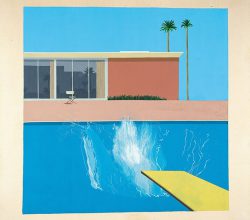
When critic Clement Greenberg said “it’s impossible today to paint a face”, de Kooning responded “that’s right, and it’s impossible not to”. Hockney, sympatico with de Kooning, has stayed true to figuration all his career. Tate opens a retrospective next week, marking the artist’s 80th year. For this writer his career hallmark is a “commitment to the present moment, and his [communication] of sensations and emotions.”
After the Great Flood of Florence

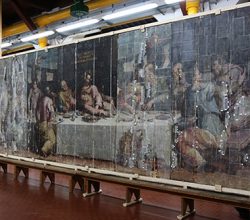
When Florence was flooded in 1966, Vasari’s Last Supper was one of thousands of paintings damaged. Considered at the time a lesser work its restoration was put at the end of the queue. Just as well – it has taken 40 years for the requisite technology to arrive. A workshop official said “This is probably the only place where you can expect a miracle”. The painting, now re-hung, features in this excellent video (8 min).

Image: Getty Foundation

The Shape of Things: Photographs from Robert B. Menschel @MoMA

A standard review of this exhibition is here but the linked piece (“Comments”) goes off on a tangent. “[H]erein lies the challenge. For a collection [assembled by a person] to truly sing, it often needs to show off its unabashed individuality, but once firmly placed inside an institutional context … it must do the exact opposite, stripping away all its vestiges of personal charm and resonance in favor of arm’s length art historical objectivity.”

Image: MoMA

Why Christo Cancelled an Epic Public Artwork

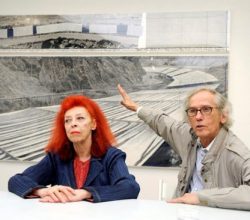
In a protest aimed at newly elected President Trump, installation artist Christo has cancelled plans to drape a canopy over six miles of Colorado’s Arkansas River. Project planning has taken over 20 years and consumed $15m but Christo deems the effort not wasted. ”[H]e identified public debate as vital to art—much more so than the installations themselves”. Varying local attitudes are reported here and project images are here.

Image: Denver Post

Getty Museum presents first major exhibition on 18th century artist Edme Bouchardon

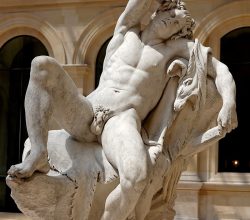
Little known Edme Bouchardon was the pre-eminent sculptor of 18th-century France.  But royal patronage didn’t alter the fact that he was more admired than popular. A taste for naturalistic design sometimes jarred with a court that preferred rococo. As a result a limited number of commissions were finally realized. Those that were are ravishing as are his brilliant drawings.

Elementary My Dear: Michael Andrews At Gagosian

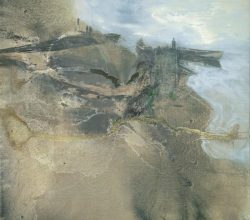
By the time critics started talking about a “school of London” in the mid 1980’s Andrews had left figurative painting (and London) to his more famous pals. He turned to landscapes and produced works that had a contemplative or religious quality. But he produced few of them: his friend Frank Auerbach observed “he is a painter who only paints masterpieces”. An excellent video (9 min) is here.

Feel-good fractals: from ocean waves to Jackson Pollock’s art

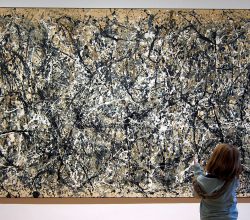
What explains the mesmerizing effect of Pollock’s drip paintings? A physicist (and amateur photographer) has found that these works contain repeating (fractal) patterns. Further, the ratio of big features to fine details in Pollock’s work falls exactly into a psychologically “preferred” range. What this may mean for “fractal free” art – minimalism, Rothko, pop, and more – will presumably be explained to us in due course.

24th January 2017

The Many Faces of John Berger

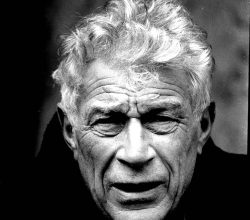
The art critic and writer, John Berger, died on January 2. Many standard obituaries don’t clearly explain his stellar reputation. The linked piece, a review of Berger’s last book, does better. “Berger doesn’t view art history as something that happened, rather as something that continues to happen. [He] decides to firmly root himself in the present and focus on why a particular artwork …appeals to us today”.

The Chameleonic Cate Blanchett Brings 20th-Century Art Manifestos to Life

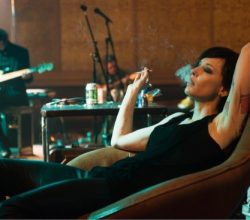
Hot on the heels of last year’s Pippilotti Rist show comes another video art notable. Julian Rosenfeldt is a German video artist who has created an installation comprising 13 films, all featuring the actress Cate Blanchett. Each film covers a set of manifestos – mostly rants written by young male writers, including Karl Marx – read by Blanchett. Rosenfeldt describes the work as “text collages”.  A trailer is here.

The Life Emphatic with Valentin de Boulogne

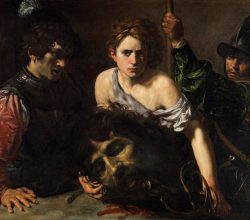
Who carried on Caravaggio’s radical innovations after his death? In France his foremost follower was de Boulogne who, with few exceptions, stayed faithful to Caravaggio’s idea of portraying real individuals. But when de Boulogne died young his style fell from favour. “Caravaggio and his followers were reviled and then virtually forgotten [for centuries]. Caravaggio had his first major show in 1951; Valentin gets his 65 years later.”

Bronwyn Oliver

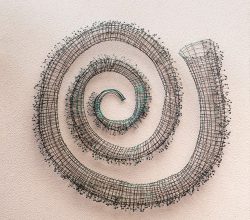
Nature’s patterns inspire many artists. Not her, avowed the sculptor Bronwyn Oliver. “My work is about structure and order … “I am not interested in structures in nature”. Given the graceful organic forms that her metal sculptures take, few are persuaded. As the writer observes “For Oliver to deny nature is akin to Balthus saying there is nothing erotic about his paintings”. An excellent video (3 min) is here.

The Dark Side of the Belle Epoque

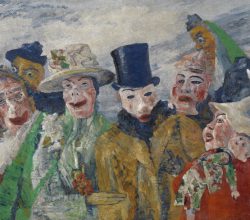
The decades around January 1, 1900 are popularly associated with sunny outdoor scenes by the Impressionists. But this period also had a darker side. Modernising pressures and urbanisation were breaking up old social structures. What might a new century bring? One French writer, referring to a bleak contemporary novel, concluded “we must have become what in fact we are – a race in its last hour.”

William Merritt Chase at the Museum of Fine Arts

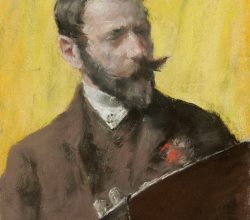
By his mid-30’s Chase was among America’s most famous artists. Then along came Impressionism. His stylistic response was too little, too late and as the fullness of modernism unfolded, he became a forgotten figure. Notwithstanding some glib works, is history’s judgement too harsh?  With maturity, his technical ability and painters eye allowed him to move “the ordinary subject … into the realm of the timeless.”