The Easel

13th October 2015

Goya at the National Gallery: Faces of a Changing World

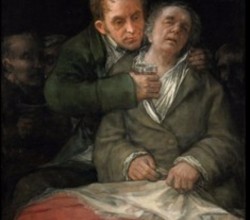
Pretty much any superlative you can think of is being thrown at this show. Partly it’s the incredible coverage of Goya’s portraits but mostly it’s because of the enduring modernity of the paintings. Robert Hughes, who wrote a biography of Goya, linked this modernity to the artist’s desire to “know and tell the truth” and, from that, an ability to “project [his] images from [his] time to ours.” A nice (4 min) video is here and multiple images here.
Hating Renoir is Just a Phase

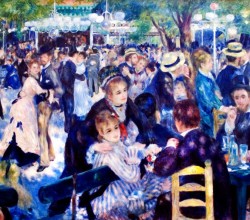
An anti – Renoir protest outside of Boston’s Museum of Fine Arts has ruffled feathers. Renoir’s crimes range from his anti-Semitism to having done too many syrupy paintings. Sebastian Smee from the Boston Globe has led the charge – “no meaningful motives at all.” Schjeldahl is a touch more sympathetic but also philosophical: “If you must hate yourself a little for loving Renoir, do so. You’ll get over it.”

Hammer Museum’s Lawren Harris show curated by celeb Steve Martin raises concern in art world

Coverage of the Lawren Harris show co-curated by actor Steve Martin (who owns a couple of Harris’s paintings) has generated an article highlighting potential conflicts of interest. Fair question. However, some will know the story of the art dealer who for decades bankrolled and promoted the Impressionist artists. When critical acclaim finally arrived, the dealer benefitted magnificently. But then, so have we all.

Cochineal

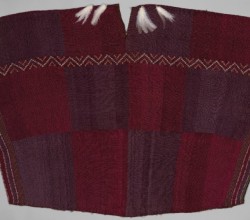
Its pretty easy to take red for granted but artists have found it to be a difficult colour. Only with Spain’s entry to Central and South America did a light-fast, brilliant crimson red dye become abundant in Europe. The cochineal insect was the source of this excitement – it became Spain’s most significant import after silver. Velazquez and Titian were early converts; the Impressionists were users, centuries later.

Celts: Art and Identity

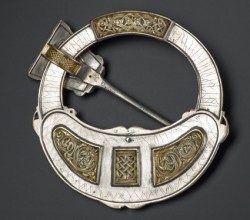
The Celts were a “will-o-the-wisp” as the reviewer expresses it, a loose group of Iron Age tribes who shared some linguistic and aesthetic traits but little else. Much of what we know comes from artifacts turned up by farmers ploughing their fields. However, the allure of Celtic art has not been limited by this lack of knowledge, as a current exhibition at the British Museum shows.

Robert Irwin: ‘my paintings were bad, I felt totally naked’

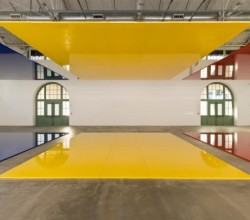
Irwin always wanted his art to extend beyond the frame. This drew him from an early stage to installation art and to the West Coast ‘Space and Light’ group. He is skeptical that his highly conceptual work will ever make him a household name: “At the very best, a few people will walk in and it will change their lives.”

6th October 2015

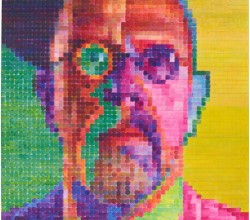
CHUCK CLOSE Red Yellow Blue

According to the critic Michael Kimmelman, Chuck Close says his interest is less the subject matter than his work method. His career-long focus on pixelated, shoulder-up portraits bears this out. Colour contrast is the aspect of work method that gets particular focus in his current show. Of one portrait – “Despite the initially cheerful palette of grapefruit, lemon, and bubble-gum, the work conveys a certain contemplation and wistfulness.”

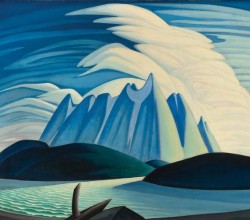
Lawren Harris: Northern Exposure

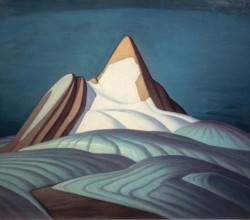
Robert Hughes lamented that artists can be overlooked if they are from the “provinces” of the art world. This may explain why Lawren Harris, often regarded as Canada’s greatest painter, is little known outside his home country. A retrospective in Los Angeles, co-curated by the actor Steve Martin, shows that Harris’s wilderness landscapes are anything but provincial. Background on his life is here.

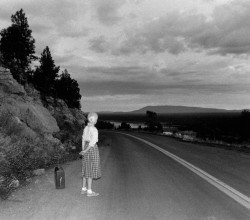
Cindy Sherman Berlin Exhibition

Cindy Sherman thinks her artistic practice germinated as a child when she would dress up in old clothes in the attic. She has since become widely acclaimed for enigmatic photos of herself dressed up as imagined characters. The recurrent theme of her work is the place of women in society and their depiction in the media. The above article also links to an interesting BBC doco (53 min).

What Becomes Of The Broken Hearted?: ‘Art Breakers’ And The Art World’s Reality TV Problem

Not all art programs have to be serious. A new reality TV show on art is about to launch and this reviewer displays a nice touch of black humour about the end product. “Of course, reality TV is inane by design, and what I appreciate about the form is that it provides me with some kind of substantive proof that life is supposed to be unbearably meaningless, and that any indication otherwise is both fleeting and a mistake.”

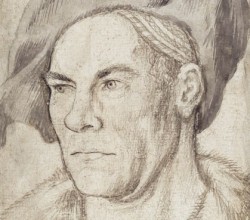
Silver Linings: The Art of Metalpoint Drawing

Metalpoint is a form of drawing where a metal stylus leaves traces on a specially abrasive paper surface. Albrecht Durer was an early pioneer, as was da Vinci. The popularity of metalpoint’s “lustrous line” has varied over the centuries as other graphic tools have become available. Perhaps its waning popularity owes something to it being an unforgiving medium – mistakes cannot be erased.

Turner Prize Sacrifices Visual Punch For Conceptual Filler In Glasgow

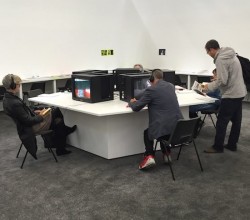
Art prizes may not be your cup of tea but they can reveal what is happening beyond the major gallery circuit. This year’s Turner Prize jury apparently wants to highlight artists who are “pushing the boundaries”. The short listed candidates include the re-created interior of a terrace house, a singing group, a re-created public reading room and a collection of fur coats on chairs. Consider the boundaries pushed!

Checking in on the Cape Town Art Scene

Interesting profile of ambitions and anxieties in Cape Town’s contemporary art scene. A major, privately funded museum opens next year to house a collection focused on contemporary African art. In advance of that event the city’s art dealers reflect on their aspirations. How much should they prioritise artists whose style is distinctly local, even if it is unfamiliar to international collectors?