
The Easel

21st May 2024

Why textiles are all the rage in the art world right now

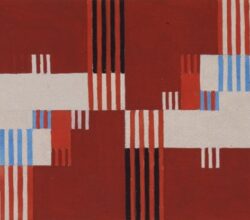
Textiles have long been discounted as craft rather than art. Two “fabulous” US shows of textiles indicate this may be changing. One reason is a greater appreciation of textiles’ role in the development of modernism. In addition, current textile artists – like the American Sheila Hicks – are wildly inventive. This writer declares that weaving is “one of the most extraordinary, sophisticated things humans have ever managed to do. It’s connected not just to survival … but also to the human capacity for abstract thought.”

Jenny Holzer’s Facile Guggenheim Museum Show Fails to Meet Our Moment

Holzer made her name in the 1980’s with text propositions such as “PROTECT ME FROM WHAT I WANT” and “MONEY CREATES TASTE”. Now re-presented in a major New York show, the numerous reviews seem lacking in enthusiasm. Perhaps that’s because, in the 1980’s, her calculated texts revealed “the slipperiness of language”. Now, in the world of the internet, the mechanics of language and power are all too familiar, making her work “dated”.

How Keith Haring’s art transcended critics, bigotry and a merciless virus

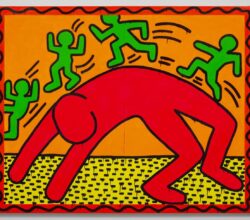
A new biography of Keith Haring extensively details the background to his meteoric art career. Arriving in New York when graffiti was everywhere, his thousands of chalk drawings helped him find his artistic voice and also brought him to attention. One critic likened the work to “boogieing on a Saturday night”, perhaps reflecting the view that work of such popularity could not be great. He quickly became wealthy, actively supported public causes and declared his real interest in art was “as a means of living a life.”

14th May 2024

The indestructible art of Frank Stella

Stella was devoted to abstraction but not abstract expressionism. He felt the latter presumed its own spiritual greatness. So, he started making austere black striped paintings – among the first minimalist works – and found instant acclaim. That style, along with many others, was discarded in a career full of reinvention. Despite being seen as an art world “god”, Stella’s advice about his own work was to avoid interpretation, “what you see is what you see.” An obituary is here and a light hearted interview with Stella is here.

Joan Jonas

Jonas trained as a sculptor but, in the 1960’s wandered into dance, seeing little difference between “a poem, a sculpture, a film or a dance”. Those explorations helped establish video and performance as recognised art forms. Her view was that these were just extensions of traditional storytelling, for which she developed modes of “technologized sorcery” including an alter ego, the “seductress Organic Honey”. Her first major retrospective offers “an experience of unexpected sculptural and scenographic power”.