The Easel

25th July 2023

Video art cuts through the noise. But the noise is getting louder

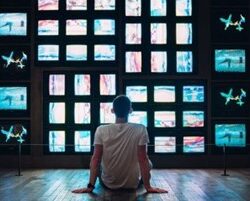
Is the vitality of video art fading away? A large survey show in New York has critics calling it “elegiac”, “I’m anything but enthusiastic”, or even “it’s a post-mortem”. One critic admits he still had “no idea” if he liked it. Video emerged in a world dominated by network television but now it’s all about smart phones and social media. Can video art be a “cultural signal” when we are learning that images can’t be trusted? “Reality itself begins to feel fugitive. We [want to dispel] the mental torpor of “screen time.””
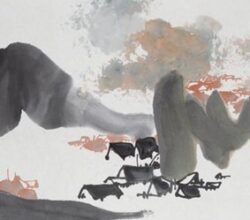
Lui Shou-Kwan’s Zen Painting and American Abstraction

Chinese ink painting, like calligraphy, balances disciplined form and personal expression. Lui trained in that tradition but, seeing contemporary 1950’s American art, decided to apply a modernist sensibility. His “zen” paintings have a spontaneous “splashing” brushwork that he said drew on Chinese traditions of abstraction. Besides pioneering the New Ink painting movement, his work attracted international interest already whetted by the wave of abstraction coming out of New York.

18th July 2023

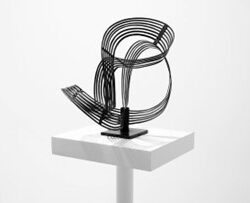
Measuring Infinity, at the Guggenheim, presents drawings, collages, and sculptures from architect-turned-artist Gertrud Goldschmidt

Gego was long in transition – from pre-war Germany to Venezuela, from architecture to art, from painting to her métier, delicate, abstract wire sculptures. It was worth the wait. These works articulate “the tensions and irregularities of organic form”. Some are small and, hung from a wall, resemble “drawings in space”. This is “magical, slippery engineering”, distinctive and infinitely varied. Says one critic “some of the most radically beautiful sculpture of the second half of the 20th century”.

Watercolors at Harvard and MoMA

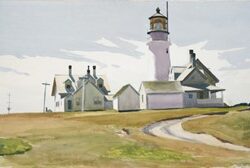
Does watercolour painting need a PR pep-up? Because its materials are relatively cheap and portable, the medium is often associated with “amateurism”. In fact, many great artists were exponents, using it to quickly capture an image or for experimentation. Its great quality though, is unpredictability, the way paint can “flow and bloom into darker and lighter areas”. That process gives a work a spontaneity and energy that offers the viewer “emotional experiences”. Images are here.

Mary Jackson has turned sweetgrass basketry into a fine-art form

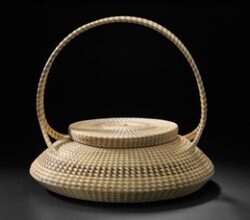
Growing up, Jackson regarded basketry as a summer “chore”. Returning to the craft in adulthood, she combined traditional materials – coastal sweetgrass – and basketry techniques with a contemporary aesthetic. Her baskets, distinguished by bold shapes and exquisite, demanding weaving skill – abandon utility and become an artform. Says one collector, “like great sculpture, Mary Jackson baskets beg to be touched.” A backgrounder is here.

Ansel Adams: Eight of the most iconic photos of the American West

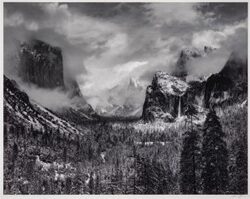
Adams “stirring” black and white images remain hugely popular. His aesthetic was shaped by the romantic idea of manifest destiny – an America, expanding ever westward to find prosperity and fulfillment. An immediate motivation, though, was to make images that promoted the new idea of national parks. With Yosemite in his image finder, Adams hoped to capture the spirituality of the wilderness, thus tapping into nostalgia for a “pure” frontier America that no longer existed.