The Easel

12th August 2015

Artful Artfulness

In a recent item that was widely read, the writer Michael Lind argued that “the fine arts don’t matter any more”. His argument was far from bullet proof and Paula Cohen comes to this argument armed to the teeth. She enjoys much the better side of the debate, pointing out that just because contemporary art is not treated with “reverence” doesn’t mean that it lacks merit.

Image: Google

TO THE INNER CITY WITH SHIRLEY BAKER

The UK’s post-war Urban Clearance programs were ambitious – around 1.5m properties were demolished, impacting about 3.6m people. Shirley Baker was one of the few women street photographers who recorded the community impact – in her case in Manchester. Her work was largely neglected during her life but a current exhibition shows the important – and amazing – pictorial record that she created. More images are here.

Rachael Howard At Sea

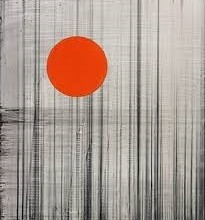
Rachael Howard waitressed as an art student until Damian Hirst took her on as his assistant. Anything but a self-promoter, she recently decided to have a “year of saying yes to everything” – including her first solo show in the UK. Press coverage is limited but the above link is to an excellent video where she discusses her emotionally charged abstracts. Hirst’s assessment– “she’s brilliant. Absolutely fucking brilliant”.

Image: Google

JOHN CHAMBERLAIN AT INVERLEITH HOUSE Q&A with Paul Nesbitt

Asked why he used wrecked cars, the great American sculptor John Chamberlain said it was because that’s what he found in his back yard, just like Michelangelo found marble in his. Despite their bulk, these works have grace and energy and share the spirit of Chamberlain’s abstract expressionist contemporaries. As one reviewer commented “Scrap metal, crumpled… turns into weird new fruit”. More images are here.

Bronze sculptures in ‘Power and Pathos’ at the Getty capture pivotal era

Following the British Museum’s sensational exhibition of Greek sculptures early in the northern summer, the Getty in Los Angeles now has an “unprecedented” show of rare Greek bronzes. The Greek empire was declining militarily at the time of these sculptures but the humanist ideas they expressed endured. These bronzes would not be equaled until the Renaissance, 1500 years later.

“How I discovered a masterpiece”

Earlier in the English summer English Heritage announced that a painting previously thought to be a copy of the work of Renaissance master Titian is actually an original. Now fully restored, it is on display in London for the first time. It is one of a number of works originally created for the Spanish king Philip II– the improbable story of how it came to be in English hands is here.

Frames for Borders

Centuries before gardening became a middle class pastime, the aristocracy used it as a way to display wealth and style. New botanical discoveries were inevitably expensive to cultivate, while garden layout expressed the aesthetics du jour. Unsurprisingly, paintings of gardens reflected these fashions. Given the longevity of the Royal collection, a selection of garden paintings from it, now on show in London, comprises a unique social record.

4th August 2015

Larry Bell

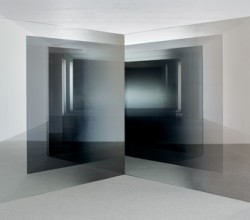
Bell was attracted by the “vagueness” of art and quickly became fascinated with glass and its optical qualities. Often included in the “Space and Light” group of American artists, he is best known for his glass sculptures – especially cubes and large wall panels. In the interviews for his new London show, Bell describes his focus without any vagueness: “my media [is] the interface between the light and glass”.

Why the Cosby exhibit is still a bad idea

The Smithsonian has got itself into a real mess with an exhibition drawn from the collection of comedian – and alleged sexual predator – Bill Cosby. Cosby is a major donor to the museum, raising questions about curatorial independence. Worse is the suggestion that the exhibition forms part of Cosby’s PR strategy: “The family themes of the Cosby exhibition … now look like an elaborate veil cast over the abuses of the patriarch.”

Image: Wikipedia

The genius of Uli Sigg unveiled at the Whitworth

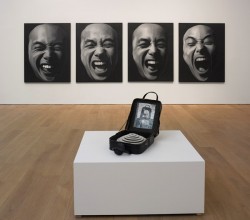
When Uli Sigg first went to China on business in the 1980’s he noticed that no-one was seriously collecting local contemporary art. He has since put together perhaps the largest collection of Chinese art covering the period since 1970. Given China’s astonishing transformation, its art is an important record of cultural change. The collection has been donated to a new art gallery due to open in Hong Kong in 2019.

PETER SCHJELDAHL with Jarrett Earnest

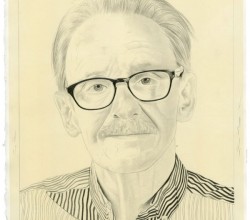
A gem of an interview with Peter Schjeldahl, the longstanding head art critic at The New Yorker. Full of insights into art and art criticism. Two examples: “Three questions we might ask of a sculpture (a favoured medium) … What is that? Why is it there?” and When will it go away?” And “Looking at art is like, Here are the answers. What were the questions?”

‘Impressionism and the Caribbean: Francisco Oller and His Transatlantic World’ Review

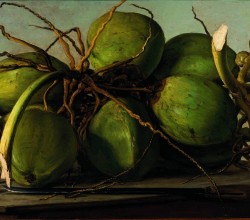
Oller’s story seems to be that of a hugely talented artist who chose his country of birth (Pueto Rico) over Paris. He visited France and Spain for extended periods – long enough to be appointed painter to the Spanish king in 1872 – and had close friendships with the Impressionists. When hung next to them in this widely praised exhibition, his art looks “at once international and indigenously Puerto Rican”.

Why Do So Many Art Galleries Lose Money?

Art gallery profitability might sound like a dry topic. However it is an important determinant of the health of the art sector because galleries are pivotal in providing support for working artists. A forthcoming book argues that the art market is antiquated and that relatively few galleries are strongly profitability. The proposed remedies are nothing if not provocative, including paying gallery staff more and artists less.

A Vibrant Display of Congolese Art at Fondation Cartier

A first ever survey show of Congolese art in Paris is having to tiptoe around some touchy agendas. Are enough women artists included? Is bringing this art to Paris perpetuating colonial relationships? The curator’s motives seem blissfully straightforward– create a narrative that doesn’t dwell on the country’s political strife. Oh… and then there is the art – its “sparkling”. An interesting background piece is here.