The Easel

28th July 2015

Jackson Pollock: Blind Spots

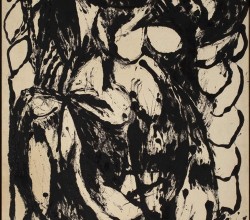
“Sensational” is the word some critics are using to describe this show at Tate Liverpool. It focuses just on the period 1951–3, when Pollock produced a series of predominantly black paintings – his “black pourings”. Some speculate that he was exploring the ideas that coalesced some years later in “colour field” painting. By that time Pollock had died, leaving behind a final, enigmatic, group of works that might be described as an “epitaph”.

Sitting for Frank Auerbach

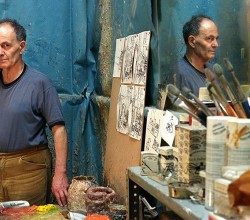
The figurative painter Frank Auerbach admits he is hugely self-critical. When painting, he reviews his work, then scrapes the paint off and starts again. This is repeated dozens of times. A new book on Auerbach’s work has been written by art historian Catherine Lampert – a close observer given that she has been sitting for him each week since 1978. Even more interesting (but lengthier) is a podcast interview Auerbach recently gave at the Royal Academy.

Tom of Finland: the Pleasure of Play review – definitely not the marrying kind

A recently recommended essay debated whether Richard Tuttle’s cool minimalism is art. A similar debate arises over the widely reviewed exhibition of Tom of Finland’s homoerotic drawings, currently in New York. These explicit and stylized works (by Finnish artist Tuoko Laaksonen) were path breaking and pose the question – are art and pornography mutually exclusive? Note that images are NSFW.

Image: Wikipedia

Decoding Sarah Charlesworth’s Patricia Cawlings, Los Angeles at New York’s New Museum

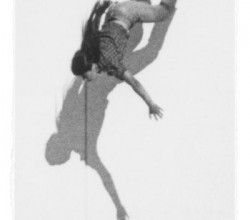
Sarah Charlesworth spent her career exploring the tension between the precision of photo images and the ambiguity of the associated story. In this large and acclaimed survey show, the exemplar of this is a series of haunting newspaper images of individuals falling from buildings. “One knows there’s a human history which exists outside the image, and yet as photographs they are complete” Multiple images from this show are here.

Open Book: Michelle Kuo Talks With Ingrid Sischy

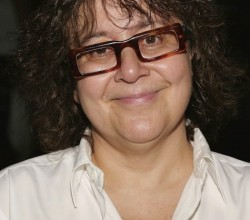
After it moved to New York in the 1970’s, Artforum emerged as an eminent art magazine. A key player in the transformation was its editor, Ingrid Sischy, who died this week. In a recent interview now re-published in Artforum, Sischy discusses some of the key issues of her editorship, including the first hints of an emerging online world. A tribute from The New Yorker, where she went after Artforum, is here.

Image: Google

Lightning Bolt: A Realization of Clyfford Still

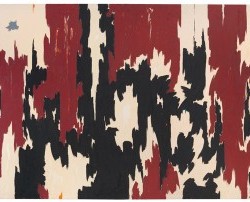
Clyfford Still wanted his art to impart a sense of overwhelming awe. So confident was he of meeting this standard that his will sealed off his estate until a purpose-built museum was available. The city of Denver came to the party in 2011, thirty years later. That museum holds 95% of his total output and is not permitted to sell or loan anything. Perhaps this splendid isolation explains why the reviewer is only now discovering the merits of this important artist.

Why is an artwork left unfinished?

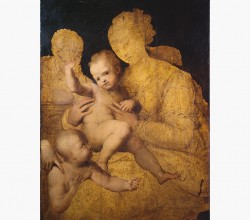
With a few notable exceptions musical and literary compositions are generally regarded as being of little value unless completely finished. Art can be different.  Incomplete figurative paintings can often convey the artist’s thinking and the same sometimes applies to abstract art. An exhibition at London’s Courtauld focuses on unfinished works to illustrate the creative process. Mulling over the same show, Marion Coutts observes “death is the great unfinisher”.

22nd July 2015

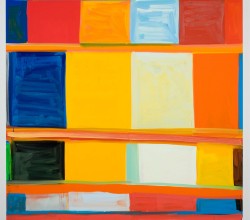
Stanley Whitney on His Show at New York’s Studio Museum in Harlem

Whitney knew from early on that colour was central to his art. As a young artist he drew inspiration from Velasquez, Mondrian and others but then had to resist the drumbeat of 1970’s Minimalism which deemed colour to be superficial. Only during a 1990’s visit to Egypt’s pyramids did he finally get his “Ah-ha” moment. His first ever museum show in New York has produced a flurry of reviews and the unmistakable sound of an artist’s reputation being significantly upgraded.

Three Stars Shine Brightly at the 56th Venice Biennale: Joan Jonas, Sarah Lucas, and Celeste Bourisier-Mugenot

The early reviews of the Venice Biennale were mostly heavyweights commenting on its overall curatorial merit. Now, there is a small but steady flow of reviews looking at the work of individual artists. With the Biennale having focused on including more female artists and artists of colour, this reviewer picks out three favourites, all of which are all examples of excellence.

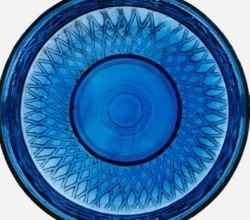
They Once Touched Roman Lips

Glass blowing apparently emerged on the southern fringes of the Roman Empire around 100BC and quickly eclipsed other methods of working glass.  The glassblower Ennion came from what is now Lebanon and became one of the eminent glass artists of his era. A show in New York highlights the graceful quality of his work, a quality that is still sought after in today’s art glass.

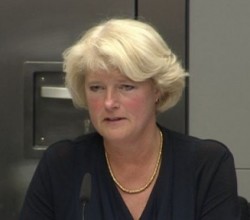
German Culture minister defends controversial art law

Wanting to tell your national story through art is laudable. Germany is considering a law to protect its artistic inheritance by restricting international sales of significant works. In a classic case of unintended consequences a storm of protest has erupted among artists such as Bazelitz and Richter, who fear limits on their artistic freedom.

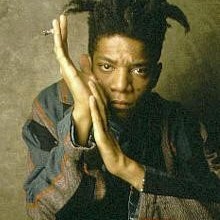
Jean-Michel Basquiat: The life and work behind the legend

Basquiat had such a dramatic impact on New York’s art world that when he died at age 27 in 1988, an aura of genius was bestowed on his art. At the time, Robert Hughes was a notable sceptic – “a small untrained talent caught in the buzz saw of art-world promotion…” On the other hand, a show at Guggenheim Bilbao is no small achievement. This author is also a supporter:  “”Ultimately, his paintings move us – and that’s his main achievement.””

Image: Wikipedia

Marc Quinn: “You can’t be Turner in the age of global warming”

Twenty odd years after it was first coined, the YBA’s (Young British Artists) tag is still firmly in place. Whether it is relevant to understanding the work of this diverse group of artists is debatable. Marc Quinn is a YBA and came to public notice with a sculpture of his head made from his own blood. However, the artist that emerges in interview is less a 1990’s tearaway and more the thoughtful inheritor of the rich heritage of British art.

Caro in Yorkshire, Yorkshire Sculpture Park & Hepworth Wakefield, review: ‘essential

When Caro met the American sculptor David Smith, he immediately left behind the figurative style taught to him by Henry Moore. He began working with large pieces of (often brightly painted) steel, assembled into abstract works of delicacy and balance. Moore initially dismissed this new work as “window dressing” but, as two current shows demonstrate, Caro was actually mapping out the new territory of 20th century abstract sculpture.