The Easel

8th September 2026

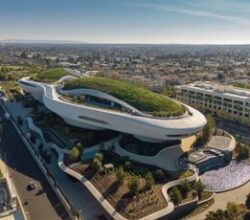
The Lucas Museum Doesn’t Have a Narrative

The Lucas Museum of Narrative Art has taken 17 years to complete and required “fuck you” amounts of money. It displays all forms of art that tell a story – paintings through to comics, street art, posters and film. It’s a mash-up of high and low culture, something Lucas proudly calls “a temple to the people’s art”. But where is the explanation for why these objects belong together? This lack of contextualisation is “egregious … the Museum of Narrative Art lacks any kind of narrative. [It is] a vanity project”.
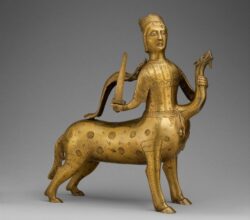
“Creatures of Myth and Imagination: Europe and the Americas” at The Met Cloisters

Up to about 1500CE, European artists imagined mythical creatures that combine features of animals and humans. Such imaginings were an attempt to explain the known world and express spiritual visions. In the Americas, completely independently, hybrid creatures were similarly being imagined that linked the human and the divine. These are beautiful and provocative objects, “a sampler of greater ventures hopefully to come.” Images are here.

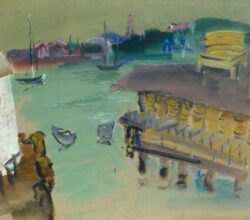
“Avery, Gottlieb & Rothko: By the Sea” Shows How Three Midcentury Greats Were Shaped by the Shore and One Another

An American art history tale. Milton Avery was a pioneer of colour field painting – broad areas of flat colour. His younger friends, Rothko and Gottlieb were producing figurative work. The trio started summering together in the 1930’s where Avery encouraged them “to eliminate and simplify, leaving apparently nothing but colour and pattern”. Rothko was most influenced by this advice, ending up with his stacked rectangular fields of colour. Avery also evolved but never entirely let go of painting the sea.

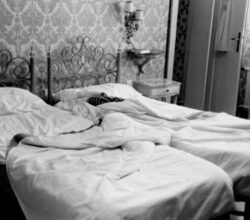
Sophie Calle’s ‘Overshare’ Exhibition Takes Visitors on a Journey Through the Intimate

Calle anticipated social media by decades. She is fascinated by what we keep private versus the sometimes constructed personas we choose to make public. This has led Calle into projects like photographing occupied hotel rooms or following and photographing people as they move around their city. Despite her work being widely acclaimed she has never entirely dodged accusations of voyeurism. Claims she, it’s all about “the urge to see, to know, and to be known”.

1st September 2026

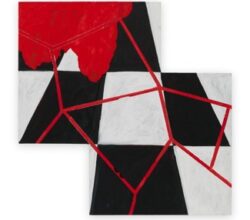
Mary Heilmann, Who Revivified Abstract Painting, Dies at 86

After training in California and a brief foray into ceramics, Heilmann moved to New York intent on “making it big” in sculpture. She didn’t, and in 1969 took up the supposedly dying medium of painting. Her “proudly unpolished” abstractions poked fun at the serious geometries of minimalism while radiating a “joyful humanity”. She continued to “uncork strange delights” until institutional recognition finally arrived in her late-60s.  Heilmann had “one of the defining art practices of her era”.

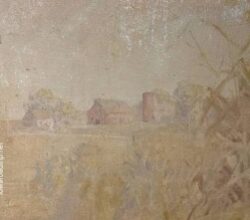
In Sioux City, Disparate Visions of the American West Converge

Before he painted his iconic “American Gothic” in 1930, Wood did a large mural of an autumnal Midwest corn field. Once regarded as merely an “artifact”, a restoration reveals it is a major work that depicts rural abundance. It marked Wood’s growing interest in Regionalism, an art movement focused on realist agricultural landscapes. Nowadays, Regionalist works anchor more contemporary art that addresses the “weighty emotions” rural Americans carry as they pursue “a successful modern life “.