
The Easel

29th August 2023

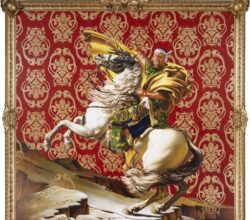
Kehinde Wiley is selling kitsch

Wiley’s show An Archeology of Silence is a big hit, further increasing demand for his work. To cope with these pressures, the artist has a streamlined production system. This seems not to have helped his art. “The exhibition is … pure kitsch. Kitsch is rooted in emotional cliché … and [presumption]. The presumption is that everyone feels the same way as you. His works offer none of the pleasures and surprises afforded by good painting. Their surfaces are immaculate … and utterly dead”.
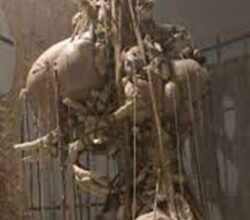
Ick Art: Why a Rising Generation of Female Sculptors Is Embracing Body Horror

Describing Lee’s work as “kinetic sculpture” is way too polite. She uses motors, scaffolding, fabric and hoses to create bizarre organic systems that slop, squish and drip goo. It’s “a bit grotesque” she admits, identifying one inspiration as the desire to devour or be devoured. Where are we going here? Her objective is to create art that makes us feel, not think. One critic calls her work “unflinching”, another says it’s “not pleasant and certainly not nice. But it works.”

22nd August 2023

The Dueling Dualities of Remedios Varo

When working alongside the macho males of surrealism in pre-war Paris, Varo’s role was that of “timid listener”. Later, in Mexico, she blossomed. Combining science and “great mysticism” she sought to portray the non-rational world that lies beyond our perceptions. Often, her images depict empowered female figures interacting with a complex “animistic world ordered by unseen forces.” Says one critic, this is a “resplendent” body of work. Images are here.

Josh Kline’s Exercise in Poverty Porn

To accompany this survey of Klein’s work, the Whitney has published an essay linking it to the “unsung struggle to maintain a middle-class existence”. But does it work as art? Some critics like its accessibility. Not all. Klein’s art is melodramatic, says a critic, subjugated to “the cause of social and political criticism”. This writer generally concurs – social justice issues are important but “the Barbie movie [is better at introducing such issues] to a broad audience”.

Federal Judge Rules A.I.-Generated Art Isn’t Copyrightable But Questions Remain

Visual artists everywhere will sleep more easily following a US court decision that AI art cannot be copyrighted. As set out in the “monkey selfie” case (no joke) copyright is only available for works of “human authorship”. Many think even more complex copyright cases are imminent. What happens when an artist jointly creates an image with AI? And can artists prevent their works being used to train an AI? For now, though, “AI will just have to find another way to world domination”.

Woman With a Film Camera

After years away, Abbott returned to New York a fan of Eugène Atget’s urban photography. Finding that “old New York” was disappearing, she embarked on a project to document its transformation. Those images show a city of tremendous dynamism and exemplify a “straight” style of photography no longer derivative of Atget. Abbott rarely featured people in her images, showing that her real ambition was to “make New York’s modernity her subject”.

Among saints & skeletons

Some place the initial impetus for the Renaissance in Flanders, rather than Italy. Its universities, trade links and entrepreneurship made it an ‘absolute powerhouse” of culture, and its ambitious merchant class wanted art that showed this. Unlike the Italians, who prioritized the human figure, Flemish artists didn’t have a hierarchy. People, flowers, scientific inventions, interiors, all were shown in exquisite detail. This was Flanders’ take on humanism – a world brimming with the fruits of human agency. Images are here.

W. Eugene Smith and the largest stories of his career

Smith’s photo-essays for Life magazine made his reputation as a great photojournalist. After Life, he focused obsessively on two huge projects. One was a photographic “poem” to Pittsburg and its “vistas of melancholy”. The other was to photograph and record illustrious jazzmen practicing in his seedy New York apartment. Both projects posthumously yielded photobooks, recently re-published. A 1978 obituary stated that he was an “obsessive, maverick genius … [who left] behind 22 tons of archive material”.