The Easel

12th May 2026

Cecily Brown: ‘Painting happens very quickly; often I don’t know if it’s working’

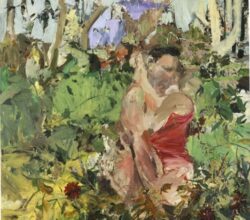
After art school, Brown left London for New York where she hoped she would fit in. Two decades later she is back for her first major solo show. Her “landscapes-as-abstractions” are both commercially appealing and critically acclaimed. Gestural amalgams of “flesh and pastoral” don’t carry a message other than her appreciation of painting. For some critics her work can be “inert” but not this writer. Brown wants to show “convulsive beauty [and] has magnificently achieved it … a triumphant homecoming”.
Henry Moore at Kew: Monumental Nature

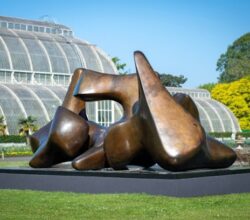
Can a garden become part of an artwork?  The sculptor Henry Moore saw sculpture as “an art of the open air” and this show places thirty of his large modernist works amidst the Victorian splendour of London’s Kew Gardens. While not an obvious pairing the result, says this writer, is “unexpectedly profound”. Amidst Kew’s ancient trees, not only do Moore’s works become “elemental” but the trees begin to look “anatomical … nature keeps quietly demonstrating [sculpture-like] forms nearby. Magnificent.”

5th May 2026

Spanish Baroque Painter Zurbarán: Essential Meditative Moments at the National Gallery

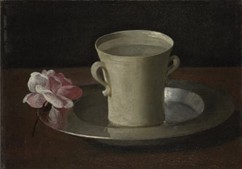
Zurbarán painted when Spain was militantly religious, so many of his works went to religious orders in and around prosperous Seville. Often painted against nearly black backgrounds, his images are austere yet compellingly real, full of drama, emotion and beauty. The way he conjures up form and volume brings his figures to life while his still lifes mesmerise with their accuracy and the way they present the spectacle of life. Says one critic “Oh my … in painting after painting we encounter genius”.

Art: my part in its downfall

A mea culpa from an art dealer turned art critic. As a twenty-something in optimistic London, the writer was a “faithful adherent” of contemporary art and started a for-profit gallery that focused on “peripheral” Left politics. Over a decade or more, art world discourse started to emphasis identity and “wokeness” and he slowly fell out of step. Now a critic, he thinks art is in “catastrophic decline”. Somewhere in all of this is a sense of his regret, but about what? Perhaps it is that too much political art forgets to be artistic.