
The Easel

24th June 2025

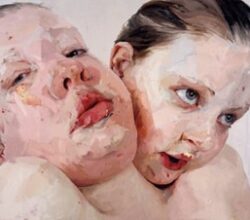
How Jenny Saville turns paint into flesh

Saville’s acclaimed works look like portraits except that she says they are actually paintings about the act of painting. She acknowledges the influence of compatriots Bacon and Freud but also abstractionists like de Kooning and Twombly. From them she draws “energy” but what she paints are fleshy, visceral, imperfect bodies that impart, says one writer, the “ungraspable but omnipresent realness of others”.  Amidst a string of 5-star reviews for Saville’s retrospective this writer says “she has the verve of a great artist”.
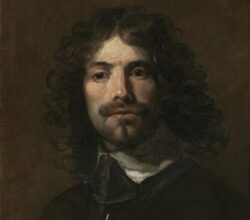
Historic portrait by ‘Britain’s Caravaggio’ bought for the nation

London’s National Portrait Gallery says William Dobson was “the first great British painter”.  Few remember him today but that may change with the official purchase of his self-portrait. Painted around 1637, the work stands out amidst that era’s “stiff” portraits. It is fluent, with thickly applied paint and “oozing romantic self-absorption”, giving it  an“un-English” psychological mood. “Suddenly, out of nowhere, we have a native Caravaggio”. The gushing official announcement is here.

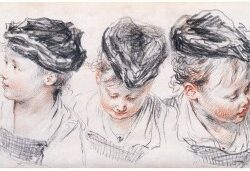
Antoine Watteau’s studies in elegance

When we think Watteau, we think of paintings of aristocratic frivolity. He was slow, it seems, to pick up his painting brushes but, when it came to drawing, he was “almost obsessive”. He drew constantly, with some images eventually appearing in his paintings. Yet Watteau’s repeated alteration of his drawings is evidence that he saw them as artworks in their own right. His skill in focusing on a figure “gives many of his drawings an almost cinematic quality, which he never fully reproduced in paint.”

17th June 2025

Steamy scenes in urban underworlds were Edward Burra’s great subject—now they’re coming to Tate Britain

Blessed with family wealth but cursed with ill-health Burra was an eccentric. When he started painting in the 1920’s, abstract work in oils was all the rage. He was the odd man out, preferring watercolours and painteing the “louche underbelly of city life”. They are satirical, resonating somewhat with George Grosz’s works about Weimar Germany. Says one writer, “one of the most overlooked artists of the 20th century”.